Pakistan has been ranked 14th among the world’s most water-scarce countries, highlighting a growing threat to the country’s agriculture, food security, and economy.
A report titled “Sustainable Agriculture in Pakistan: Can Pakistan Meet Its Future Food Requirements?” by Ampic Strategies says that harmful farming methods, along with years of weak governance and poor policy implementation, have pushed Pakistan’s agriculture sector into a growing crisis.
It says that excessive irrigation, continuous monocropping and the heavy and indiscriminate use of chemical fertilizers and pesticides have damaged soil quality, reduced crop yields and caused widespread environmental damage.
The report says that blaming climate change alone for Pakistan’s agricultural problems ignores deeper structural issues that have built up over time.
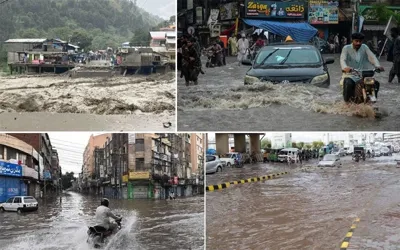
It highlights inefficient irrigation systems, declining soil fertility, excessive chemical use and weak enforcement of agricultural policies as major factors worsening the impact of floods, droughts and heatwaves.
According to the report, Pakistan’s per capita renewable freshwater availability has fallen sharply from about 5,260 cubic meters in 1951 to less than 1,000 cubic meters, placing the country under severe water stress.
With nearly 90% of agriculture depending on the Indus Basin irrigation system, the report warns that increasing pressure on limited water resources could further undermine food production and rural livelihoods.
As a solution, the report stresses better implementation of existing policies rather than introducing new legislation.