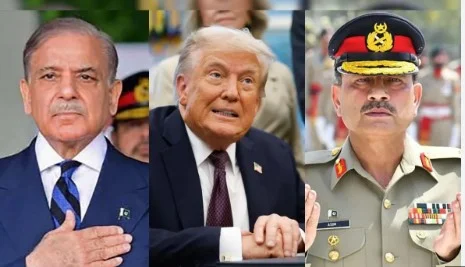
The year 2025 emerged as a period of strategic resurgence and renewed military confidence for Pakistan, with the American magazine “The Diplomat” describing the country as a renewed center of global attention after many years.
According to the magazine’s assessment, Pakistan re-entered the international spotlight in 2025 due to a combination of military assertiveness, clearer state policy against extremism, and evolving regional and global engagements. The country’s military leadership played a central role in this shift, delivering what was described as a strong and unambiguous state-level message against extremism.
A key milestone highlighted was the Army Chief’s declaration that the authority to declare jihad rests solely with the state, a stance termed firm, clear, and unprecedented in its impact. The message was seen as reinforcing the writ of the state and marking a significant step in Pakistan’s long-running struggle against extremism.
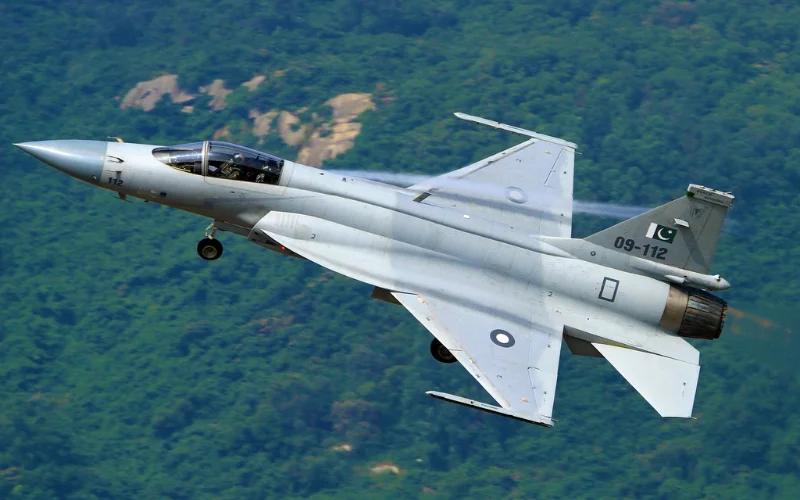
The report noted that Pakistan’s military leadership safeguarded national interests throughout the year, promoting discipline, order, and strategic clarity. Military clashes with India in May 2025 drew widespread global attention, with analysts observing that Pakistan’s response demonstrated military balance and professional competence despite limited resources.
Pakistan’s armed forces were credited with effectively countering what was described as Indian military adventurism, strengthening the country’s strategic credibility and deterrence posture. The performance became a focal point for global defense experts and helped restore international confidence in Pakistan’s military capabilities.
Following these developments, Pakistan reportedly regained a central place in global military debates. The improved strategic outlook also contributed to a noticeable improvement in Pakistan–US relations, while India’s ties with Washington reportedly came under strain after the conflict.
On the diplomatic and defense front, Pakistan concluded significant defense agreements in the Middle East, including a major bilateral defense cooperation agreement with Saudi Arabia. These developments were described as strengthening Pakistan’s regional role and boosting global demand for its defense equipment. China, according to the report, expressed satisfaction with the real-world performance of defense systems used during the conflict.
The magazine further pointed to a favorable global environment for the second phase of the China–Pakistan Economic Corridor (CPEC) and noted Pakistan’s recognition as an important stakeholder in global discussions related to Gaza.
On regional security, Pakistan adopted what was described as a clearer and tougher policy toward Afghanistan and the Tehreek-e-Taliban Pakistan (TTP). Increased pressure on the Taliban government, combined with mediation efforts involving Qatar, Türkiye, and Saudi Arabia, helped elevate cross-border security concerns at the global level.
Domestically, Pakistan achieved notable counterterrorism successes, with expanded cooperation with multiple countries. Effective actions against extremism were identified as a defining feature of state policy in 2025.
Despite ongoing economic challenges, the report highlighted progress on reform measures. The privatization of Pakistan International Airlines (PIA), after nearly two decades, was described as a potentially major turning point, offering Pakistan a rare opportunity to capitalize on a supportive global environment and implement long-awaited reforms.