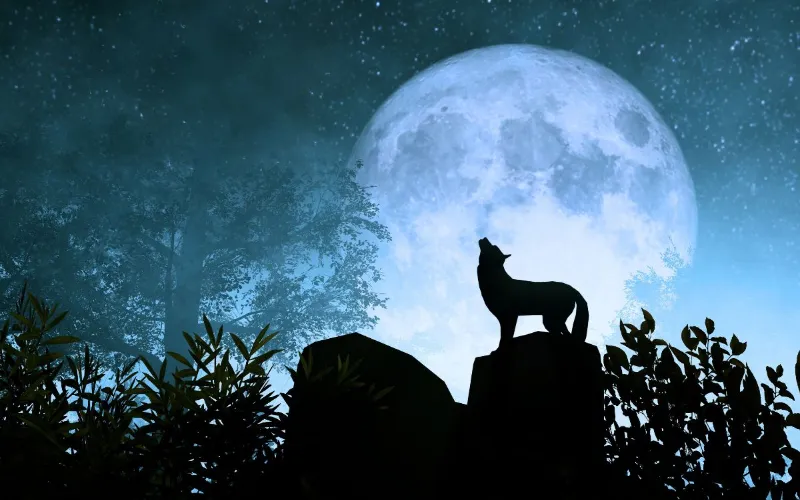
The first full Moon of 2026, known as the “Wolf Moon,” will light up the sky on January 3, marking a spectacular celestial event.
This will be the fourth consecutive supermoon, following the Harvest Moon in October, Beaver Moon in November, and Cold Moon in December.
Though weather conditions may affect visibility, clear skies are expected to offer a stunning view of this bright Moon, bringing a glimmer of light to the chilly post-Christmas nights.
If you miss this sight, don’t worry another opportunity to witness such a bright Moon won’t come until November, though May will treat us to two full Moons, making 2026 a rare year with 13 full Moons instead of the usual 12.
A supermoon occurs when the Moon is closest to Earth in its elliptical orbit, known as “perigee.” When this happens during a full Moon, it appears significantly brighter and larger in the sky.
At perigee, the Moon is around 220,000 miles from Earth, compared to 250,000 miles at its farthest point, or “apogee.” While supermoons happen three to four times a year, consecutive supermoons like this are rare.
January’s full Moon is known as the “Wolf Moon,” named after the ancient tradition linking wolves howling more often at this time of year.
In Native American cultures, it’s also called the Cold Moon, the Frost Exploding Moon, and the Freeze-Up Moon. In Europe, it’s known as the Moon After Yule, marking the period that follows the winter solstice festivities.
The Wolf Moon will reach its peak fullness at 5:02 a.m. EST on January 3. It will be best viewed as it rises in the east at dusk that evening, near the bright star Pollux in the Gemini constellation. Jupiter, the “king of planets,” will be shining brightly to its right.
This full Moon also marks the highest arc through the sky for any full Moon in the Northern Hemisphere. Since it follows the winter solstice, it mirrors the position of the summer sun.
While this supermoon won’t appear particularly large, it will still be a breathtaking sight. The next full Moon, the Snow Moon, will follow on February 1.
The Wolf Moon is a rare and beautiful sight, marking a spectacular start to the year’s lunar events.