A brief handshake in Dhaka between senior Indian and Pakistani officials has sparked cautious speculation about a possible easing of tensions between the two nuclear-armed neighbors after a year marked by military confrontation and diplomatic freeze.
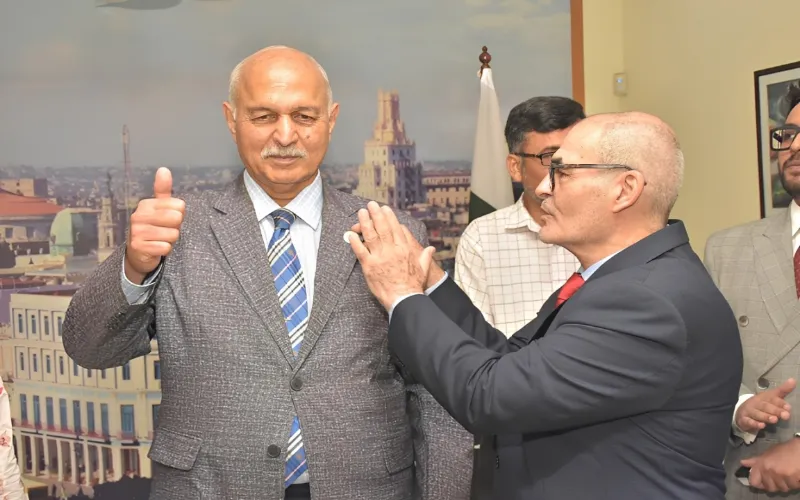
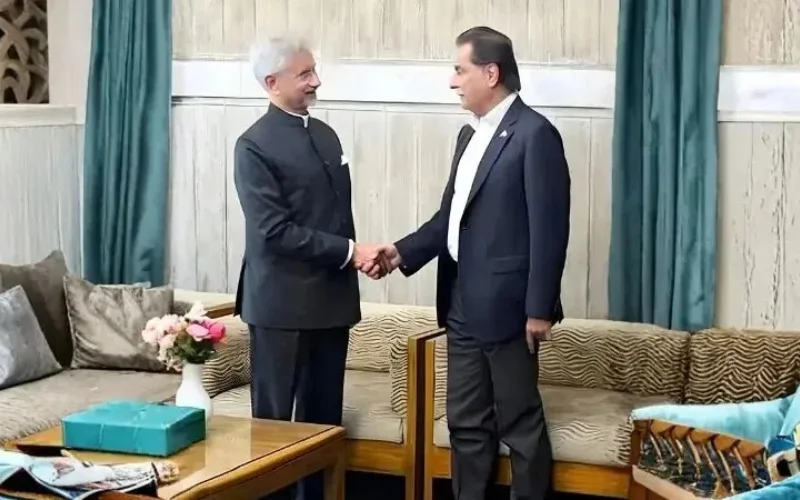
Pakistan’s National Assembly Speaker Ayaz Sadiq and India’s External Affairs Minister S. Jaishankar exchanged greetings on the sidelines of the state funeral of former Bangladeshi Prime Minister Khaleda Zia, marking the first high-level interaction between the two countries since their aerial hostilities in May 2025.
Pakistani officials described the interaction as initiated by Jaishankar, while Indian media largely portrayed it as a routine diplomatic courtesy at a formal international event. Nevertheless, the moment drew significant attention across South Asia, given the near-total absence of contact between New Delhi and Islamabad in recent months.
According to Sadiq, who later recounted the exchange to a private television channel, Jaishankar greeted delegations from Nepal, Bhutan and the Maldives before approaching him.
“He walked up to me and said hello, at which I stood up, and he introduced himself and shook hands with a smile,” Sadiq said. “As I was about to introduce myself, he said, ‘Excellency, I recognise who you are and no need to introduce yourself.’”
Photographs of the handshake were released by Sadiq’s office and shared on social media by Muhammad Yunus, chief adviser of Bangladesh’s interim government. Notably, the images circulated primarily through Pakistani and Bangladeshi sources, with no official release from the Indian side.
Sardar Ayaz Sadiq, Speaker of the National Assembly of Pakistan, exchanges greetings with Indian External Affairs Minister S. Jaishankar in Dhaka on Wednesday ahead of the funeral programme of former Bangladesh Prime Minister Khaleda Zia. pic.twitter.com/1eLz0i8nAi
— Chief Adviser of the Government of Bangladesh (@ChiefAdviserGoB) December 31, 2025
Symbolism Amid Hostility
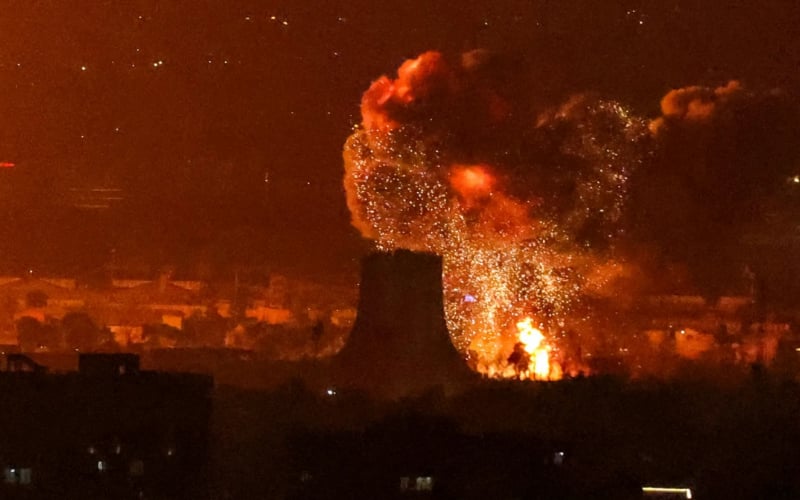
The brief exchange stood in sharp contrast to the atmosphere of open hostility seen just months earlier. In September, India’s cricket team declined to shake hands with Pakistani players during the Asia Cup final, underscoring the depth of bilateral animosity. More seriously, a four-day air conflict in May 2025 involving fighter jets, drones and artillery brought the two countries to the brink of a wider confrontation before U.S. mediation helped secure a ceasefire.
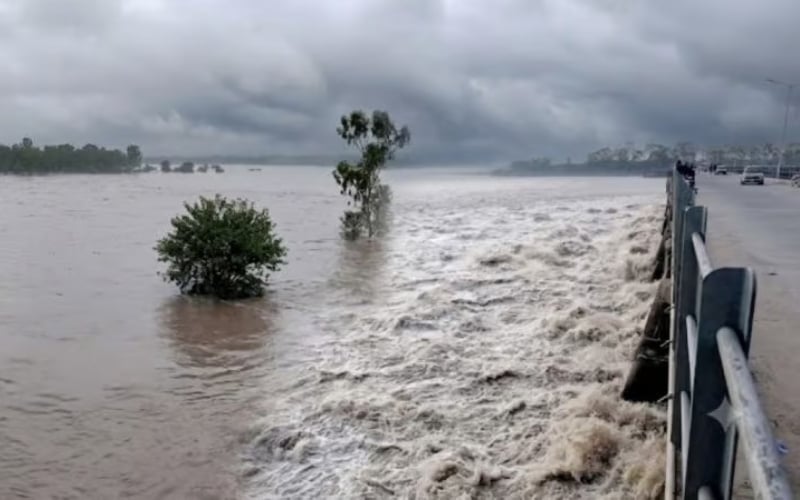
Relations deteriorated sharply after an April 2025 attack in Indian-administered Kashmir that killed 26 civilians. India blamed Pakistan, withdrew from the six-decade-old Indus Waters Treaty, and carried out missile strikes inside Pakistani territory. Islamabad denied involvement in the attack and responded militarily, triggering the most intense fighting between the rivals in nearly three decades.
Against this backdrop, analysts in Pakistan described the Dhaka handshake as a “welcome development” and a potential signal that both sides may be exploring minimal engagement to prevent future escalation.
War of Words Continues
Despite the symbolic gesture, rhetoric on both sides remains hardline. Speaking at an event in Madras on Friday, Jaishankar referred to India’s “bad neighbors,” saying New Delhi had a right to defend itself.
“When you have bad neighbors… if you look to the one to the West, if a country decides that they will deliberately, persistently, unrepentantly continue with terrorism, we have a right to defend our people,” he was quoted as saying by The Hindu.
Pakistan swiftly rejected the remarks. Foreign Office spokesman Tahir Andrabi accused India of deflecting attention from its own actions.
“India’s documented involvement in promoting terrorist activities in the region, particularly in Pakistan, is well known,” Andrabi said, citing the case of Kulbhushan Jadhav as evidence of alleged state-sponsored espionage and terrorism.
Jadhav, an Indian navy officer arrested in Balochistan in 2016, was sentenced to death by a Pakistani military court. India disputes the charges and has challenged the conviction at the International Court of Justice.
Cautious Optimism
Former Pakistani envoy to the United States and the United Nations, Sardar Masood Khan, said any interaction by Jaishankar would have required approval from India’s top leadership.
“Whatever prompted the handshake is good for the region, but there are many ifs and buts down the road,” he said.
The broader political context remains fraught. Pakistan has deepened ties with the United States, China, Saudi Arabia and Bangladesh, while India continues to face international scrutiny over its conduct during the May conflict. The suspension of the Indus Waters Treaty remains a major flashpoint, with Pakistan warning of serious humanitarian consequences.
Still, some analysts argue that even limited engagement could help reduce the risk of miscalculation.
“They can have a very basic, minimal agenda to define rules, red lines and guardrails,” said regional analyst Sayed. “Once that is done, a basic level of dialogue can be maintained.”
As South Asia enters 2026, it remains unclear whether the Dhaka handshake will evolve into meaningful diplomacy or fade as a symbolic footnote. For now, it stands as a rare moment of civility in an otherwise volatile relationship and a reminder that even small gestures can carry outsized diplomatic weight.