Balochistan’s so-called “human rights” organization, the Baloch Unity Committee (BYC), has been unmasked as a covert instrument for armed separatist groups, particularly Fitna al-Hindustan.
What presents itself as a soft, peaceful advocacy group is, in reality, deeply entrenched in recruitment, narrative-building, and societal-level influence to advance extremist agendas.
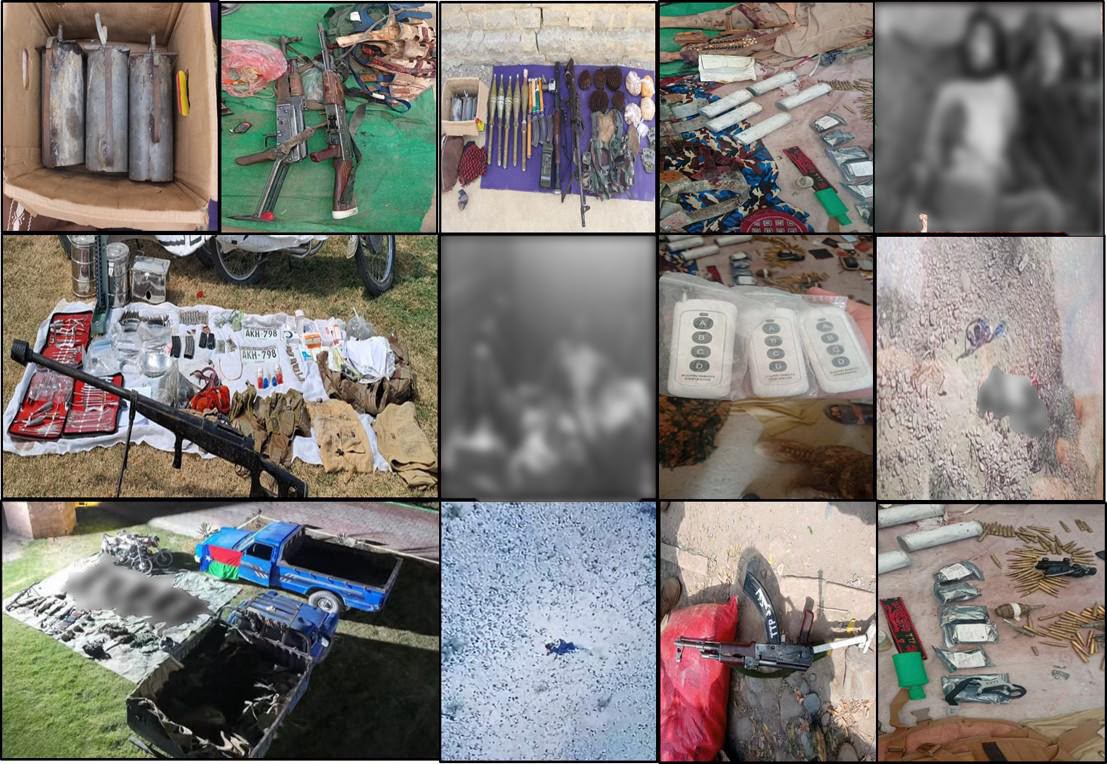
Law enforcement agencies confirm that the BYC’s activities are not speculative; they are part of a consistent record from 2025, now further substantiated by official evidence.
After the March 2025 Jaffar Express incident, the DG ISPR highlighted that proxy networks like BYC orchestrate propaganda campaigns to support terrorism in Balochistan.
The BYC, under the leadership of Maherng Baloch, reportedly attempted to forcibly claim the bodies of deceased militants from hospitals a move widely reported by media as a deliberate obstruction of legal processes and identification.
By framing such deaths as “enforced disappearances,” the group seeks to manipulate public perception before facts, identities, and affiliations emerge.
On May 23, 2025, DG ISPR explicitly stated that the BYC and its leadership act as facilitators and proxies for terrorist networks, weaponizing the narrative of enforced disappearances.
Recently, law enforcement agencies, including CTD and police, arrested Sajid Ahmed from Turbat, a sociology postgraduate and former lecturer, who confessed to his close ties with BYC leadership while assisting terrorist operations.
Additional arrests included three facilitators, all with prior links to the BYC. Among them, 18-year-old Sarfraz from Kharan was initially recruited into BYC, where he actively participated in protests and road blockades.
Recruitment often exploited familial loss; for instance, Bezan, another recruit, joined BYC after his brother was killed during an attack on the Levies Force. This demonstrates the strategic exploitation of grief and deprivation to fuel terrorism.
Authorities have also noted the BYC’s systematic use of minors as an entry point into militant activities, prompting the government to establish rehabilitation centers in Quetta and Turbat, focusing on psychological counseling, parental engagement, and social reintegration.
Experts highlight that BYC’s so-called human rights interventions are a tactical ploy to portray militants as victims immediately after attacks.
The organization’s operations, especially in Europe, reflect foreign sponsorship, structured propaganda, and coordinated international networking. The incidents in March–May 2025, corroborated by DG ISPR and DG CTD briefings in January 2026, demonstrate a continuous, organized official record of BYC’s activities.
Ultimately, the BYC functions not as an independent rights organization but as Fitna al-Hindustan’s active arm for recruitment, narrative control, and international propaganda, exploiting both youth and tragedies to further violent separatist agendas.