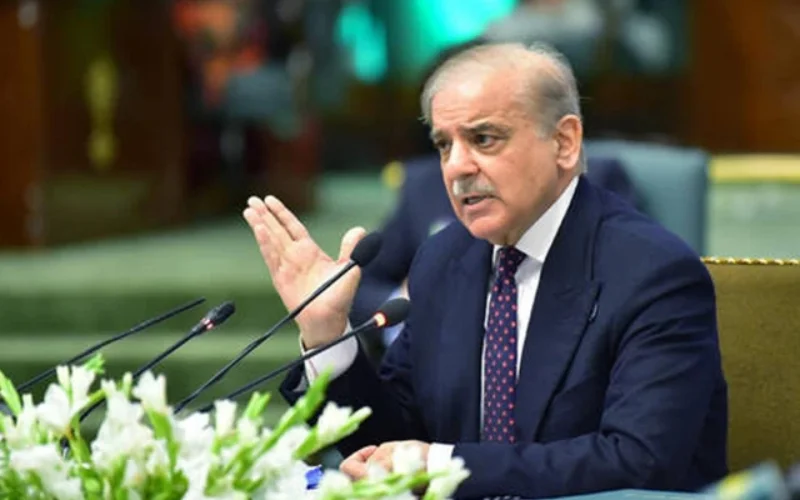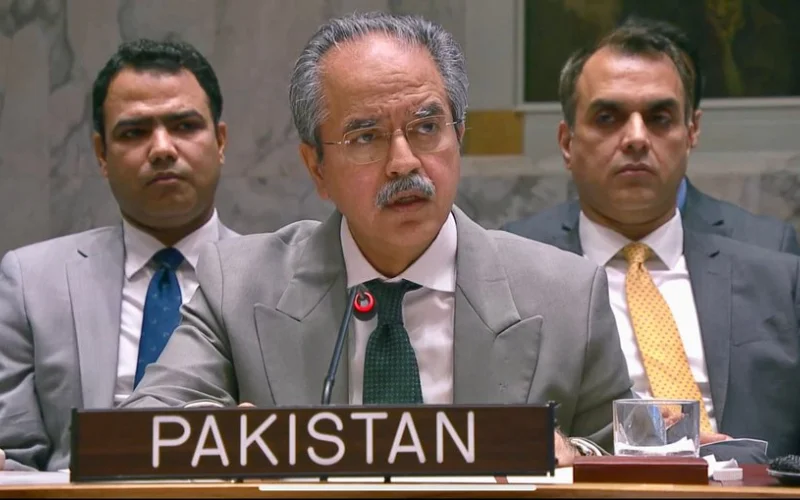
Pakistan’s Permanent Representative to the United Nations, Ambassador Asim Iftikhar, on Tuesday emphasized that a stable and peaceful Iran is in Pakistan’s national and regional interest, as he addressed a United Nations Security Council meeting on the situation in Iran.
Speaking at the Council, Ambassador Iftikhar expressed concern over the evolving situation in Iran and its wider regional implications. He said Pakistan was closely monitoring developments, stressing that instability could have serious consequences for regional peace and security.
Highlighting Pakistan’s principled position, the envoy underscored that the United Nations Charter clearly opposes the use of force and calls for the peaceful resolution of disputes. He reiterated Pakistan’s commitment to these principles and urged restraint by all concerned parties.
Ambassador Iftikhar described Iran as a “brotherly neighboring country” and noted that peace and stability in Iran are essential not only for Iran itself but also for Pakistan and the broader region. “A peaceful Iran is vital for peace in Pakistan and the region,” he said.
He also recalled the longstanding and historic relations between Pakistan and Iran, reaffirming Islamabad’s desire to see calm, stability, and constructive engagement prevail.
Pakistan, he concluded, will continue to support efforts aimed at de-escalation and dialogue in line with international law and the purposes and principles of the United Nations Charter.
Iran’s UN Envoy Condemns Sanctions, Warns Against Any Military Action
Iran’s representative to the United Nations Security Council on Tuesday delivered a sharply worded address rejecting international criticism of Tehran’s domestic situation, denouncing U.S. sanctions, and warning that any military action against Iran would violate international law and trigger a strong response.
Speaking during a Security Council meeting convened at the request of the United States, the Iranian envoy accused what he described as “so-called human rights organizations” of advancing Israel’s political agenda. He argued that such groups have distorted events inside Iran while ignoring the impact of long-standing sanctions on the Iranian population.
The representative said sanctions imposed on Iran over many years have caused significant harm to ordinary citizens, framing them as a form of collective punishment rather than a tool of diplomacy. He described the U.S. decision to convene a Security Council meeting on Iran as “shameful,” asserting that Washington lacks moral authority on the issue.
Addressing recent unrest, the envoy claimed that protesters in Iran had been attacked using tactics comparable to those employed by ISIS, and said Iranian security forces had sacrificed their lives to protect civilians. He rejected allegations of systematic repression, stating that the Iranian government respects the rights of peaceful protesters while acting against violence and unrest.
The Iranian diplomat further accused the U.S. government of inciting protesters toward rebellion and interfering in Iran’s internal affairs. He emphasized that any form of aggression against Iran would constitute a violation of international law and the United Nations Charter.
“There is no justification whatsoever for a military operation against Iran,” the representative said, warning that such actions would undermine the credibility of the UN system itself. He concluded by stating that Iran would respond decisively to any act of aggression.
The remarks come amid heightened tensions between Iran and Western nations, with ongoing disputes over sanctions, regional security, and human rights concerns continuing to dominate discussions at the United Nations.
U.S. Raises Iran Situation at UN Security Council Meeting
The United Nations Security Council held a meeting to discuss the situation in Iran, during which the United States strongly criticized the Iranian government and expressed support for the Iranian people.
Speaking at the session, the U.S. envoy said Washington “stands with the brave people of Iran,” citing what the United States described as widespread repression and violence by Iranian authorities. The envoy referred to the killing of a woman for not covering her head as an example of human rights abuses in the country.
The U.S. representative said President Donald Trump “believes in action,” and argued that Iran’s internal violence and repression have broader consequences for international peace and security. The United States also accused Iran of funding regional groups such as Hezbollah and Hamas.
According to the U.S. envoy, the Iranian government has grown weak and is increasingly relying on force to maintain control. While Iran speaks about dialogue, the envoy said, its actions contradict its words. The United States claimed that millions of Iranians are protesting against the government.
The U.S. envoy noted that Iran has expressed readiness to engage in negotiations with the United States but argued that Tehran’s behavior is inconsistent with genuine negotiations. “The world knows that today the Iranian regime is in its weakest state,” the envoy said.
Iranian officials did not immediately respond to the statements made during the meeting.
A meeting of the United Nations Security Council on the situation in Iran.
Address by the Russian Permanent Representative to the United Nations at the Security Council meeting.
We condemn foreign interference in Iran and other countries, said the Russian representative.
Russia condemns every attempt to interfere in Iran’s internal affairs, said the Russian representative.