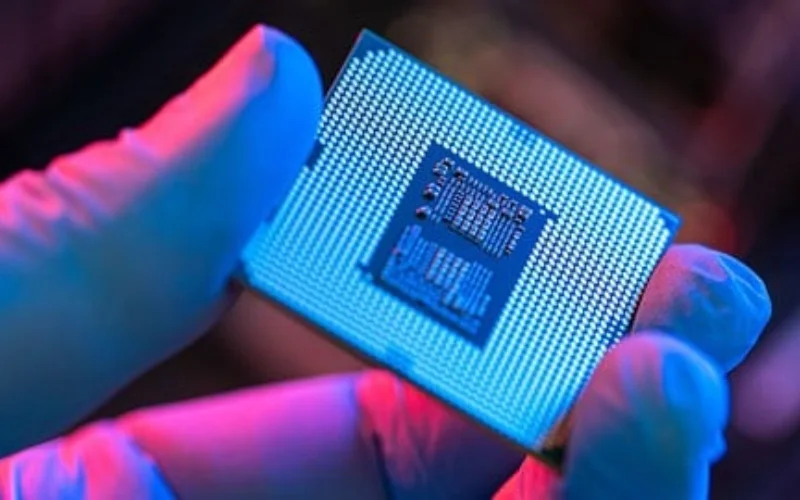
President Donald Trump announced a new 25% tariff on certain advanced artificial intelligence semiconductors, escalating U.S. trade measures aimed at bolstering domestic chip manufacturing and addressing national security concerns.
The tariff applies to advanced AI semiconductors that are produced outside the United States and pass through the U.S. before being exported to customers in other countries. Among the affected products are high-end computing chips such as NVIDIA’s H200 and AMD’s MI325X, which are widely used in AI training and data center applications, including shipments destined for China.
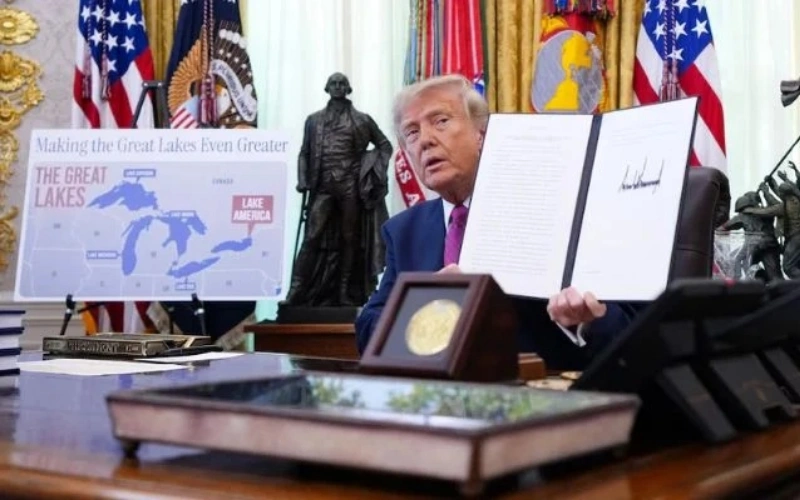
The measure was implemented through a presidential proclamation signed Wednesday, following months of speculation that the administration would move forward with semiconductor tariffs.
Under the proclamation, the president directed the U.S. Secretary of Commerce and the U.S. Trade Representative to jointly negotiate new agreements or continue existing negotiations with foreign partners to address what the administration describes as a threat to national security stemming from semiconductor imports.
The tariff includes carve-outs for chips imported to support the buildout of the U.S. technology supply chain. Advanced semiconductors used to strengthen domestic manufacturing capacity or produce semiconductor-derived products inside the United States will be exempt from the new duties.
The administration signaled that this action may be only the first step. According to the proclamation, broader tariffs on semiconductors, semiconductor manufacturing equipment, and derivative products could be imposed in the near future, potentially alongside a tariff offset program designed to further incentivize domestic production.
The move follows the completion of a Section 232 investigation by the Department of Commerce, which found that current levels and conditions of semiconductor-related imports threaten to impair U.S. national security. The investigation concluded that the United States lacks sufficient domestic capacity to meet demand for semiconductors and key manufacturing equipment, such as advanced lithography and etching tools, leaving the country heavily dependent on foreign suppliers.
Semiconductors are critical to the nation’s economic, industrial, and military strength, the administration said, warning that disruptions to import-reliant supply chains could strain both industrial output and defense readiness.
The White House framed the tariffs as part of a broader effort to restore U.S. leadership in semiconductor manufacturing, reduce reliance on foreign supply chains, and strengthen long-term economic and national security.