Water politics in South Asia has entered a volatile new phase following India’s suspension of the Indus Waters Treaty (IWT), a move that could significantly heighten regional tensions, according to The National Interest, a leading American foreign policy journal.
In a strongly worded analysis, The National Interest endorses Pakistan’s position that India’s recent actions undermine one of the world’s most durable water-sharing agreements. The journal argues that New Delhi’s suspension of treaty mechanisms and related measures risks transforming water into a strategic weapon in an already fragile region.
The report highlights India’s proposed Dul Hasti Stage II hydropower project as a step that allegedly violates the Indus Waters Treaty, which strictly regulates India’s use of the western rivers allocated to Pakistan. According to the journal, such projects, if pursued outside the treaty framework, could erode trust and destabilize regional water security.
The National Interest also warns that India’s reported suspension of hydrological data sharing contravenes international law and established treaty obligations. The sharing of river flow data, the journal notes, is essential for flood control, irrigation planning, and food security for millions of people downstream.
Citing international legal precedents, the analysis states that arbitration mechanisms have made it clear that India cannot unilaterally suspend the Indus Waters Treaty. The treaty, brokered by the World Bank in 1960, is described as a “fundamental guarantee of food security in South Asia,” particularly for Pakistan’s agrarian economy.
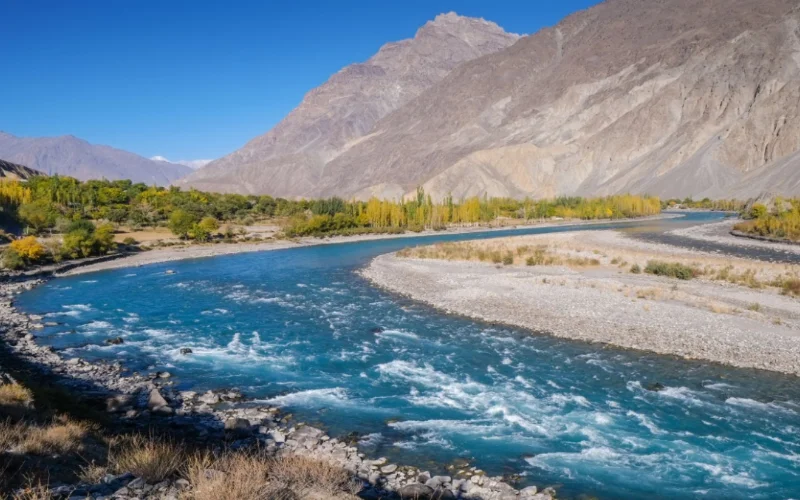
The journal further stresses that India remains legally bound to ensure the flow of water from the western rivers Indus, Jhelum, and Chenab to Pakistan. Any attempt to “weaponize water,” it argues, is unacceptable under international law and unlikely to withstand scrutiny by international courts.
Warning of broader consequences, The National Interest concludes that escalating water disputes could evolve into a major humanitarian threat in South Asia, a region already vulnerable to climate change, population growth, and political instability. The journal urges restraint and a return to treaty-based dialogue to prevent water from becoming the next flashpoint between the two nuclear-armed neighbors.