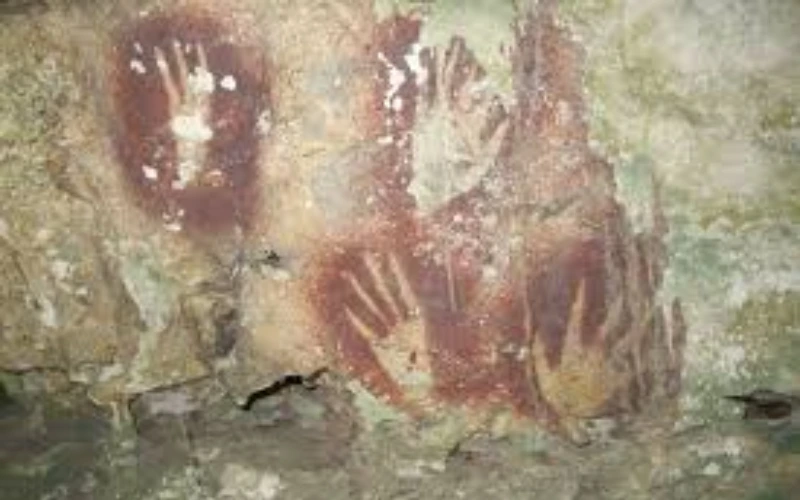
Archaeologists have uncovered what is believed to be the world’s oldest known cave art: a hand stencil dating back at least 67,800 years in a limestone cave on Muna Island, part of Indonesia’s Sulawesi region.
The discovery, detailed in a study published Wednesday in Nature, was made by an international team of Indonesian and Australian researchers. The artwork was found in Liang Metanduno cave, located within Sulawesi’s distinctive karst landscape.
Using uranium-series dating, scientists analyzed microscopic mineral layers on and beneath the painting to establish its minimum age. This finding surpasses previous rock art discoveries in the region by over 15,000 years.
“Our research indicates the cave was a hub of artistic activity for tens of thousands of years,” said the study. Evidence suggests paintings were created repeatedly over a period of at least 35,000 years.
The hand stencil itself is unusual, with deliberately narrowed finger outlines, suggesting a symbolic or cultural purpose. Researchers believe it may reflect unique artistic expression or social practices among early humans.
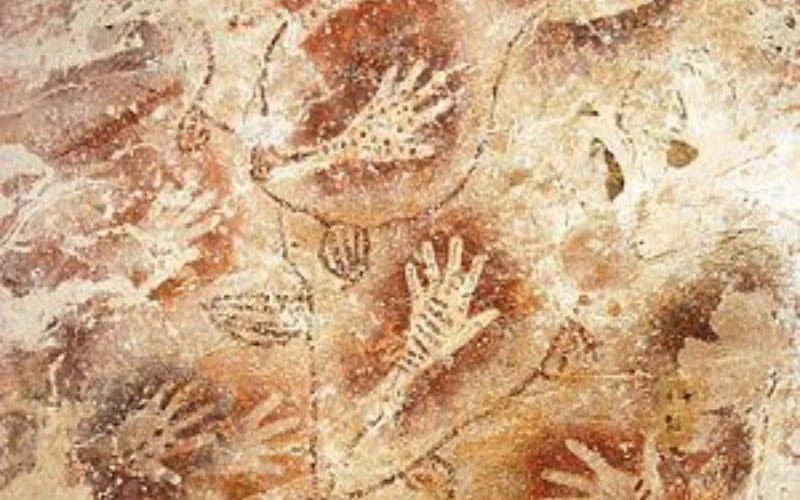
The findings also shed light on early human migration into Sahul, the ancient landmass connecting present-day Australia, New Guinea, and Tasmania. The team suggests the artists were likely ancestors of Indigenous Australians, supporting theories that modern humans may have reached Sahul by at least 65,000 years ago.
“This discovery not only pushes back the timeline of human artistic expression but also strengthens our understanding of how early humans spread across Southeast Asia and into Sahul,” researchers said.