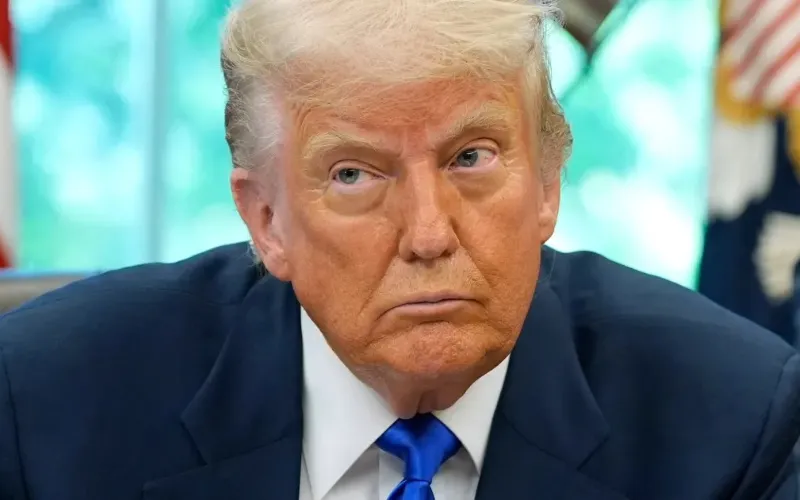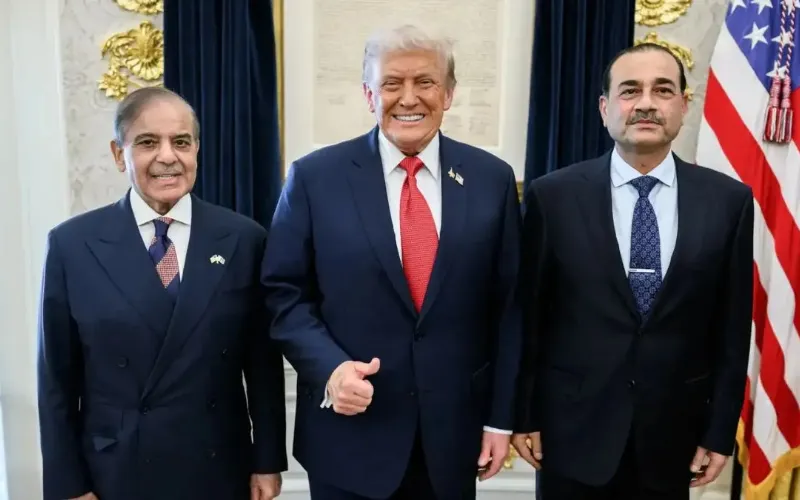
Prime Minister Shehbaz Sharif on Thursday signed the charter of the newly established Board of Peace (BoP), a U.S.-led international initiative chaired by President Donald Trump. The body, first proposed on the sidelines of the UN General Assembly in September, aims to promote peace, stability, and reconstruction in conflict-affected regions, with a primary focus on Palestine and Gaza.
The signing took place at the World Economic Forum (WEF) 2026 in Davos, Switzerland, following an address by Trump. Also present at the event were U.S. Secretary of State Marco Rubio, Middle East envoy Steve Witkoff, and Trump’s son-in-law Jared Kushner.
Pakistan Joins a Multinational Effort
Pakistan joined the Board alongside Saudi Arabia, Turkey, Egypt, Jordan, Qatar, the United Arab Emirates, Indonesia, Bahrain, Morocco, Argentina, Hungary, and the United States. Additional countries represented at the signing included Bulgaria, Kazakhstan, Kosovo, Armenia, Azerbaijan, and Paraguay.
Prime Minister Shehbaz Sharif emphasized Pakistan’s unwavering stance on Palestine: a free Palestinian state within pre-1967 borders, with Jerusalem as its capital, and strong opposition to occupation and collective punishment. Pakistan clarified that joining the Board does not imply participation in any military operations but reflects its commitment to active diplomacy on the Palestinian issue.
During the ceremony, a cordial exchange was noted between Prime Minister Sharif and President Trump, who also acknowledged Field Marshal Syed Asim Munir with a thumbs-up gesture, signaling recognition of Pakistan’s role in global affairs.
Who joined?
Pakistan, Saudi Arabia, Turkey, Egypt, Jordan, Qatar, United Arab Emirates, Indonesia, Bahrain, Morocco, Argentina, Hungary, United States, Kazakhstan, Vietnam, Albania, Armenia, Kosovo, Indonesia, Mongolia, Egypt, Bahrain and Belarus were the first to publicly join the board.
France was one of the latest countries to decline his offer Thursday, saying the board’s charter does not correspond with a United Nations resolution to resolve the war in Gaza (nor does it mention the Gaza mandate) and some of the charter’s elements were contrary to the UN charter, its Foreign Ministry spokesperson said.
Who didn’t joined?
Several Western countries chose not to sign the charter, including the U.K., France, Norway, Sweden, Slovenia, and Belgium. French officials expressed concerns that the Board’s charter “goes beyond the sole framework of Gaza” and could challenge the principles of the United Nations. The U.K. cited concerns over potential Russian participation in the body, while Belgium clarified that it never intended to sign the charter, correcting earlier announcements.
Which countries have rejected the BoP?
At least five countries – France, Denmark, Norway, Sweden and Slovenia – have confirmed they will not join. Swedish Prime Minister Ulf Kristersson confirmed the decision to reporters in Davos on Wednesday.
About the Board of Peace
The Board of Peace is governed by a three-tier structure:
Founding Executive Council – responsible for voting on budgets, policies, and senior appointments.
Executive Board – a seven-member body tasked with implementing the Board’s mission, including former UK Prime Minister Tony Blair, U.S. Secretary of State Marco Rubio, and Jared Kushner.
Chairman – Donald Trump, who holds final authority, veto power, and control over key decisions, including membership and executive actions.
Although the organization was initially framed as a Gaza-focused reconstruction mechanism, its 11-page charter outlines a broader mandate to promote peace and stability in areas affected or threatened by conflict. A specialized Gaza Executive Board, supported by Arab countries, will oversee governance, reconstruction, and long-term development in the region.
Funding and Membership
Countries wishing to become permanent members of the Board must contribute US$1 billion, controlled by Chairman Trump. Those who do not pay the fee serve a 3-year term. The Board will oversee critical areas such as governance capacity-building, regional relations, investment attraction, and capital mobilization to ensure sustainable peace and reconstruction.
While some major Western allies skipped the ceremony, Russia and China have received invitations but have not confirmed participation.
Trump has invited to join are two who are subject to International Criminal Court (ICC) arrest warrants for war crimes and crimes against humanity – Russian President Vladimir Putin and Israeli Prime Minister Benjamin Netanyahu. Trump has invited leaders of other countries with appalling human rights records to join his board.
Prime Minister Benjamin Netanyahu has accepted US President Donald Trump’s invitation to join the Board of Peace to be the board’s founding members.
The BoP represents a new approach to international peace efforts, combining high-level political engagement, financial resources, and a focus on practical reconstruction, with Pakistan taking a visible role in the process.