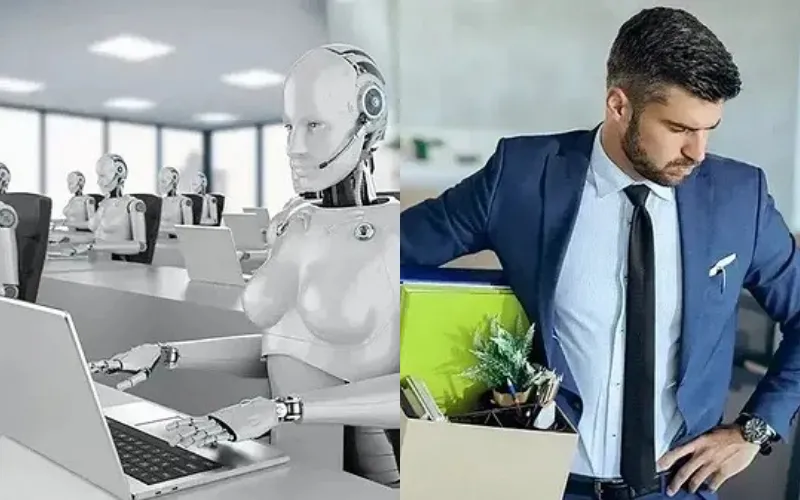
Microsoft’s AI chief, Mustafa Suleyman, has issued a striking forecast about the future of work, predicting that artificial intelligence could automate the bulk of white-collar jobs within the next 12 to 18 months.
Speaking to the Financial Times, Suleyman suggested that AI is rapidly approaching human-level proficiency across professional roles.
He stated, “White-collar positions whether in law, accounting, project management, or marketing will soon be largely managed by AI. The pace of change is accelerating, and the transformation is already visible.”
Suleyman highlighted software engineering as a prime example, noting that AI-assisted coding now accounts for the majority of code production, marking a significant shift in the way professionals interact with technology. “The dynamic between humans and AI has fundamentally evolved in just the past six months,” he added.
While AI has boosted productivity, it has also introduced “AI fatigue” among workers, particularly software engineers, who must contend with intensified workloads and the constant adaptation to new tools and technologies.
Microsoft continues to spearhead AI integration with products such as Copilot and substantial investments in OpenAI and Anthropic. Yet, many experts warn that AI could eventually replace entire workforces, reshaping the global economy.
Stuart Russell, co-author of a prominent AI textbook, cautioned that policymakers are already bracing for widespread unemployment, noting that AI threatens jobs across a spectrum ranging from surgeons to CEOs.
Dario Amodei, CEO and co-founder of Anthropic, added that AI could potentially eliminate half of all entry-level white-collar roles. He stated, “As creators of this technology, we have a responsibility to be transparent about its societal impact. Most people have yet to appreciate the scale of what’s coming.”
The warnings have also captured political attention. Senator Bernie Sanders described Suleyman’s predictions as a potential “economic earthquake”, urging a moratorium on new AI data centers to ensure that AI advances benefit workers rather than just corporate billionaires. Though such proposals face hurdles, they reflect growing concern over AI’s societal and economic consequences.
Despite these cautions, tech giants continue to invest heavily. In 2025 alone, companies poured hundreds of billions of dollars into constructing data centers, with support from former President Donald Trump, underscoring the relentless expansion of AI infrastructure even as debates about workforce disruption intensify.