The reported assassination of Iran’s Supreme Leader, Ayatollah Ali Khamenei, in joint US-Israel missile strikes has thrust the Islamic Republic into uncharted political waters, igniting intense speculation about the nation’s leadership trajectory and the succession process.
According to Iran’s Constitution, the demise of the Supreme Leader triggers the immediate formation of an interim leadership council. This temporary body assumes the full spectrum of authority until a permanent successor is designated.
The council is composed of the sitting president, the head of the judiciary, and a cleric handpicked by the Guardian Council through the Expediency Council, ensuring continuity amid the uncertainty.
Currently, President Masoud Pezeshkian and Judiciary Chief Gholam-Hossein Mohseni-Ejei occupy key positions within this provisional structure, although their powers remain strictly transitional.
The ultimate responsibility for appointing the next Supreme Leader rests with the 88-member Assembly of Experts, a cadre of elected Shia clerics chosen via public elections every eight years.
Candidates undergo rigorous vetting by the Guardian Council, making the process opaque and largely insulated from public scrutiny.
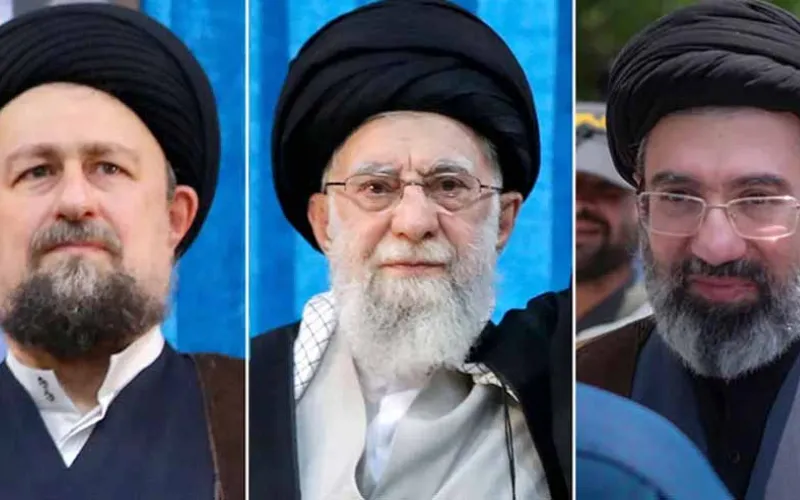
Prior to Khamenei’s death, former President Ebrahim Raisi had been widely regarded as a likely successor. In the current vacuum, speculation now swirls around Mojtaba Khamenei, the 56-year-old son of the Supreme Leader, despite his lack of formal governmental experience.
This historic juncture represents only the second leadership transition in the Islamic Republic’s 44-year history, the first occurring in 1989 following the death of Ruhollah Khomeini, when Ali Khamenei ascended as Supreme Leader.
In the weeks ahead, Iran faces a crucible moment, navigating one of the most pivotal and sensitive leadership transitions of its modern era, with implications that could reverberate across the region and redefine the nation’s political landscape.