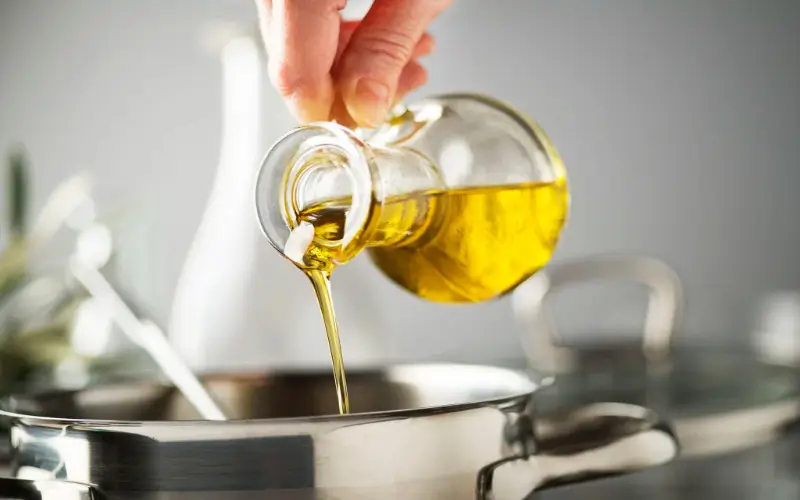
Using cooking oil in daily meals is common in most households, but medical experts have warned that excessive use can lead to serious health problems.
Although oil improves the taste and aroma of food and makes cooking easier, using too much of it can increase the risk of heart disease and other illnesses. In recent years, the rise in heart attacks and other heart-related issues has made this concern even more serious.
According to health experts, the right amount of oil depends on a person’s weight, age, and lifestyle. However, for a healthy person, about two tablespoons of oil per day, which is around 25 to 30 milliliters, is considered enough. On a weekly basis, this amount should stay between 150 and 170 milliliters. This limit only applies to oil used in cooking, while fried foods and processed items are not included in it.
Experts say that using too much oil can increase bad cholesterol in the body, which may lead to blocked arteries, heart attacks, and strokes. It can also raise the risk of obesity, belly fat, high blood pressure, and diabetes. Once excess fat starts building up in the body, it becomes difficult to reduce it.
Doctors also advise people not to depend on just one type of oil. Instead, different healthy oils should be used in a balanced way. Oils such as olive oil, mustard oil, sunflower oil, peanut oil, and soybean oil are considered better because they contain healthier fats.
Experts also recommend using cold-pressed oils when possible and avoiding oils that contain trans fats. As for ghee, they say it is not necessary to stop using it completely, but it should only be used in small amounts and occasionally to stay healthy.