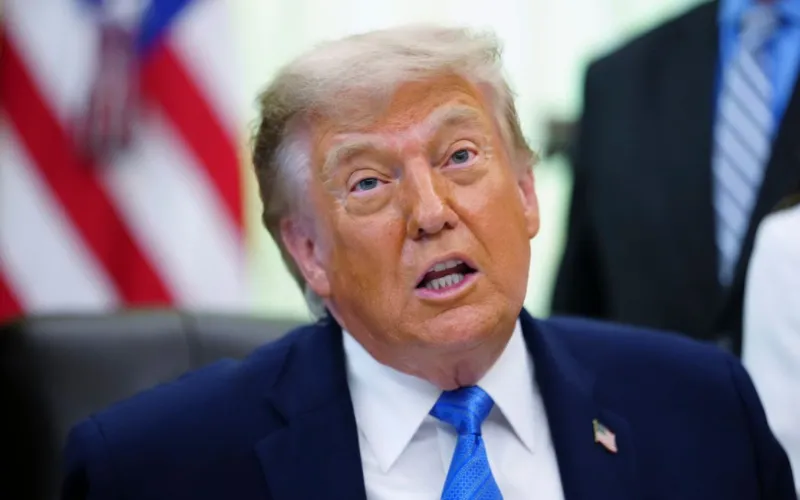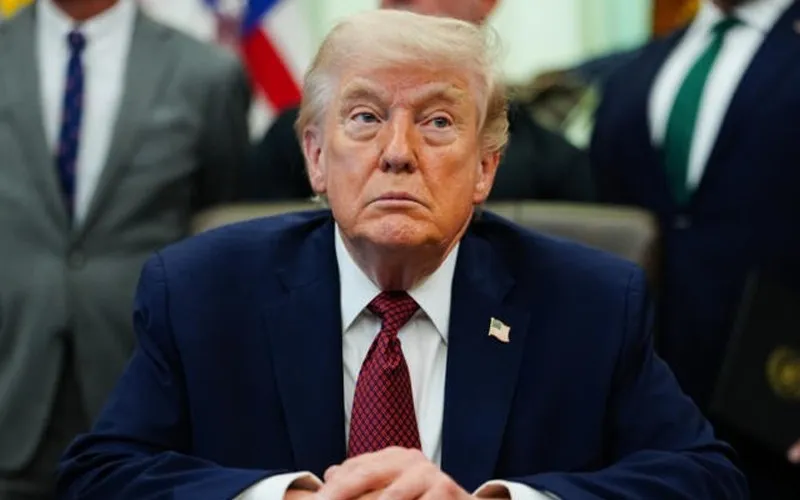
US President Donald Trump has urged caution in ongoing negotiations with Iran, stating that he has instructed his team not to “rush” into any agreement, even as diplomatic efforts between Washington and Tehran show tentative progress toward ending the prolonged conflict in the Middle East.
The United States and Iran have maintained a ceasefire since April 8, while international mediators continue efforts to reach a negotiated settlement. However, tensions remain high, with Iran continuing restrictions on Gulf shipping routes and the United States maintaining a blockade on Iranian ports.
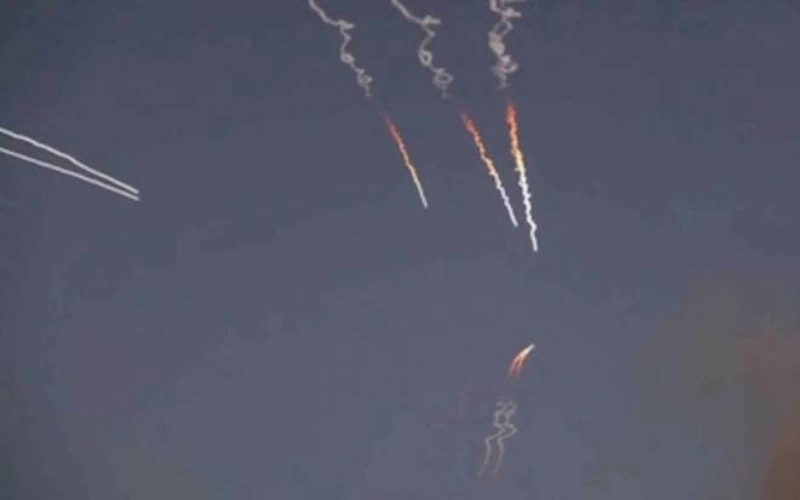
The conflict escalated after the United States and Israel launched strikes on Iran on February 28, prompting Tehran to respond with missile and drone attacks across the region, significantly widening regional instability.
In a social media statement, Trump said he had instructed his negotiators not to rush, stressing that “time is on our side.” He further stated that restrictions on Iranian shipping will remain in place until a final agreement is reached, formally certified, and signed.
— Rapid Response 47 (@RapidResponse47) May 24, 2026
Earlier, Trump suggested that a deal had “largely been negotiated,” pending final agreement between the United States, Iran, and other involved parties. However, he later clarified that discussions are still ongoing and not yet complete.
Iran’s Tasnim News Agency reported that key components of a potential agreement remain unresolved, particularly the issue of frozen Iranian assets held under sanctions.
US Secretary of State Marco Rubio, speaking to The New York Times, said that while a diplomatic framework has gained regional support, a comprehensive nuclear agreement cannot be finalized quickly, emphasizing that “it cannot be done in 72 hours on the back of a napkin.”
Read More: Marco Rubio says some progress made in US-Iran talk
Rubio noted that several regional countries have endorsed the current diplomatic approach and expressed readiness to move forward, though significant technical and political differences remain under discussion.
Israeli Prime Minister Benjamin Netanyahu, a close US ally, said he and President Trump agree that any final deal must completely eliminate Iran’s nuclear threat.
Iranian officials have confirmed the existence of a draft framework but said discussions over the nuclear programme remain unresolved and have been postponed for 60 days after any eventual agreement.
President Masoud Pezeshkian reiterated Iran’s position that it does not seek nuclear weapons, although it remains unclear whether this assurance will be formally included in a final agreement.
According to Iran’s Fars News Agency, proposed arrangements include the temporary easing of sanctions on oil, gas, and petrochemical exports during the negotiation period, allowing Iran limited economic relief.
A high-level regional call on Saturday brought together leaders from Saudi Arabia, the United Arab Emirates, Qatar, Egypt, Jordan, Bahrain, Turkey, and Pakistan, alongside US President Donald Trump, to review ongoing diplomatic efforts.
Pakistan, which previously facilitated direct US–Iran engagement in April, has expressed willingness to host another round of talks in the near future, according to Prime Minister Shehbaz Sharif.
He also noted that Chief of Army Staff and Chief of Defence Forces Field Marshal Asim Munir, who recently visited Tehran, participated in the call, which he described as an important step toward advancing regional peace efforts.
Sharif said the discussions provided a constructive platform to support continued diplomacy aimed at achieving lasting stability in the region.