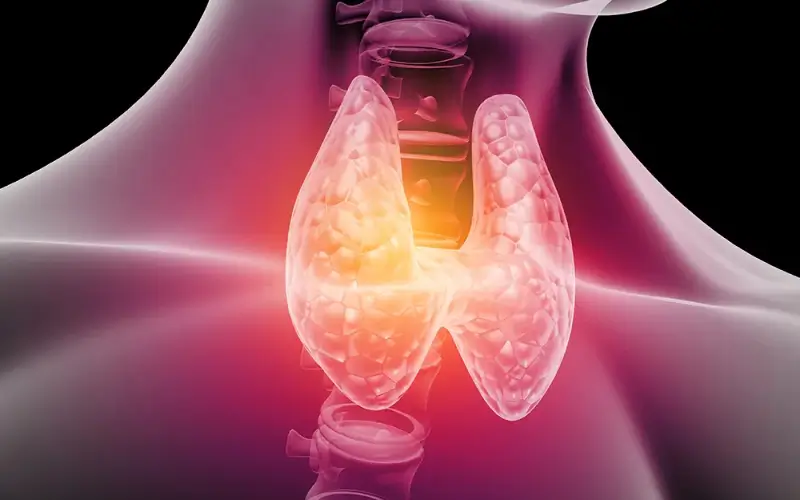
One of the most common health issues worldwide is thyroid disease, affecting millions of people. Thyroiditis is the medical term used for inflammation of the thyroid gland, which often begins with swelling.
When the thyroid gland becomes inflamed or damaged, it can affect the production of two important hormones, thyroxine (T4) and triiodothyronine (T3).
These hormones play a key role in regulating the body’s metabolism and help convert food into energy needed for daily activities. Disruptions in hormone production can lead to various health problems and affect the body’s normal functioning.
Some of the different types of thyroiditis that a person can suffer from are listed down below:
Hashimoto’s Thyroiditis:
It is an autoimmune disorder where the defense mechanism of your body mistakenly attacks the thyroid gland and its cells. As a result, the gland becomes unable to produce thyroxin.
Subacute Thyroiditis:
Subacute thyroiditis is an acute disease of the thyroid gland caused by a virus. It is a painful condition which often leads to upper respiratory tract infections as well.
Acute Thyroiditis:
Different from subacute thyroiditis, it is usually the inflammation and impairment of the thyroid gland due to bacterial infection of the organ.
Postpartum Thyroiditis:
Also known as silent or painless thyroiditis, occurs in women when their thyroid gland inflames after giving birth to a baby. It is rare and only affects a small ratio of women.
Drug induced Thyroiditis:
Some drugs that a person consumes can also stimulate inflammation of the thyroid gland as either a side effect of the drug or the immune response of the body. A few of these chemicals include, amiodarone and lithium while the immune response occurs because of interferons and cytokines.
Radiation induced thyroiditis:
Its is a painful type of thyroiditis as a result of radioactive therapy to treat hyperthyroidism (excess of thyroid hormone) head and neck cancer as well as lymphoma (a broad term for cancer of the lymph system).