Hospitals across Africa could face major financial pressure as supplies of halothane, a widely used anaesthetic for children surgeries, are expected to run out by the end of 2027.
Medical experts and charities warn that many health facilities are struggling to prepare for the change. Halothane has been commonly used in sub-Saharan Africa because it is much cheaper than sevoflurane, a newer anaesthetic.
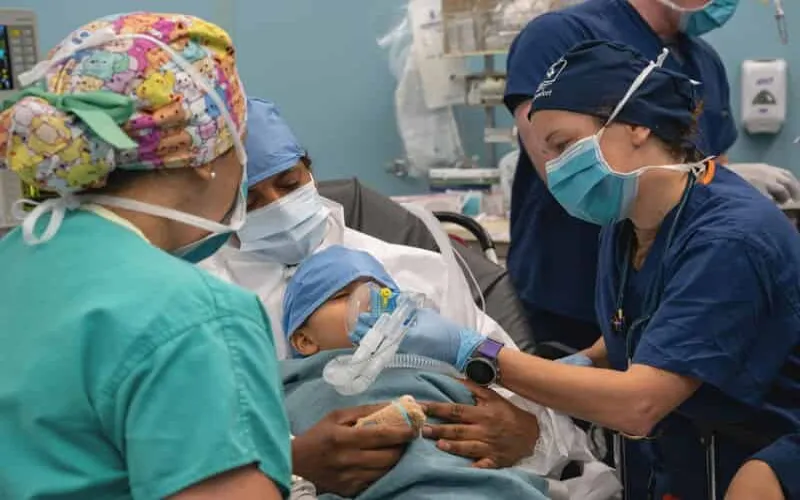
Doctors say the shortage is creating serious concerns for hospitals that perform large numbers of operations on children. Smile Train, a charity that supports surgeries for cleft lips and palates, said the issue is especially important because most of the patients it helps are children. The organization carries out more than 100,000 surgeries each year and wants to ensure patients continue to receive safe treatment.
Many larger hospitals have already switched to sevoflurane. However, most health facilities in Africa still depend on halothane. The transition is proving difficult because many hospitals need new anaesthesia machines, which can cost tens of thousands of dollars. Health experts say the situation has also exposed years of limited investment in anaesthesia services.
Medical professionals in Zambia said the announcement of halothane production shutdown caused widespread concern among healthcare providers. They explained that hospitals now need to upgrade equipment and train staff to use the new anaesthetic safely and efficiently.
The challenge is even greater in rural areas, where resources are already limited. In many African countries, anaesthesia is often provided by trained health workers rather than doctors. As a result, additional training will be needed to help staff use new medicines correctly and avoid unnecessary waste.
In 2024, the World Federation of Societies of Anaesthesiologists urged African governments to prepare funding for the transition. However, healthcare groups say progress has been slower than needed. While countries such as Uganda and Zambia have taken positive steps, experts believe much more support is required.
The shift to a new anaesthetic is expected to add millions of dollars to healthcare budgets that are already under pressure. Recent cuts in foreign aid from several western countries have made the situation more difficult. Doctors warn that some hospitals may be forced to reduce the number of surgeries they can perform if funding is not available.
Health experts are particularly worried because Africa has the world youngest population. The United Nations estimates that by 2050, one in four children worldwide will live in Africa. At the same time, infant mortality rates remain high in many countries across the continent.
Smile Train said it will continue supporting hospitals during the transition. However, the charity stressed that governments must take a leading role in addressing the problem. Experts say stronger investment in equipment, training, and healthcare systems will be necessary to ensure children continue to receive safe surgical care after halothane supplies are exhausted.