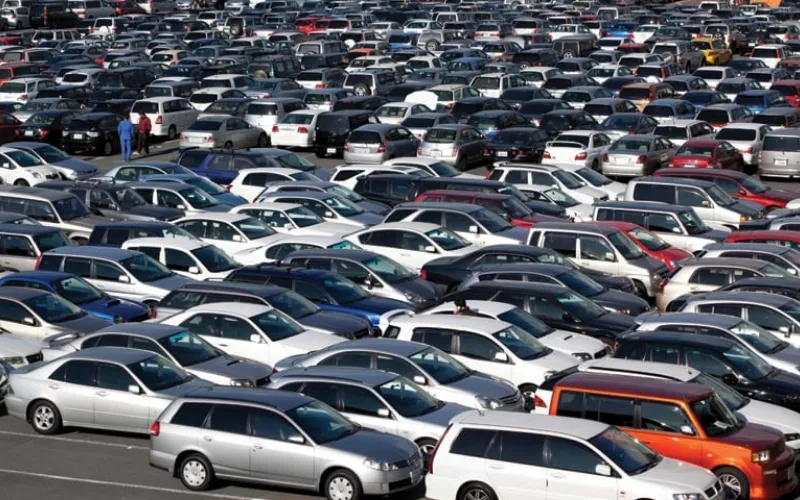
LAHORE: The Ministry of Commerce has issued fresh directives introducing regulatory clarifications along with a conditional, one-time waiver for used vehicles imported under the Gift and Transfer of Residence schemes, in an effort to ease congestion and clearance delays at ports.
The decision, however, has sparked strong opposition from the local automotive industry, which has raised concerns over potential financial losses, regulatory loopholes, and safety risks for consumers.
In an official memorandum, the ministry clarified the status of Pre-Shipment Inspection (PSI) certificates, confirming that documents issued by EAA Company (Pvt) Ltd and Auto Terminal Pak (Pvt) Ltd through their Japanese principals will be accepted as valid.
Both entities are registered with the Pakistan Standards and Quality Control Authority (PSQCA) for automotive inspection compliance.
To strengthen oversight, the Federal Board of Revenue (FBR) and customs authorities have been instructed to verify all inspection certificates directly with the companies’ local offices, which will remain legally responsible for ensuring compliance with environmental, safety, and quality standards.
In a separate statutory notification issued under the Imports and Exports (Control) Act, the government approved a one-time waiver for vehicles shipped under a Master Bill of Lading between January 16 and March 9, 2026. The exemption temporarily relaxes the pre-shipment inspection requirement under SRO 61(I)/2026.
Officials emphasized that the waiver is limited in scope and does not constitute a broader relaxation of import regulations.
Customs authorities have also been directed to strictly exclude vehicles classified in Japanese auction sheets as Below Average (Grade 3), Poor Condition (Grade 2), Repaired Accident (Grade R), or Minor Accident Repair (Grade RA), to prevent the entry of unsafe or structurally compromised vehicles.
The local automotive sector has strongly criticised the move, terming it a sudden policy shift that could undermine domestic production and disrupt market stability.
Industry estimates suggest that nearly 15,000 vehicles may enter the country under the waiver window an amount comparable to the annual sales volume of a major local manufacturer.
Stakeholders argue this could significantly weaken local assembly operations already operating under pressure.
Experts further caution that the measure may lead to an estimated $180 million outflow impact on the economy, alongside Rs22 billion in losses for auto parts manufacturers and around Rs8 billion in lost tax revenue.
With local assembly plants reportedly running at nearly 50% capacity, analysts warn that repeated policy reversals in the auto sector could erode investor confidence and create long-term uncertainty for industrial growth.