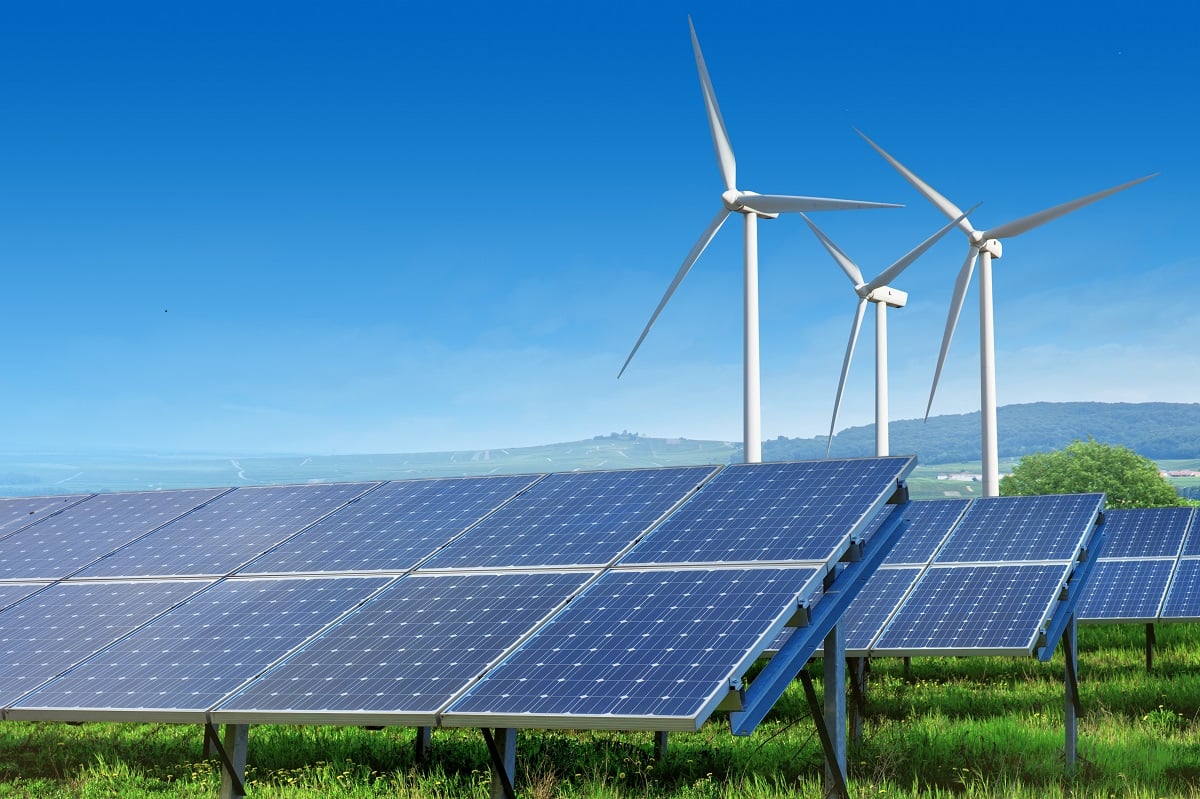
KARACHI: Pakistan’s power sector regulator is evaluating a proposal to add a 269-megawatt wind-and-solar hybrid power plant developed by JCM Power Corporation of Canada to the country’s long-term generation plan.
The project would supply Karachi’s K-Electric network and displace hundreds of megawatts of wind capacity previously slated for construction elsewhere in the system.
The National Electric Power Regulatory Authority (NEPRA) is evaluating the addendum to the Integrated System Plan 2025-35, the 10-year roadmap for generation and transmission expansion prepared by the Independent System and Market Operator, or ISMO.
ISMO submitted the addendum July 14, requesting that the 269-MW project split between 175 MW of wind and 94 MW of solar generation be designated as an optimized candidate plant in the Indicative Generation Capacity Expansion Plan, the generation component of the broader system plan. The facility would be built in Thatta district, Sindh, and would feed directly into K-Electric’s network.
The project has a longer history in Pakistan’s planning process. K-Electric originally proposed a 220-MW version of the plant during development of the current Integrated System Plan, but it failed to get selected when planners ran their least-cost optimization model for the 2025-35 period.
Pakistan’s National Task Force on Energy later supplied revised technical and financial data for the same site, by then rebranded the JCM 269 MW Hybrid Dhabeji Project, and asked ISMO to rerun the analysis.
The revised numbers were markedly more favorable. Dependable capacity rose from 220 MW to 269 MW, and the plant’s estimated cost of capital fell from 10% to 7.36%, according to a comparison table included in the addendum.
Fixed operating and maintenance costs dropped from roughly $67 per kilowatt-year to about $16.50, and projected transmission costs fell by more than half, though overall capital costs per kilowatt rose slightly. The plant’s earliest availability also shifted a year later, to 2027.
With all previously committed power plants held constant, ISMO reran its optimization model using only the updated Dhabeji parameters. This time, the plant was selected for construction in fiscal year 2027.
Wind Capacity Elsewhere Scaled Back
Because system planners build the cheapest combination of generation that meets demand, adding the now-competitive hybrid project pushed other, costlier wind projects out of the model. ISMO’s addendum shows candidate wind capacity was reduced by a combined 543 megawatts i.e. 465 MW in National Grid Company territory and 78 MW within K-Electric’s system, concentrated mainly in the early 2030s.
Total capacity additions planned for the 2025-35 period fell by 274 MW overall, from 16,680 MW to 16,406 MW, the filing states.
ISMO’s modeling also found the change would lower total system costs. The present value of the reference-case expansion plan fell to $46.76 billion from $47.13 billion after incorporating the Dhabeji project on its revised terms, according to a cost comparison.
The addendum, endorsed by ISMO’s senior executive director for planning, executive director for planning and Chief Executive Officer Syed Imtiaz Hussain Shah, recommends that any eventual power purchase agreement for the project stick strictly to the technical and financial terms used in the analysis including the 269-MW capacity, 2027 commissioning date, 37% plant factor and 7.36% cost of capital.
It also calls for the wind-capacity reductions to be reflected in future procurement planning for both grid systems and for the treatment to carry into next year’s plan update.
Gwadar Backup Plant Moves Forward
The Dhabeji filing is not the only recent change to the 2025-35 system plan. In a separate action this spring, ISMO asked NEPRA to fold in a standalone reliability plan for Gwadar, the Arabian Sea port city whose electricity supply depends almost entirely on imports from Iran.
In an April 11 letter to NEPRA, ISMO’s Shah asked the regulator to treat a previously submitted “Reliability Enhancement Solution for Gwadar”.
It was developed by a committee including the Private Power and Infrastructure Board, National Grid Company, Quetta Electric Supply Company and NEPRA itself as an addendum to the main system plan, rather than approving it as a fully separate document as originally planned.
The request cited the deteriorating security situation in the region. “In light of recent geopolitical situation w.r.t Iran/USA/Israel war, the supply situation for Gwadar from Iran has become highly uncertain, since the possibility of attacks on Iranian power plants have publicly been signaled,” ISMO wrote, warning that a prolonged disconnection or curtailment of Iranian supply would seriously compromise power to the port at a time when Gwadar’s operations have become more strategically important.
Underlying data in the committee’s report show why officials are concerned. The Polan interconnection that supplies Gwadar’s critical grids was completely unavailable for about 130 hours in 2024 and 246 hours in 2025, with broader supply shortfalls recorded for roughly a fifth to a quarter of all hours in those years.
Extending Pakistan’s national grid to the region was ruled out as impractical: the existing 800-kilometer, 132-kilovolt line from Khuzdar suffers severe voltage-stability problems, a planned voltage-support device at Pasni would raise deliverable power only to about 73 MW, and building a dedicated 220-kilovolt link would cost more than $500 million.
Iran’s supply contract with Pakistan’s Central Power Purchasing Agency also bars synchronized operation with the national grid.
The committee’s recommended fix is a locally sited, technology-neutral generation plant with 40 MW of firm capacity, capable of operating in an “islanded” mode independent of both the Iranian and national grids and able to black-start the local network after an outage.
Commissioning is targeted for July 2027. The plan was approved by the ISMO and QESCO boards in February and by ISMO’s board again in April, and it has been endorsed by a Ministry of Energy-led committee including the heads of PPIB, PPMC, CPPA-G, QESCO and NGC.