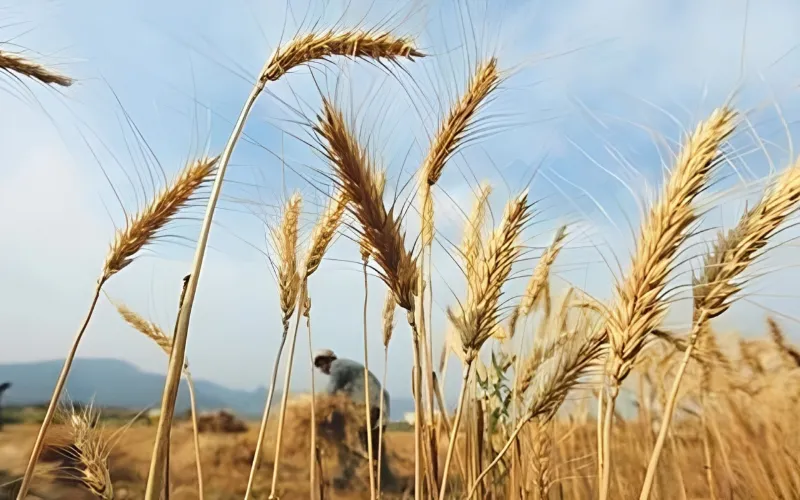
The Pakistan Flour Mills Association has raised concerns about future wheat availability and is pushing for faster approval of import permits.
The government, however, says current stock levels remain sufficient and that no immediate shortage exists. According to economic analyst Shahid Anwar, former secretary general of the Federation of Pakistan Chambers of Commerce and Industry, the real issue goes beyond whether Pakistan needs to import wheat right now.
He said the bigger question is whether the country has a transparent, reliable system for determining when imports are actually necessary versus when domestic supply can meet demand on its own.
Anwar said Pakistan’s wheat challenge isn’t only about supply levels. It also involves forecasting, coordination between agencies, and overall governance of the sector, with current trends suggesting a need for closer monitoring going forward.
Pakistan produced a record 31.8 million tonnes of wheat during the 2024-25 season. Production is now expected to fall to roughly 29 million tonnes for 2025-26, a decline of about 2.8 million tonnes, or roughly 9%, in a single season.
Several factors are contributing to the decline, including a smaller area of land under cultivation, shifting incentives for farmers, rising costs of production inputs, and ongoing water shortages. Uncertainty about expected returns has also shaped farmers decisions on how much wheat to plant this season.
Officials say total wheat availability currently stands at 33.47 million tonnes, compared to estimated demand of 33.58 million tonnes. The government points to this narrow gap as evidence that supplies remain manageable for now, even as production falls.
The disagreement between millers and the government highlights a broader challenge facing Pakistan’s wheat sector by balancing short term supply data with longer term planning.
With production trending downward and demand holding steady, analysts say the country’s ability to track and respond to shifts in supply will become increasingly important in the months ahead.
For now, the government maintains that current numbers don’t point to a crisis, while industry groups continue to call for a more proactive and transparent approach to managing import decisions before supply gaps become urgent.
The debate comes as Pakistan continues to navigate broader economic pressures, making the stability of staple food supplies like wheat a closely watched indicator for both policymakers and consumers alike.