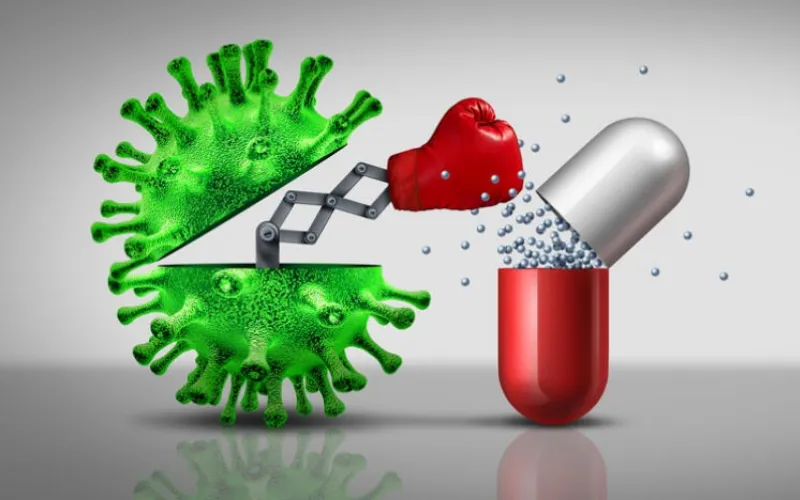
GENEVA: Medicines that once saved millions of lives are gradually losing their power as antimicrobial resistance (AMR) emerges as a growing global threat.
From common infections to life-threatening diseases, drug-resistant germs are making treatments more complicated and putting millions of people at risk worldwide.
According to the World Health Organization (WHO), antimicrobials are medicines used to prevent and treat infectious diseases in humans, animals and plants. These include antibiotics, antivirals, antifungals and antiparasitic medicines.
AMR occurs when bacteria, viruses, fungi and parasites develop the ability to resist these medicines, making treatments less effective or, in some cases, ineffective. As a result, infections become harder to control, increasing the risk of disease spread, severe illness, disability and deaths.
WHO warns that the growing resistance of microbes is limiting treatment options for patients and placing additional pressure on healthcare systems worldwide.
The impact of AMR extends beyond public health, affecting economies, societies and development. Drug-resistant infections can lead to longer hospital stays, higher medical costs and increased reliance on intensive care and advanced treatments.
Read More: Another child tests positive for HIV in Pathan Colony, as infections rise in Karachi
The growing threat also puts medical procedures such as surgeries, cancer treatments and organ transplants at greater risk, as effective antimicrobial medicines are often essential for preventing infections.
Experts identify the misuse and overuse of antibiotics as one of the leading causes behind the rise of AMR.
Using antibiotics without medical need, taking incorrect medicines, not completing prescribed treatment courses, poor access to clean water and sanitation, weak infection-control practices and limited diagnostic facilities are among the major factors contributing to antimicrobial resistance.
WHO has also warned that the development of new antibiotics is not progressing fast enough to replace medicines that are losing effectiveness, leaving fewer options available for treating resistant infections.
WHO data shows that in 2023, nearly one in six laboratory-confirmed bacterial infections worldwide were resistant to antibiotic treatments.
Between 2018 and 2023, resistance increased in more than 40% of monitored pathogen-antibiotic combinations, with an average annual increase of 5 to 15%.
The situation is particularly concerning in the WHO South-East Asia and Eastern Mediterranean regions, where approximately one in three reported infections showed resistance.
Drug-resistant bacteria, including E. coli and Klebsiella pneumoniae, are among the major concerns as they can cause severe bloodstream infections, sepsis, organ failure and death.
Antimicrobial resistance is not limited to bacteria, as drug resistance is also increasing among fungi, viruses and parasites.
WHO has identified Candidozyma auris, a dangerous fungal infection, as a growing global concern due to its ability to resist multiple antifungal treatments.
Drug resistance in viruses, including HIV, influenza and hepatitis B and C, is also creating new challenges for healthcare systems. Similarly, rising resistance among malaria-causing parasites is threatening efforts to control and eliminate the disease.
WHO is leading global efforts to tackle antimicrobial resistance through the Global Action Plan on Antimicrobial Resistance (GAP-AMR) 2026–2036.
The initiative aims to ensure equal access to effective medicines, promote responsible antimicrobial use, prevent infections and encourage research and innovation for new treatments.
WHO is working with the Food and Agriculture Organization (FAO), United Nations Environment Programme (UNEP), and World Organisation for Animal Health (WOAH) under the “One Health” approach, which recognizes the link between human, animal and environmental health.
Experts stress that controlling AMR requires stronger public awareness, responsible use of medicines, improved surveillance systems, better diagnostic facilities and investment in new treatments.
Without timely global action, antimicrobial resistance could make even common infections difficult to treat in the future, creating a major challenge for healthcare systems worldwide.