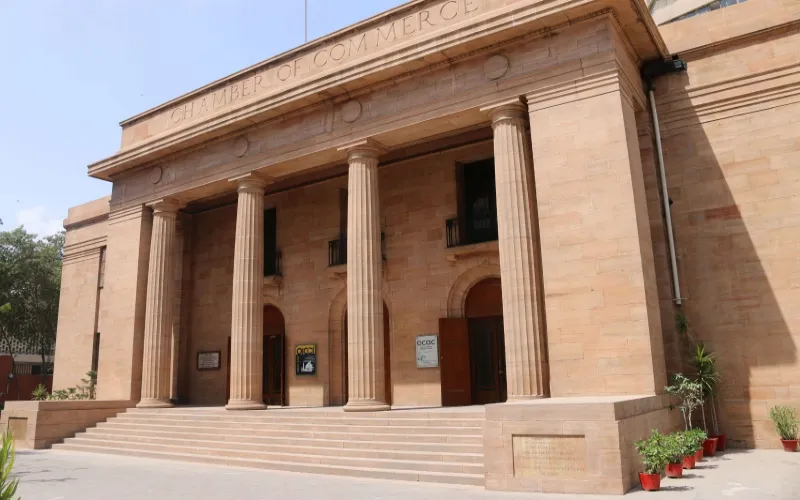
KARACHI: The Overseas Investors Chamber of Commerce and Industry (OICCI) has urged Pakistan to strengthen climate preparedness after devastating floods in Nepal killed hundreds and left thousands missing.
OICCI expressed deep sorrow over the disaster and offered condolences to the families and communities affected by the floodson Aug. 31. The chamber said the tragedy highlights the need for Pakistan to accelerate investment in climate resilience.
In a statement, OICCI said the disaster should serve as a serious warning for Pakistan. The country has repeatedly faced severe floods that have caused deaths, displacement, destroyed homes and damaged livelihoods.
OICCI said Pakistan should not wait for another disaster before taking stronger action. Instead, the country should invest in systems that can identify risks early and give vulnerable communities enough time to respond.
Pakistan remains highly exposed to climate-related threats. The country recorded its second-warmest year in 65 years in 2025, following its warmest year on record in 2024.
Pakistan’s rising temperatures, faster glacial melting and changing rainfall patterns are increasing risks for communities, infrastructure, agriculture and the wider economy.
The financial impact of climate change is also becoming harder to ignore. Federal Minister for Climate Change and Environmental Coordination Musadik Masood Malik said at OICCI’s Pakistan Climate Conference earlier this year that climate-related impacts cost Pakistan about 1% of its gross domestic product each year.
OICCI said recent efforts to improve predictive early-warning systems are increasingly important. These systems can help authorities prepare for glacial lake outburst floods, flash floods, urban flooding and heat waves.
However, the chamber said Pakistan needs to go beyond simply warning people when extreme weather is already approaching. The country needs a broader approach that can identify potential threats, locate vulnerable areas and help authorities and communities act before a disaster strikes.
OICCI also called for greater investment in climate-resilient infrastructure, predictive technology, emergency response capabilities and community preparedness. The chamber said stronger preparation could save lives, reduce damage and limit the economic losses caused by extreme weather.
The warning comes as climate-related disasters continue to pose serious challenges across the region. For Pakistan, the floods in Nepal offer another reminder of the urgent need to prepare for increasingly severe weather events.
OICCI said climate resilience is ultimately about protecting people and communities. Timely warnings can give families a better chance to reach safety, while stronger infrastructure can help protect homes, businesses and livelihoods.
The chamber reaffirmed its solidarity with the people of Nepal and all families affected by the devastating floods.