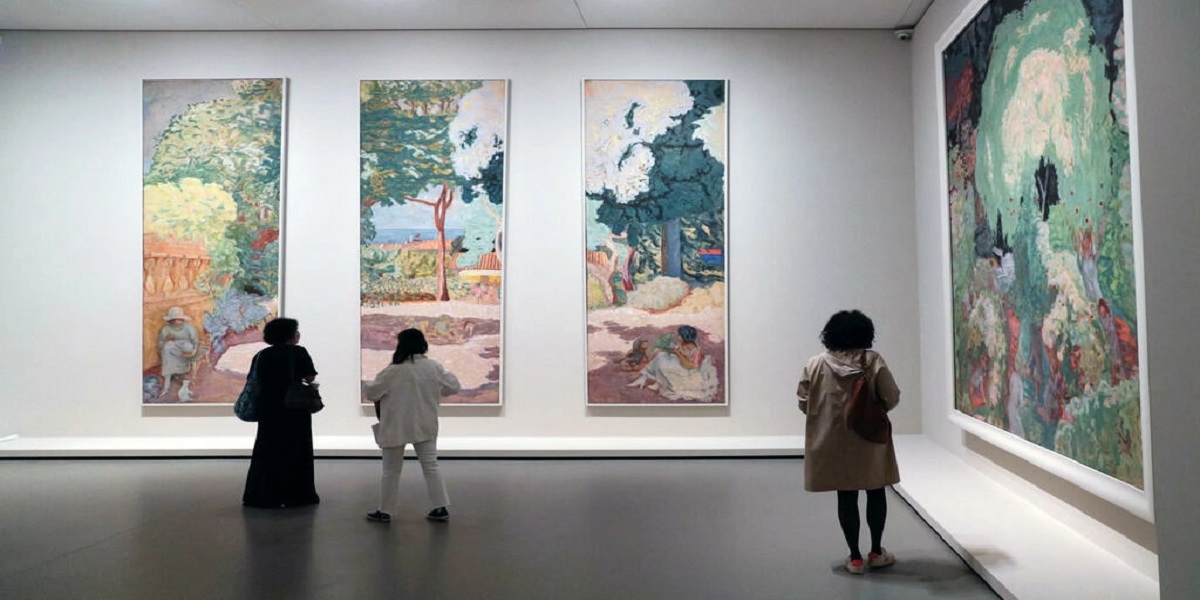
Due to the conditions produced by Russia’s invasion of Ukraine, two photographs from the smash hit Paris art exhibition of treasures gathered by Russian afficionado Ivan Morozov will remain in France, the French cultural ministry announced Saturday.
One painting, now held by a Russian tycoon targeted by Western sanctions, and another, owned by a Ukrainian institution, “will stay in France,” the ministry announced Saturday, putting an end to speculation over the paintings’ whereabouts after the exhibition’s record-breaking run.
According to AFP, the first image is a self-portrait by Russian artist Pyotr Konchalovsky, which is owned by Russian businessman Petr Aven, according to a person close to the situation who did not want to be identified.
Aven, a wealthy financier and banker, is seen as connected to Russian President Vladimir Putin and is the subject of Western sanctions imposed in the aftermath of Russia’s invasion of Ukraine.
In an official statement, the ministry stated that the painting “shall remain in France as long as its owner… is subject to an asset freeze.”
The second artwork, a portrait of Margarita Morozova by Russian painter Valentin Serov, is owned by the Fine Arts museum in Dnipro, Ukraine, and will remain in France “until the situation in the country permits its return in safety,” according to the ministry.
This was done “at the request of the Ukrainian authorities,” according to the statement.
Meanwhile, France is investigating the circumstances surrounding a third painting held by a private organisation tied to another Russian tycoon who has been sanctioned, according to the ministry.
According to AFP, the Magma foundation, which is related to Viatcheslav Kantor, owns this photograph. Sanctions on him have already been imposed by the United Kingdom because of his ownership of a fertiliser firm.
From late September through April 3, the exhibition was on display at the Louis Vuitton Foundation in Paris.
It is currently being disassembled, with the approximately 200 paintings being sent to Russian museums, where the majority of them are generally maintained.
Work by Impressionists and other European artists seldom seen outside of Europe, as well as famous pieces of Russian art, are among the collection’s highlights.
The Tretyakov and Pushkin museums in Moscow, as well as the State Hermitage museum in Saint Petersburg, currently house the majority of the Morozov collection.
However, because to the present limitations on air travel between Europe and Russia, there have been concerns regarding the return of the photos, which will take place via land rather than by air.