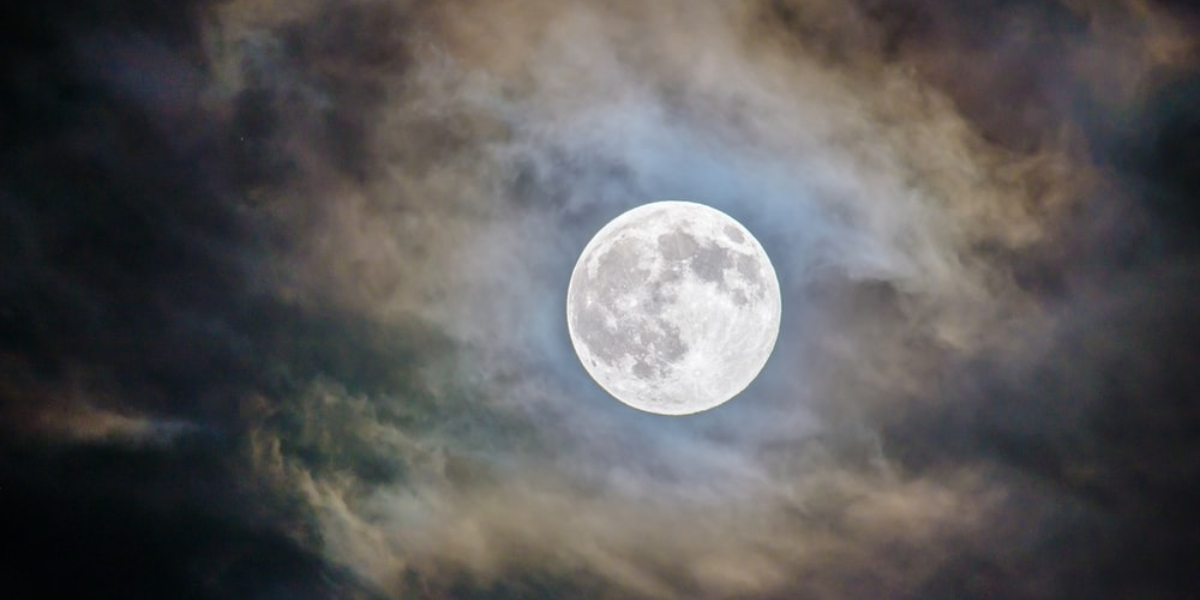
The fourth full moon of 2022 has arrived, and Brits are hoping for a bright and clear Easter weekend to allow for a clear view of April’s orb.
For millennia, the full moon has been shrouded in folklore and mysticism, inspiring everything from religious festivals to horror flicks and bizarre doomsday conspiracy theories.
It has also resulted in moon names permeating mainstream culture, with this month’s full moon nicknamed the “snow moon” — here’s everything you need to know.
According to the Royal Observatory, Greenwich, the full moon in February will occur on Saturday, April 16th, peaking at 7.55pm.
Although we usually think of a full moon once a month, the lunar cycle lasts little over 29.5 days, so there may be more than one (often referred to as a “blue moon”).
This also means that the full moon generally falls slightly earlier each month, with the full lunar timetable for 2022 as follows:
- 17 January
- 16 February
- 18 March
- 16 April
- 16 May
- 14 June
- 13 July
- 12 August
- 10 September
- 9 October
- 8 November
- 8 December
Why have names like ‘Pink Moon’ grown popular?
According to the American Farmer’s Almanac, which has evidently been selected as the authority on such matters, the full moon in March has come to be known as the “Pink Moon” in some areas.
According to the magazine, the moniker’s origins do not stem from its colour: “Although we wish this name had to do with the color of the Moon, the reality is not quite as mystical or awe-inspiring.
“In truth, April’s full Moon often corresponded with the early springtime blooms of a certain wildflower native to eastern North America: Phlox subulata—commonly called creeping phlox or moss phlox—which also went by the name “moss pink.”
“Thanks to this seasonal association, this full Moon came to be called the “Pink” Moon.”
These moon names and their alleged meanings have acquired popularity in recent years, with the labels often attributed to Native American tribes.
According to a list issued by the Algonquin Nation Tribal Council in 2005, some of the frequently used names, such as “strawberry moon” and “harvest moon,” appear to be Algonquin.
Others, like the “wolf moon,” aren’t — the tribe reportedly referred to January as “long moon month.”
For the latest Sci-tech News follow BOL News on Google News. Read more on Latest Sci-tech on oldsite.bolnews.com