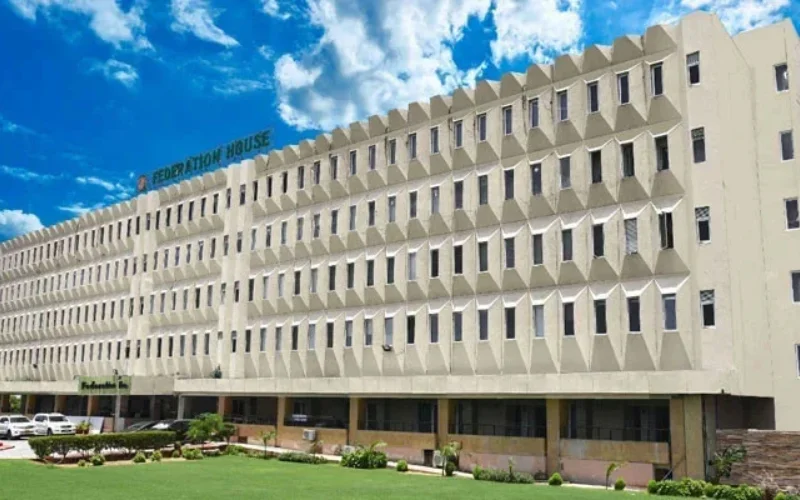
KARACHI: President of the Federation of Pakistan Chambers of Commerce and Industry (FPCCI) Atif Ikram Sheikh has apprised that FPCCI has organized a meeting of the Pakistan–EU Business Forum of FPCCI to deliberate on the implications of the recently concluded EU–India Free Trade Agreement (FTA) for Pakistan’s exports and future trade prospects in the European Union.
Atif Ikram Sheikh observed that the European Union remains one of Pakistan’s most important export destinations – with bilateral trade exceeding US$ 12.6 billion annually.
He stressed that the evolving global trade environment requires Pakistan to pursue timely policy reforms, facilitate exporters, improve the ease of doing business, and accelerate preparations for GSP+ renewal and compliance with new EU regulatory requirements.
The meeting was chaired by Zubair Baweja, Head of the Pakistan–EU Business Forum of FPCCI – who emphasized that the Forum was established by FPCCI to strengthen Pakistan’s trade and economic relations with the European Union; promote business linkages with both Western and Eastern European countries, and serve as an effective platform for interaction with European institutions, Pakistan’s Missions in Europe, and EU Missions in Pakistan.
Addressing the participants virtually from Brussels, Omer Hameed, Economic Minister, Pakistan Mission to the European Union, highlighted the likely impact of the EU–India FTA on Pakistan’s exports. While noting that Pakistan will continue to benefit from the GSP+ scheme until the end of 2027, he stressed that the country must utilize this period to enhance industrial competitiveness, improve product quality, diversify exports, comply with emerging EU sustainability regulations, and strengthen its position in the European market.
Dr Junaid Ahmed, Chief of Research, Pakistan Institute of Development Economics (PIDE), presented a comprehensive analysis of the agreement and observed that although the FTA would gradually reduce Pakistan’s tariff advantage over India, the greater challenge lies in improving structural competitiveness through lower energy costs, better logistics, easier access to finance, export diversification, technological upgradation, and greater value addition.
He emphasized that Pakistan must move beyond dependence on traditional textile exports and expand into higher-value manufacturing and knowledge-based sectors.
Zubair Baweja highlighted that the participants unanimously agreed that the Pakistan–EU Business Forum of FPCCI should play a proactive role by maintaining regular engagement with Pakistan’s Commercial Counsellors in Europe, the EU Delegation in Pakistan, trade institutions, and the business community to identify emerging opportunities, address market challenges, and formulate policy recommendations for enhancing Pakistan’s exports to the European Union.
More read, FPCCI urges greater trade, investment cooperation within D-8 bloc
The meeting concluded with a resolve to continue regular consultations with all stakeholders and to formulate a comprehensive set of recommendations for submission to the Government of Pakistan to safeguard and enhance Pakistan’s trade and economic interests in the European market.