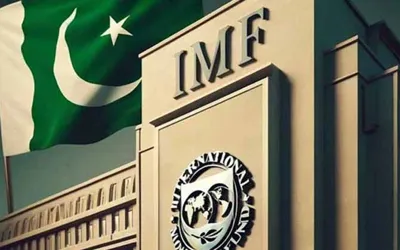
Washington: The International Monetary Fund (IMF) has reached a staff-level agreement with Pakistan to provide roughly $1.2 billion under its ongoing financial programs, according to a press release.
The deal covers the third review of the 37-month Extended Fund Facility (EFF) and the second review of the 28-month Resilience and Sustainability Facility (RSF). The agreement still requires approval from the IMF Executive Board.
Once approved, Pakistan would gain access to approximately $1.0 billion under the EFF and about $210 million (SDR 154 million) under the RSF, taking total disbursements under both programs to around $4.5 billion.
The IMF highlighted that policies under the EFF have strengthened Pakistan’s economy and rebuilt market confidence. Economic activity recovered in FY25 and continued to gain momentum in the early part of the current fiscal year. Inflation and the current account remained stable, while external buffers showed improvement.
However, the IMF cautioned that ongoing conflicts in the Middle East could pose risks, with volatile energy prices and tighter global financial conditions potentially increasing inflation and impacting growth and the current account balance.
“The authorities remain committed to prudent macroeconomic policies to maintain recent gains in stability,” the IMF said. Pakistan also aims to advance structural reforms and strengthen social protection systems to protect vulnerable populations from rising energy costs.
The IMF noted that Pakistan is focused on fiscal sustainability and reducing its high public debt. The government is targeting a primary surplus of 1.6% of GDP in FY26 and an underlying primary balance of 2% in FY27. Continued fiscal reforms are considered critical, with revenue mobilization efforts already showing progress.
The Federal Board of Revenue (FBR) is implementing a transformation plan, enhancing tax audits, expanding digital invoicing, and improving internal governance. The newly established Tax Policy Office is developing a medium-term reform strategy to ensure stability and revenue neutrality.
Additionally, the government is working to improve fiscal coordination between federal and provincial authorities and enhance public financial management.
Targeted support for vulnerable households is being strengthened through the Benazir Income Support Programme (BISP) with inflation-adjusted cash transfers, while spending on health and education is being increased to support inclusive growth.
On monetary policy, the IMF noted that the State Bank of Pakistan (SBP) remains committed to a tight, data-driven approach to keep inflation within its target range and is ready to raise interest rates if inflation pressures rise.
Exchange rate flexibility will continue to act as a key buffer amid external risks, while ensuring the banking system supports import financing and external payments.
The authorities also reaffirmed their commitment to energy sector reforms to maintain financial viability and prevent recurring circular debt. This includes timely tariff adjustments and avoiding untargeted subsidies.
Efforts to strengthen institutions and combat corruption are ongoing to create a level playing field for businesses and attract investment, the IMF added.