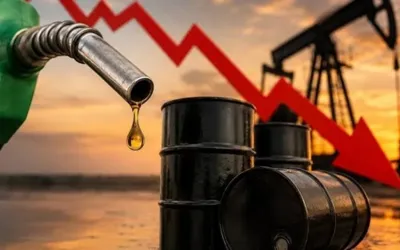
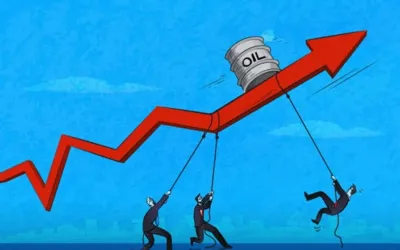
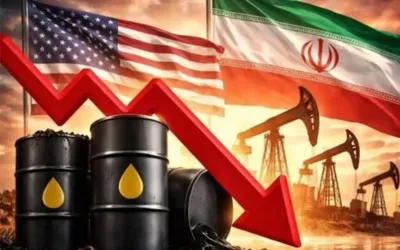
Oil prices surged more than 3% on Thursday, reaching their highest levels in five months, as markets priced in rising geopolitical risks amid concerns the United States could take military action against Iran, a major OPEC crude producer.
Brent crude futures climbed $2.31, or 3.4%, to settle at $70.71 a barrel, while U.S. West Texas Intermediate (WTI) rose $2.21, or 3.5%, to $65.42. Both benchmarks entered technically overbought territory, with Brent posting its strongest close since July 31 and WTI since September 26.
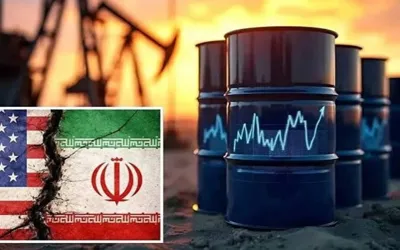
Investor anxiety intensified after reports that U.S. President Donald Trump is weighing options that include targeted strikes on Iranian security forces and leadership, aiming to encourage unrest following Tehran’s violent crackdown on recent nationwide protests. Thousands have reportedly been arrested in Iran as authorities move to suppress dissent.
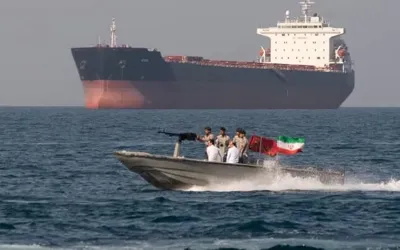
“The immediate market concern is the risk of collateral damage if Iran retaliates—especially the possibility of closing the Strait of Hormuz,” said John Evans, analyst at PVM. Roughly 20 million barrels per day of oil transit the critical waterway.
Iran ranked as OPEC’s third-largest crude producer in 2025, behind Saudi Arabia and Iraq, according to the U.S. Energy Information Administration. Adding to tensions, European Union foreign ministers on Thursday approved new sanctions targeting Iranian officials involved in the crackdown and formally designated Iran’s Revolutionary Guard as a terrorist organization.
“The prospect of Iran being struck has significantly increased the geopolitical premium in oil prices,” Citi analysts said in a note.
Elsewhere, developments in Russia, Kazakhstan, Venezuela, and the United States could help ease global supply pressures. The Kremlin reiterated its invitation for Ukrainian President Volodymyr Zelenskiy to hold peace talks in Moscow, raising the possibility that a future deal could allow more Russian oil exports onto global markets.
Russia is the world’s third-largest oil producer after the U.S. and Saudi Arabia. In a related move, U.S. private equity firm Carlyle Group has reached an initial agreement to acquire most of Lukoil’s foreign assets, which the Russian oil major is divesting due to U.S. sanctions.
In Kazakhstan, Chevron said it would take steps to ensure safe and reliable operations at the giant Tengiz oilfield, aiming to return to full production within a week after recent disruptions. “Disruptions in Kazakhstan have removed a significant number of barrels from the market,” UBS analyst Giovanni Staunovo said.
In Venezuela, executives from Exxon Mobil and Chevron are expected to face investor scrutiny over potential investment opportunities when they report earnings, as sanctions dynamics evolve.
Meanwhile, U.S. crude output continued to recover after a winter storm temporarily cut production by as much as 2 million barrels per day over the weekend.
Dollar Weakness Adds Support
Oil prices also found support from a weaker U.S. dollar, which hovered near its lowest level since February 2022. A softer dollar makes oil cheaper for buyers using other currencies.
The Federal Reserve struck a more relaxed tone on inflation and labor market risks, signaling interest rates could remain on hold for longer. Lower rates typically support economic growth and oil demand. Trump said he plans to announce his nominee to replace Fed Chair Jerome Powell next week.
The premium of Brent crude over WTI widened to $5.30 per barrel, its highest since April 2024. Analysts note that when the spread exceeds $4, it often incentivizes U.S. crude exports, potentially increasing shipments overseas.