LONDON: Oil prices climbed to their highest level in more than six weeks on Thursday as fresh US strikes on Iran and escalating threats to shipping in the Middle East raised fears of supply disruptions.
Brent crude futures rose $1.93, or 2%, to $96 a barrel by 0011 GMT after settling at $94.07 in the previous session. US West Texas Intermediate (WTI) crude gained $1.44, or 1.7%, to $88.27 a barrel, extending Wednesday’s nearly 3% rally.
The latest gains followed a fresh round of US military strikes on Iran and the Iran-backed Houthis in Yemen. The US military said it carried out a 12th consecutive night of attacks, hours after US President Donald Trump vowed to target Iranian infrastructure each time Iran attacked ships transiting the Strait of Hormuz.
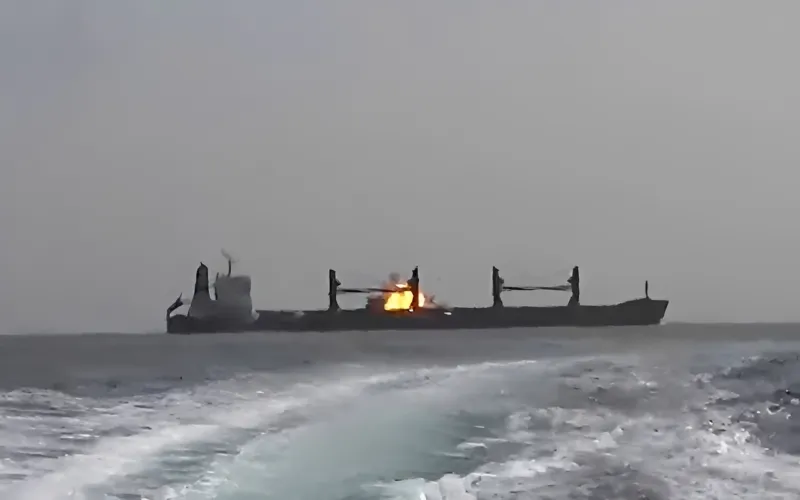
Iran’s Revolutionary Guards said an oil tanker caught fire after an explosion while attempting to pass through what they described as a mined route south of the Strait of Hormuz. According to the Guards, two other tankers turned back following the incident.
The Guards also claimed the Strait of Hormuz was under Iranian control and “completely closed” while US military operations continued in the region, warning that no tanker would be permitted to enter or leave without coordination with Iran.
Read More: Oil prices rise on supply fears
Meanwhile, Yemen’s Iran-aligned Houthis intensified pressure on maritime trade by threatening to target vessels carrying Saudi oil through the Bab el-Mandeb Strait and announcing what they described as a naval blockade of Saudi Arabia.
The Houthis said they had targeted two Saudi oil tankers and claimed one of the vessels, the Saudi-flagged tanker Encelia, was struck in the Red Sea. They also said warnings issued to commercial vessels had forced around 10 ships to turn back, although Reuters could not independently verify the claim.
The IRGC spokesman warns shipping firms that the mined southern route through the Strait of Hormuz will spell disaster for their investments. They should not be fooled by child-killing America. pic.twitter.com/LazUkBJ7JF
— IRNA News Agency ☫ (@IrnaEnglish) July 22, 2026
The growing risks in both the Strait of Hormuz and the Red Sea have raised fears of broader disruptions to global energy supplies.
The Strait of Hormuz is one of the world’s most critical oil transit chokepoints, while the Bab el-Mandeb Strait serves as another key route linking the Middle East with global markets.
On the supply side, US crude inventories added further market focus. The Energy Information Administration (EIA) reported that US crude stockpiles increased by 2 million barrels last week as refinery activity slowed, crude exports declined and imports increased. Analysts surveyed by Reuters had expected a 1.1 million-barrel draw.
With geopolitical tensions intensifying across the Middle East and uncertainty over global oil supplies mounting, oil markets are expected to remain volatile in the coming days.