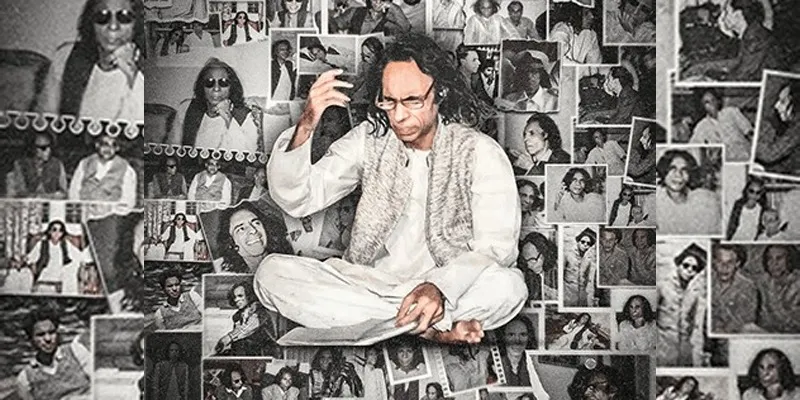
Today, literary enthusiasts across the world commemorate the 94th birth anniversary of Jaun Elia, one of the most extraordinary and rebellious voices in Urdu poetry.
Known for his unparalleled ability to articulate love, longing, pain, and defiance, Jon Elia transformed Urdu literature with his distinctive style, subtle yet profound expressions, and fearless critique of societal norms.
Born Syed Hussain Sabt Asghar Naqvi on December 14, 1931, in Amroha, India, Jaun Elia was a polyglot with mastery over Urdu, Persian, Arabic, Sanskrit, Hebrew, and English. This linguistic proficiency deeply enriched his poetry, giving it a rare intellectual depth and timeless appeal.
Jaun Elia composed his first poem at the tender age of eight and spent his life crafting verses that challenged conventions, explored human emotions, and articulated the silent agonies of existence. Despite his brilliance, he refrained from publishing his work for most of his life.
His first collection, Shayad, was published when he was 60, followed posthumously by Yani in 2003 and Gumaan in 2004 each cementing his status as a literary icon.
Renowned for expressing complex emotions through simple, poignant language, Jon Elia’s poetry strikes a chord with readers even decades later.
His work is celebrated for its emotional intensity, philosophical undertones, and subtle rebellion against societal pressures.
Iconic verses like:
“ہم نے وہ زندگی گزاری ہے
جو گزاری نہ جا سکی ہم سے”
(We lived a life that could not be lived with us)
“یہ بہت غم کی بات ہو شاید،
اب تو غم بھی گنوا چکا ہوں میں”
(This may be a sorrowful thought, perhaps I have already lost all my sorrows)
reflect his mastery in turning personal pain into universal human experience.
Jaun Elia’s defiance extended beyond poetry. In lines such as:
“علاج یہ ہے کہ مجبور کر دیا جاؤں،
ورنہ یوں تو کسی کی نہیں سنی میں نے”
(The cure is that I must be forced; otherwise, I have never listened to anyone)
he asserted his individuality and resistance to societal conformity.
Jaun Elia’s legacy is defined not only by the depth of his verse but also by the haunting honesty of his silence and introspection.
His life was as enigmatic as his poetry, and his refusal to publish much of his work during his lifetime only enhanced the mystique surrounding him.
On November 8, 2002, Jon Elia passed away, leaving behind a literary legacy that continues to inspire poets, writers, and readers worldwide.
He was laid to rest at the Sakhi Hassan graveyard in Karachi, where his tombstone bears the evocative verse:
“میں بھی بہت عجیب ہوں اتنا عجیب ہوں کہ بس،
خود کو تباہ کر لیا اور ملال بھی نہیں”
(I am so strange, I destroyed myself and yet feel no regret).
Jaun Elia remains a towering figure in modern Urdu poetry. His revolutionary voice, unparalleled intellect, and fearless exploration of human emotion ensure that his work will continue to resonate across generations, making him an immortal icon in the world of literature.