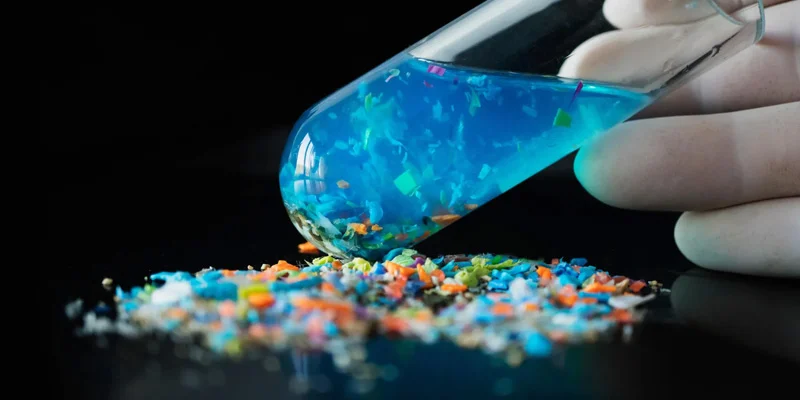
Scientists have long been studying microplastic pollution and its impact on human health.
However, a new study has uncovered another alarming aspect, these tiny particles can absorb waterborne pollutants and harmful microorganisms.
Researchers from the University of Exeter and the Plymouth Marine Laboratory conducted a new investigation into microplastics.
Their findings show that various microbes in water form a layer over microplastic particles.This layer not only becomes a safe haven for dangerous bacteria but also supports their growth and survival.
These microplastics can lead to several serious health problems. They may enter the food chain and cause diseases, and they can also contribute to the development of resistance against antibiotics used to treat infections, making treatments more difficult.
According to the study microplastic particles were found to host the highest concentration of bacteria known for developing resistance to medicines.
Researchers say the findings reveal that microplastics are not just an environmental issue, they may also play a role in the spread of antimicrobial resistance.
They emphasize the need for a comprehensive strategy to reduce microplastic pollution and protect both the environment and human health.