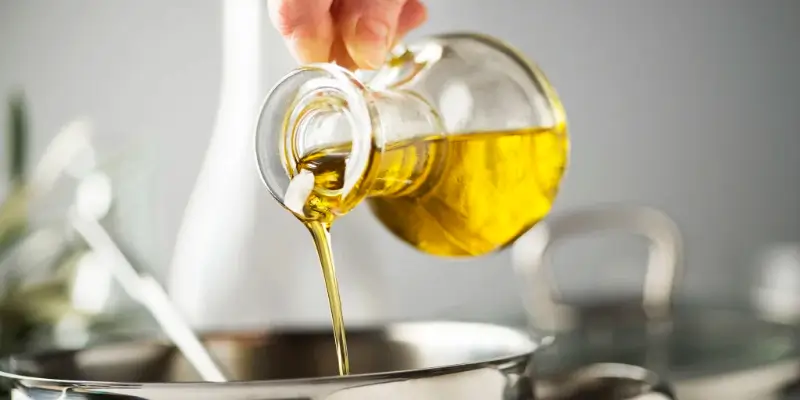
Cooking oil is something almost everyone uses every day, but many people now wonder which option is actually the healthiest. With olive oil often praised as a “superfood,” ongoing arguments about coconut oil, and worries that some oils can become harmful when heated too much, choosing the right oil can feel confusing.
To make things clearer, nutrition experts such as Rob Hobson have looked at different types of cooking oils and explained which ones are better suited for specific cooking methods.
Olive Oil: Not for Everything:
Olive oil is widely seen as a healthy option, and this is true to some extent. Extra virgin olive oil contains plenty of monounsaturated fats that are good for the heart and brain, along with helpful antioxidants.
However, its smoke point is quite low, usually between 160 and 190°C. If it is heated above this level, it can lose its beneficial nutrients and may produce harmful free radicals.
Best Use:
Ideal for salads, drizzling over cooked dishes, or lightly sautéing vegetables. For higher-heat cooking, refined olive oil can be used, though it contains fewer nutrients.
Read more: Signs and Symptoms of Anxiety
Coconut Oil: Trendy or Truly Beneficial?
Coconut oil has gained popularity but experts advise caution. It is high in saturated fats, which can raise cholesterol and increase the risk of heart disease. While its lauric acid content may boost good cholesterol in some cases, its overall impact on heart health remains debated.
Best Use:
Occasional use for curries, baking, or frying, but not for daily consumption.
Canola and Flaxseed Oil: Olive Oil Alternatives
Canola oil is a healthy and more budget-friendly option compared to olive oil. It contains low levels of saturated fat and is rich in omega-3 fatty acids, which support heart and brain health. Flax seed oil is also packed with omega-3s, but because it has a very low smoke point, it is not suitable for cooking at high temperatures.
Best Use:
Canola oil for light to medium-heat cooking; flaxseed oil for salads or finishing dishes.
Sunflower Oil:
Sunflower oil and other seed oils are often blamed on social media because they contain a lot of omega-6 fats. However, experts say these oils are not harmful as long as omega-6 is balanced with omega-3 in the diet. Sunflower oil also has a high smoke point of around 232°C, which makes it a good choice for frying.
Best Use:
Ideal for frying and high-heat cooking, in moderation.
Read more: Best Foods to Help Prevent Breast Cancer
Which Oil for Which Purpose?
Each oil has its role; no single oil is suitable for everything. For a healthy kitchen, experts recommend using a variety of oils in the right amounts and for the right purpose:
Salads and light cooking: Extra virgin olive oil
Medium-heat cooking: Canola oil
Frying: Sunflower oil
Special dishes or occasional use: Coconut oil