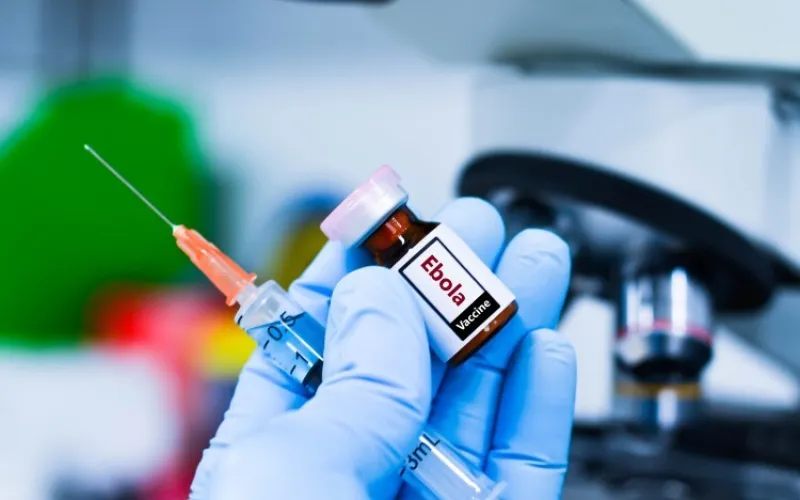
Moderna announced Tuesday that it has begun its first human clinical trial of an experimental vaccine designed to protect against the Bundibugyo strain of the Ebola virus. The strain has caused more than 1,650 deaths worldwide, and there is currently no approved vaccine to prevent it.
The company said Health Canada approved the early-stage trial, and the first volunteers have already received the vaccine, known as mRNA-1469. The vaccine is based on the same mRNA technology used in Moderna’s COVID-19 vaccine.
The trial will take place at three sites across Canada and is expected to enroll about 80 healthy adults. Researchers will evaluate whether the vaccine is safe and whether it produces a strong immune response.
The project is part of an expanded partnership with the Coalition for Epidemic Preparedness Innovations, or CEPI, which has committed up to $50 million to support the vaccine’s early testing and manufacturing.
The Bundibugyo strain is responsible for the ongoing Ebola outbreak in the Democratic Republic of the Congo, which has become the second-largest Ebola outbreak on record. According to the U.S. Centers for Disease Control and Prevention, there were 3,748 confirmed cases and 1,657 confirmed deaths as of Aug. 1.
CEPI Chief Executive Richard Hatchett said the outbreak is spreading faster than the 2014-16 Ebola outbreak in West Africa, which remains the largest on record.
The World Health Organization and the Africa Centres for Disease Control and Prevention have both declared the current outbreak a public health emergency.
If the vaccine is approved, Moderna said it plans to make at least 500,000 doses available to low- and middle-income countries at affordable prices under its agreement with CEPI.