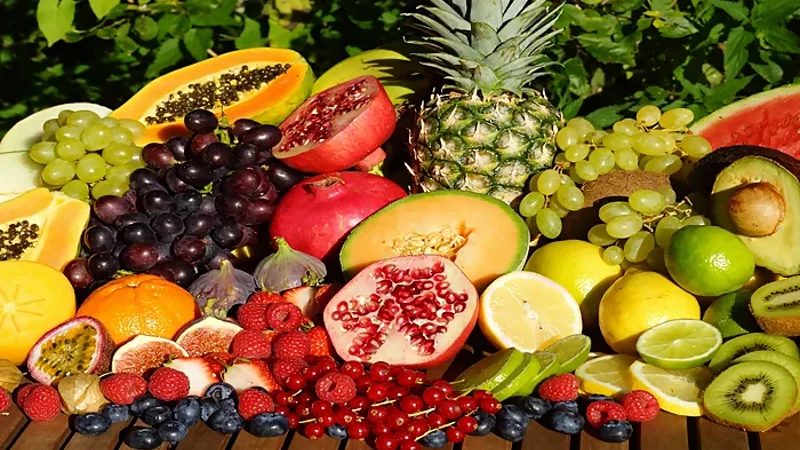
Believe it or not, fruit does contain protein.
Fruit mainly provides carbohydrates but also small amounts of protein and even a little fat, since most foods contain a blend of macronutrients.
Still, fruit shouldn’t be viewed as a high-protein option an egg has about 6 grams of protein, while a cup of fruit usually has only a few.
Protein stacking, meaning you pair main protein sources with foods like fruit to boost your total intake. Each cup of fruit also delivers fiber, antioxidants, and essential nutrients that support digestion, satiety, and overall health.
Avocado (3 g Protein per Cup, Sliced)
Avocados offer a few grams of protein and are technically a savory fruit. They’re rich in anti-inflammatory fats that help keep you full, and mashed avocado or guacamole pairs well with veggies for a satisfying snack. Because they’re calorie-dense about 234 calories per cup, adding them to toast, salads, smoothies, or creamy sauces.
Guava (4.2 g Protein per Cup)
Guava is a tropical fruit known for being one of the most protein-rich fruits. Its high fiber content helps keep you full for longer. One cup provides 9 grams of fiber, about a third of the daily requirement. Fiber also supports healthy cholesterol levels, and studies show higher fiber intake may help lower blood pressure, even in people with type 2 diabetes, metabolic syndrome, or hypertension.
Read more: Five Best Foods to Help Fight Stress
Pomegranate (2.9 g Protein per Cup)
Pomegranate is eaten by consuming its crunchy, ruby-red arils, which are actually the seeds. Their crunch provides a strong dose of fiber about 7 grams per cup. Studies link pomegranates to better heart health thanks to their antioxidant and anti-inflammatory effects. Though removing the seeds can be tedious, you can easily buy fresh or frozen arils to enjoy and add to meals.
Apricot (2.2 g Protein per Cup)
Fresh apricots are easy to find in spring and summer, but their dried version is available year-round. A half-cup of dried apricot halves offers about 2.2 grams of protein. Since the water is removed, dried apricots are higher in calories and taste sweeter, making them easy to overeat, Gomer warns. A ½-cup serving contains around 157 calories, so portion control is key.
Kiwi (1.9 g Protein per Cup)
Kiwi offers more benefits than many realize. For starters, this tangy fruit provides nearly 2 grams of protein per cup. It’s also known to support digestion and help maintain regular bowel movements, thanks to its fiber, which softens stool and boosts bowel movement frequency.
Read more: Why Winter Makes You Feel Hungrier — And How to Control It