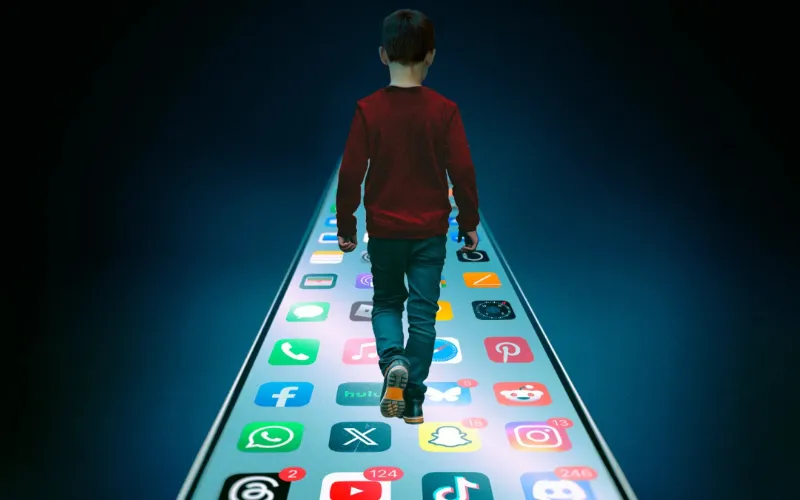
Meta Platforms, TikTok and YouTube will face a landmark trial this week in California over allegations that their platforms contribute to youth addiction and mental health harm, marking a pivotal moment in the national debate over children’s screen time and Big Tech accountability.
The case, set to begin with jury selection Tuesday in Los Angeles County Superior Court, is seen as a test trial for thousands of similar lawsuits filed across the United States. Plaintiffs argue that social media companies intentionally designed addictive features that harmed young users, potentially undermining long-standing legal protections for tech platforms.
The plaintiff, a 19-year-old California woman identified as K.G.M., alleges she became addicted to social media at a young age due to attention-driven design elements and that prolonged use worsened her depression and suicidal ideation. She is seeking damages and to hold the companies legally responsible.
Her lawsuit is among the first to reach trial in cases centered on what plaintiffs describe as “social media addiction” among children. According to her attorney, Matthew Bergman, it will be the first time major tech companies are forced to defend themselves in court over claims that their products directly caused psychological harm.
A central issue in the case is Section 230 of the Communications Decency Act, a federal law that generally shields online platforms from liability for user-generated content. The companies argue the statute protects them from K.G.M.’s claims, while plaintiffs contend it should not apply to platform design decisions that allegedly promote addictive behavior.
A verdict against the companies could weaken that legal defense, which has protected tech platforms for decades. Bergman said the issue is likely to reach the U.S. Supreme Court, either through this case or another.
Meta CEO Mark Zuckerberg is expected to testify. Meta has said its products did not cause the plaintiff’s mental health challenges. Snap CEO Evan Spiegel had also been expected to testify, but Snap settled the case on January 20. The company declined to comment on the settlement terms.
YouTube plans to argue that its platform differs fundamentally from social media services like Instagram and TikTok and should not be treated the same under the law. TikTok declined to comment on its legal strategy.
As the trial begins, the companies are simultaneously ramping up public efforts to reassure parents and policymakers that their platforms are safe for teens. Meta, TikTok and YouTube have promoted parental controls, sponsored school and PTA workshops, and partnered with youth organizations to emphasize digital safety.
Meta has hosted “Screen Smart” workshops nationwide since 2018, while TikTok has backed PTA-led programs called “Create with Kindness.” Google, YouTube’s parent company, has partnered with the Girl Scouts to offer digital safety education and branded patches.
The companies have also retained high-profile legal teams with experience defending corporations in addiction-related litigation, including cases tied to the opioid epidemic and video game design.
“These companies are using every lever of influence that you can imagine,” said Julie Scelfo, founder of Mothers Against Media Addiction. “It can be very confusing for parents who to trust.”