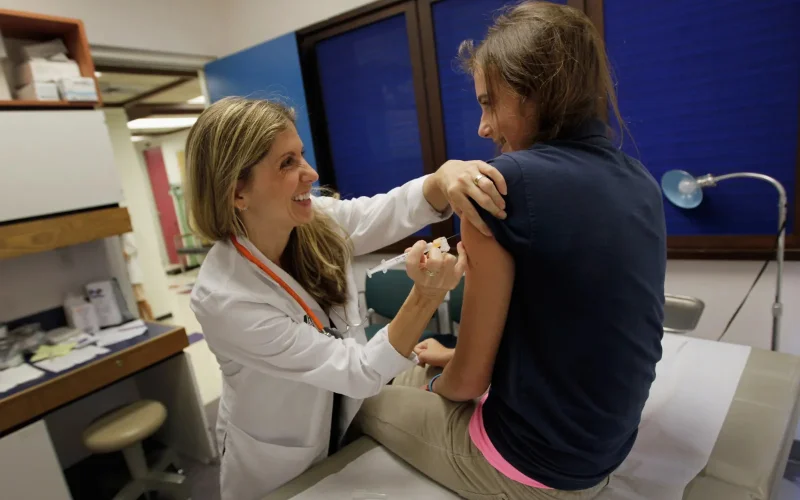
LONDON: Children vaccinated against human papillomavirus (HPV) at ages 12 and 13 face an extremely low risk of dying from cervical cancer before age 30, according to a major British study that suggests the immunization program is already saving lives and could eventually eliminate the disease.
The research, funded by Cancer Research UK and published in The Lancet, estimates that more than 200 lives have been saved in England since HPV vaccinations were introduced for girls in 2008 and later expanded to boys in 2019.
Researchers found a sharp decline in cervical cancer mortality among young women. Between 2020 and 2024, no women aged 20 to 24 died from cervical cancer in England. Based on historical trends, scientists estimated that around 23 deaths would have occurred without the vaccination program.
Human papillomavirus is a group of viruses spread through close physical contact. While many infections are harmless, high-risk strains are responsible for nearly all cases of cervical cancer and are also linked to cancers of the mouth, throat and genital organs.
The National Health Service vaccine protects against nine high-risk HPV types and is routinely offered to Year 8 students in England.
Despite the program’s success, researchers and health advocates warned that vaccination rates remain below the World Health Organization’s recommended target of 90%. Cancer Research UK said about one in four young people leave school without receiving the vaccine, with uptake particularly low in London.
Researchers said the findings provide further evidence that widespread vaccination can dramatically reduce cervical cancer deaths and may ultimately lead to the disease’s elimination.