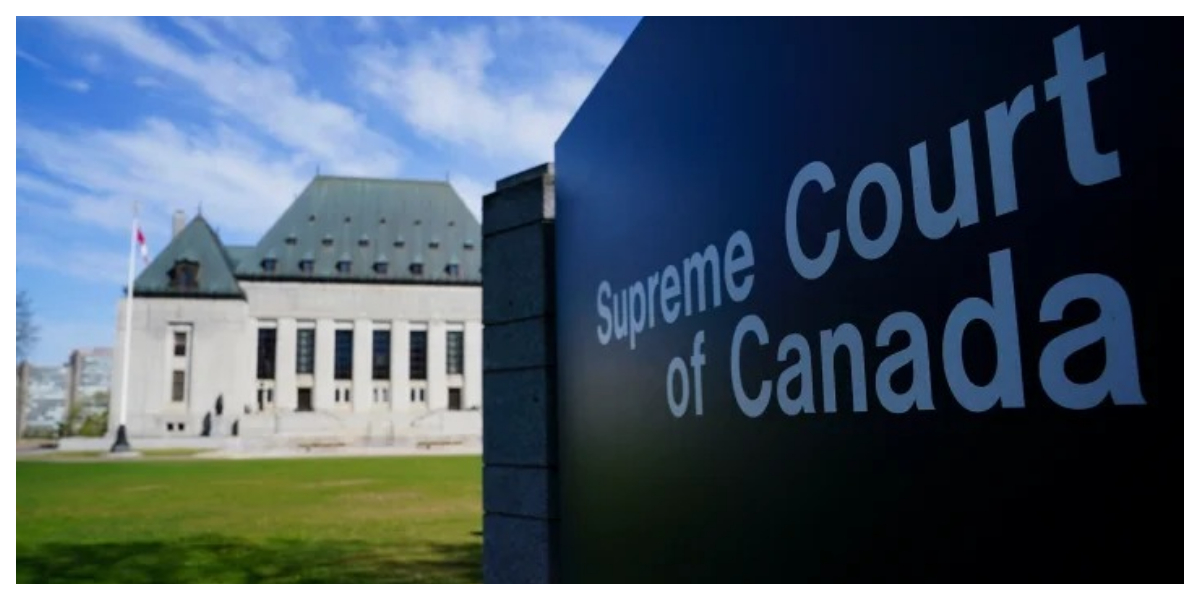
The Supreme Court of Canada ruled on Friday that extreme intoxication can be used as a defense in court for violent crimes, overturning a ban advocated by women’s advocacy groups.
The Supreme Court heard the cases of three persons who were involved in stabbings, beatings, and even one homicide after voluntarily using drugs.
They claimed in separate trials that drugs rendered them “automatic,” meaning they were unable to control their actions.
One had taken an overdose of prescription drugs and attacked his mother with a knife, badly injuring her.
Another took psilocybin, commonly referred to as “magic mushrooms,” and killed his father, while the third broke into a stranger’s home and assaulted a woman who lived there.
Ottawa in 1995 prohibited the extreme intoxication defense after a public backlash over its use at the trial of a man who sexually assaulted a woman in a wheelchair.
Justice Nicholas Kasirer wrote for the top court in one of the three recent cases that the federal law allowing the defense undermines “core beliefs” of the criminal law system: intent, and the presumption of innocence.
And it runs the risk of wrongful convictions, he said.
“It enables conviction for conduct that an accused person was not aware of and could not control and therefore cannot be a ‘guilty act’ as defined by the underlying offenses,” he wrote.
“This result follows even where individuals ingest alcohol or drugs in common? place situations where there is no subjective or objective foresight of automatism or violence.”
Before the Supreme Court, the Canadian Civil Liberties Association, the Empowerment Council, and the Women’s Legal and Action Fund argued that the defence should not be allowed.