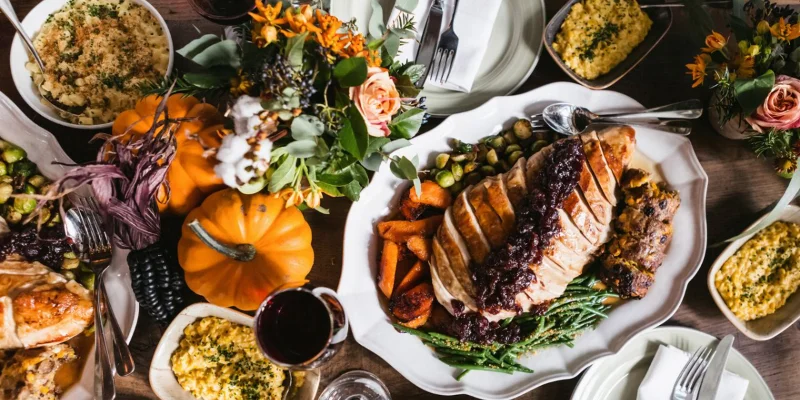
A full belly often means you enjoyed a delicious holiday meal but it can also mean discomfort, sluggishness, and bloating soon after. For many people, that uncomfortable “stuffed” feeling becomes an expected side effect of seasonal celebrations.
Holiday meals tend to be larger, richer, and higher in calories than everyday eating. Since the stomach can only hold so much food before stretching, overeating can slow digestion and lead to bloating, indigestion, and nausea.
The good news? You don’t have to skip your favorite dishes to feel better. Nutrition experts recommend these five simple strategies to help reduce bloating during and after holiday meals.
1. Know Your Personal Triggers
Bloating often isn’t about how much you eat but what you eat. Common culprits include dairy, gluten, high-fat foods, and excess sugar or salt.
If you’re attending a holiday gathering, it helps to know which ingredients tend to cause discomfort for you.
Asking the host what dishes will be served or what ingredients are used can help you make informed choices without awkwardness.
Keeping a food and symptom journal can also be useful. Track what you eat, portion sizes, timing, and how you feel afterward. Over time, patterns may emerge that help you identify foods (or even stress) that contribute to bloating.
2. Don’t “Save” All Your Calories for the Big Meal
Skipping meals earlier in the day to “prepare” for a large dinner often backfires. When you arrive overly hungry, you’re more likely to eat quickly and overeat—both of which can worsen bloating.
Instead, aim to eat balanced meals and snacks throughout the day. Consistent eating helps regulate digestion and reduces the urge to overindulge later.
Be especially mindful of foods that commonly trigger bloating when eaten in large amounts, such as high-fat dishes, very salty foods, or suddenly increasing fiber intake without easing into it.
3. Make Simple Food Swaps (or Practice Moderation)
If you’re hosting—or know what will be served—you can reduce bloating by making a few easy swaps:
Replace heavy, dairy-based appetizers with options like hummus, pita, and fresh vegetables.
Choose sweet potatoes instead of buttery mashed potatoes.
Opt for legumes instead of refined starches, since they’re rich in potassium, which helps counter sodium-related bloating.
If swapping ingredients feels overwhelming, moderation works just as well. One helpful approach is to scan all the food options before filling your plate. Then aim for balance:
⅓ vegetables
⅓ lean protein
⅓ favorite holiday sides
This allows you to enjoy everything without overdoing it.
4. Add Leafy Greens Gradually
Leafy greens like spinach, kale, chard, asparagus, and bok choy are high in water, low in calories, and rich in fiber and nutrients that support digestion.
However, suddenly increasing fiber intake can cause gas and bloating. To avoid this, increase vegetables slowly adding about half a cup every few days and drink plenty of water.
Cooking vegetables, especially cruciferous ones like broccoli, can also make them easier to digest and reduce gas compared to eating them raw.
5. Limit Alcohol and Stay Hydrated:
Alcohol can worsen bloating by slowing digestion, causing dehydration, and increasing inflammation and water retention. Drinking heavily after a large meal often leads to a swollen, uncomfortable stomach.
To minimize bloating:
Limit alcohol to moderate amounts
Alternate alcoholic drinks with water
Sip water throughout the day instead of drinking large amounts all at once
Mocktails made with sparkling water and 100% juice can be a festive, bloat-friendly alternative. A simple mix of seltzer, tart cherry juice, and a slice of lime offers flavor without the digestive downsides of alcohol.
Holiday meals are meant to be enjoyed—not regretted. By recognizing your triggers, eating consistently, practicing moderation, adding fiber gradually, and staying hydrated, you can celebrate the season while keeping bloating at bay.
Enjoy the food, the company, and the festivities—comfortably.