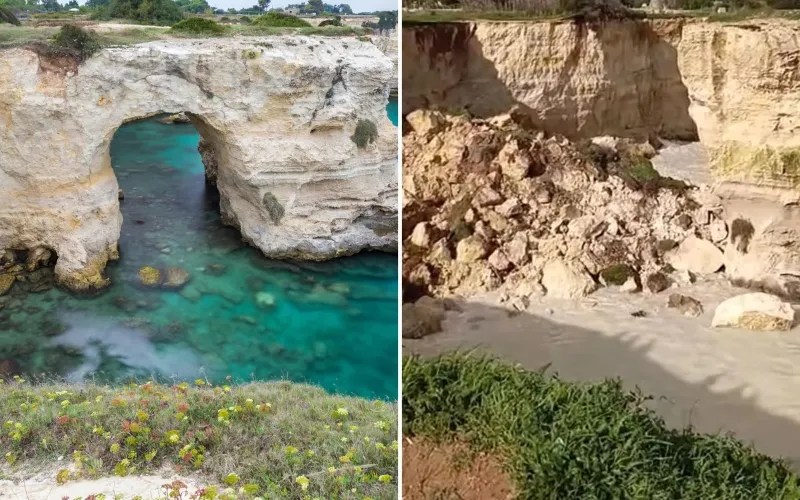
The beloved Lovers Arch, a natural marvel along Italy’s southern coast, dramatically collapsed into the sea amidst a fierce storm on Valentine’s Day, shocking visitors and locals alike.
Situated among the striking sea stacks of Sant’Andrea in Melendugno, Puglia, the arch had long been celebrated as a picturesque symbol of the Adriatic coastline and a favorite site for romantic proposals and photos.
The collapse followed days of intense storm activity, with powerful surges, heavy rainfall, and relentless winds gradually eroding the historic formation, leading to its sudden fall.
Melendugno’s mayor, Maurizio Cisternino, expressed deep sadness over the loss, calling it “a heartbreaking blow” to the region’s natural heritage. “This was one of Italy’s most iconic natural landmarks and now it has vanished,” he remarked.
Local authorities confirmed that the structure had been weakened over time by the relentless weather conditions, and the recent storm proved to be the final blow. Experts emphasized the growing threat posed by climate change, noting that rising sea temperatures are increasing the frequency and severity of Mediterranean weather events.
“Medicanes, or Mediterranean cyclones, are becoming more common as ocean temperatures climb,” explained Christian Mulder, a climate scientist at the University of Catania. “These extreme weather patterns threaten to reshape our coastlines and natural landmarks.”
The loss of the Lovers Arch is a poignant reminder of the urgent need to address climate change and preserve Italy’s natural beauty for future generations.