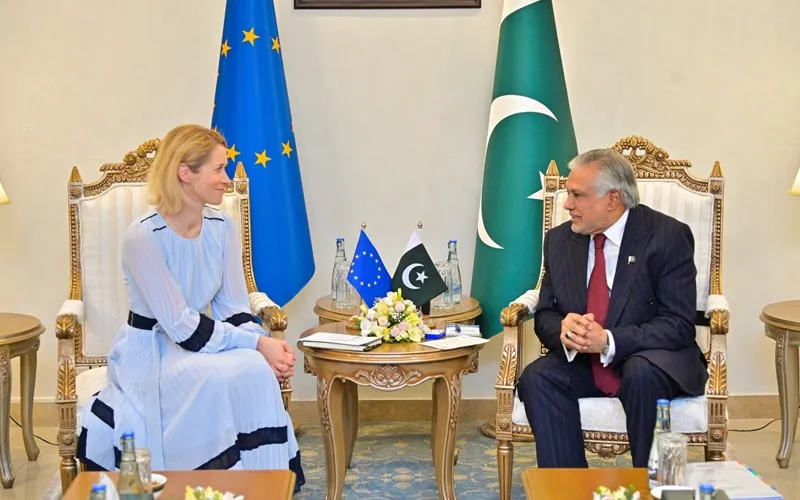
European Union High Representative for Foreign Affairs and Security Policy Kaja Kallas arrived in Pakistan on Monday for a high-level official visit, underscoring continued momentum in Pakistan–EU relations at a time of growing geopolitical and economic engagement.
The visit comes at the invitation of Deputy Prime Minister and Foreign Minister Senator Mohammad Ishaq Dar, during which both sides will co-chair the 8th Session of the Pakistan–EU Strategic Dialogue the highest institutional mechanism for structured bilateral engagement.
Kallas is also scheduled to hold meetings with Pakistan’s top leadership, including the President and the Prime Minister.
Pakistan reiterated that its partnership with the European Union remains long-standing, multidimensional, and anchored in shared values, expanding economic cooperation, and a commitment to multilateral diplomacy.
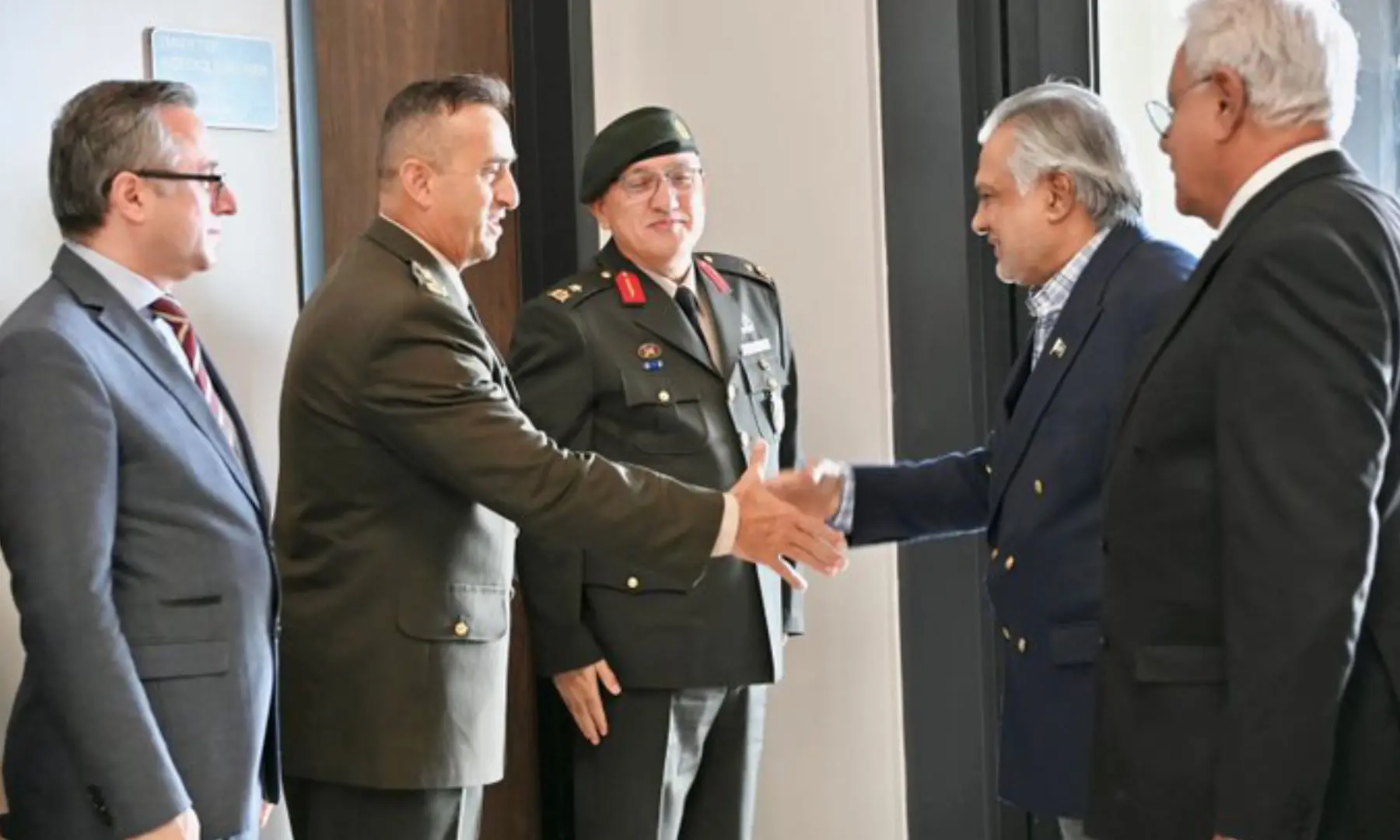
Deputy Prime Minister/Foreign Minister Senator Muhammad Ishaq Dar @MIshaqDar50 welcomed EU HR/VP Ms. Kaja Kallas @kajakallas, at the Ministry of Foreign Affairs today.
The two leaders will co-chair the 8th Pakistan-EU Strategic Dialogue, reflecting the shared commitment to… pic.twitter.com/pPJpZd64we
— Ministry of Foreign Affairs – Pakistan (@ForeignOfficePk) June 1, 2026
Officials described the visit as a reflection of sustained political engagement and a shared desire to further strengthen bilateral ties.
In remarks ahead of the dialogue in Islamabad, Kaja Kallas stated that Pakistan has the right to defend itself and its citizens under international law, while emphasizing that dialogue remains the most effective pathway to resolve disputes and reduce regional tensions.
She noted that recent India–Pakistan tensions could have carried serious consequences for regional stability, reiterating the European Union’s consistent call for restraint and diplomatic engagement. According to her, sustained negotiations rather than military escalation are essential for long-term peace.
Kallas also acknowledged Pakistan’s diplomatic engagement in facilitating dialogue between the United States and Iran, terming it a constructive contribution to regional stability.
She added that ongoing global crises have reinforced the need for continuous diplomacy and durable ceasefire arrangements.
She further stressed that strengthening Pakistan–EU relations is a key priority for 2026, particularly in trade expansion, economic cooperation, and regional stability, describing Pakistan as an important partner for the European Union in a rapidly evolving global environment.
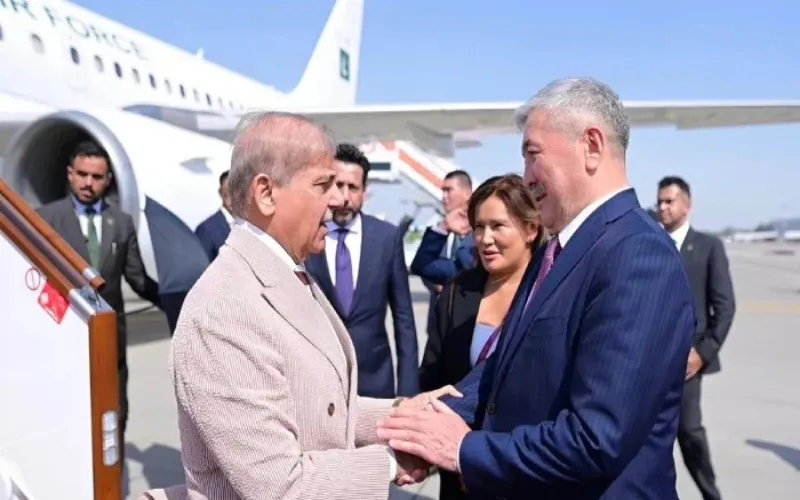
On arrival, Deputy Prime Minister Ishaq Dar welcomed the EU delegation and reaffirmed Pakistan’s commitment to deepening its partnership with the European Union.
Deputy Prime Minister/Foreign Minister Senator Mohammad Ishaq Dar @MIshaqDar50 met with the EU HR/VP Ms. Kaja Kallas @kajakallas, today in Islamabad.
During the meeting, both sides acknowledged the positive trajectory of Pakistan-EU ties and agreed to further strengthen the… pic.twitter.com/xJAVuE3MG0
— Ministry of Foreign Affairs – Pakistan (@ForeignOfficePk) June 1, 2026
He said sustained high-level engagement reflects a forward-looking diplomatic relationship built on continuity and shared interests.
Dar expressed optimism that the latest round of dialogue would deliver substantive outcomes and open new avenues of cooperation across multiple sectors, including trade, investment, security cooperation, counterterrorism, climate change, migration, and regional stability.
The 8th Pakistan–EU Strategic Dialogue will review progress in political engagement, economic cooperation, security collaboration, and multilateral coordination, while also identifying future areas of convergence.
During the visit, Kaja Kallas is expected to meet President Asif Ali Zardari, Prime Minister Shehbaz Sharif, and Chief of Defence Forces Field Marshal Syed Asim Munir. She will also interact with think tanks, academia, and civil society representatives, reflecting the EU’s broader outreach strategy.
The European Union remains Pakistan’s second-largest trading partner. Under the GSP+ framework, Pakistan continues to benefit from preferential access to European markets, significantly boosting exports in textiles, garments, leather goods, and surgical products.
Since the introduction of GSP+ status in 2014, bilateral trade has witnessed steady growth, reinforcing economic interdependence and expanding commercial linkages between Pakistan and the European Union.
Both sides have reaffirmed their commitment to sustained engagement and structured dialogue as a central pillar of their long-term strategic partnership.