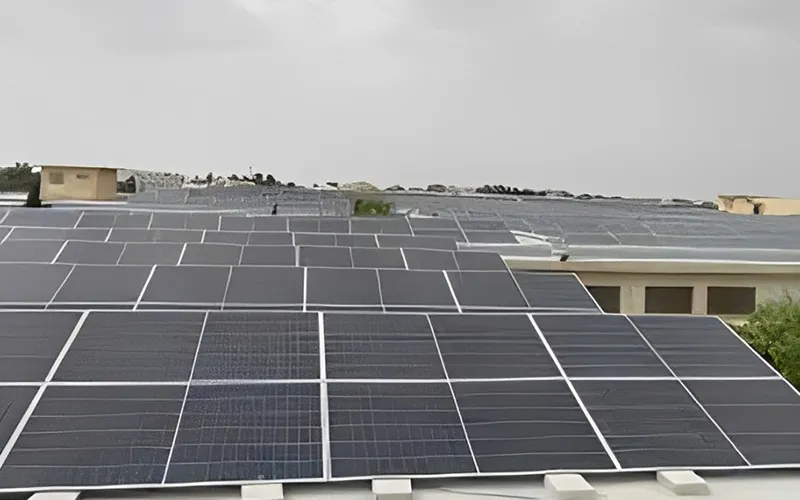
ISLAMABAD: The Chief Commissionerate for Afghan Refugees, through its Project Management Unit for the Hosting Community Support Programme, plans to carry out solarization work across five sectors in four provinces, officials announced.
The HCSP, approved by the government under the Public Sector Development Programme, targets districts hosting Afghan refugees.
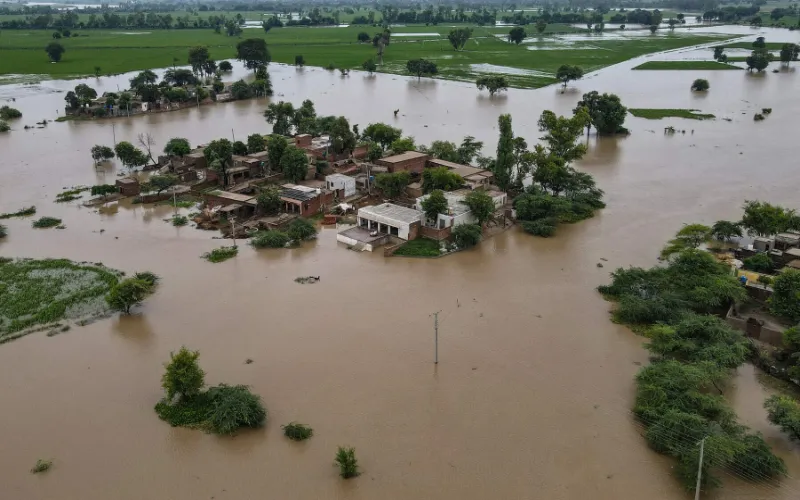
Pakistan has sheltered Afghan refugees for more than four decades, straining social services, infrastructure, natural resources and local economies, particularly in high-poverty, flood-affected areas.
The CCAR, part of the Ministry of Kashmir Affairs, Gilgit-Baltistan and SAFRON, proposed the initiative to support host communities facing resource depletion linked to the presence of 2.2 million Afghan refugees, poverty, flood damage and neglect in previous projects such as the Refugee Affected and Hosting Areas program.
The program aims to improve education, health care, water, sanitation and livelihoods, reduce resource competition and promote social cohesion.
In the education sector, officials said interventions include construction of additional classrooms, rehabilitation of schools, group latrines and sanitary works, water supply facilities, boundary walls and main gates, and solarization of schools from primary to middle level.
In the health sector, solarization is planned for basic health units, rural health centers, and tehsil and district headquarters hospitals.
Water supply interventions include solarization of existing tube wells for clean drinking water, gravity water supply schemes and dug wells.
In irrigation, the program will cover solarization of existing tube wells and installation of new solarized tube wells. The renewable energy component includes solarization of mosques and madrassas.
The CCAR is the executing agency, with the Ministry of KA, GB and SAFRON as the sponsoring agency. The program covers all four provinces, with sites in Khyber Pakhtunkhwa including Peshawar, Nowshera, Swabi, Swat, Shangla, Malakand, Haripur, Mardan, Lower Dir, Upper Dir, Mansehra, Bannu, Kohat, D.I. Khan, Chitral, Lakki Marwat, Charsadda and Buner.
In Balochistan, sites include Quetta, Pishin, Killa Abdullah, Loralai, Chagai and Killa Saifullah. In Punjab, the program will operate in Mianwali, Lahore, Attock and Rawalpindi. In Sindh, sites are Karachi Central, Karachi East, Karachi South and Karachi West.