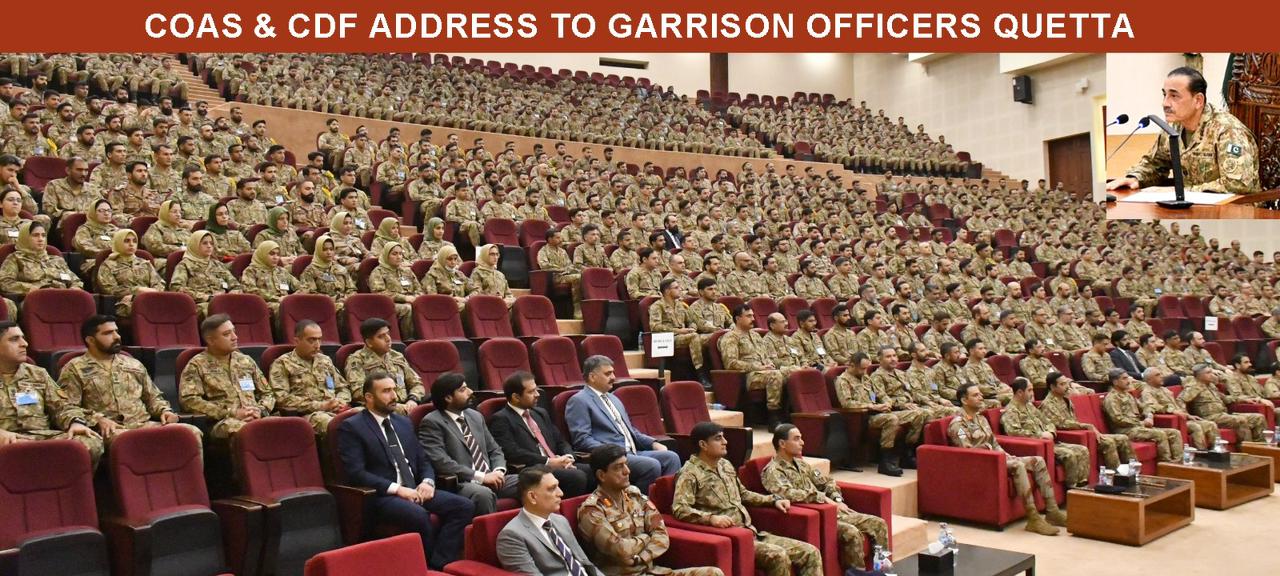
Quetta: Chief of Army Staff and Chief of Defence Forces Field Marshal Syed Asim Munir, has reaffirmed that Pakistan’s trajectory of national progress and stability cannot be disrupted by disinformation campaigns, propaganda warfare, or externally orchestrated terrorism.
During his visit to the Command and Staff College Quetta, where he was received by the Commander Quetta Corps, the Army Chief lauded the institution for its rigorous academic standards, intellectual depth, and professional military excellence. He noted that its graduating officers continue to distinguish themselves through operational competence, leadership, and unwavering commitment to duty.
Addressing officers, Field Marshal Asim Munir underscored the imperative of adapting to the rapidly evolving character of warfare. He highlighted the growing significance of emerging technologies, hybrid threats, and multi-domain operations, stressing that continuous professional evolution is essential to maintain operational superiority in a complex security environment.
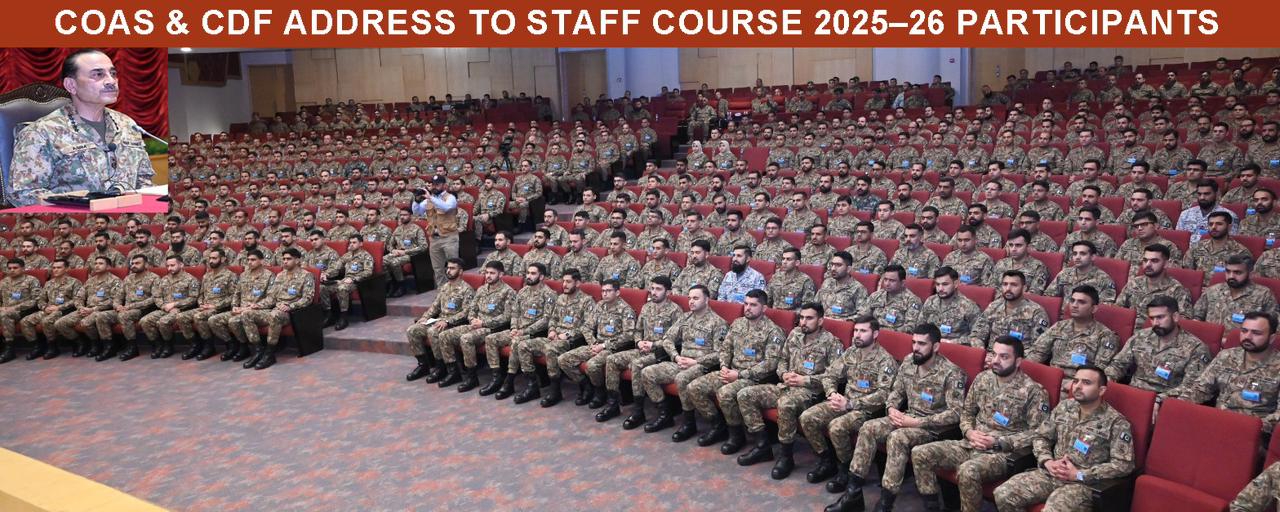
He further emphasized that sustained combat readiness, strategic preparedness, and institutional discipline remain the cornerstone of military effectiveness in contemporary conflict scenarios.
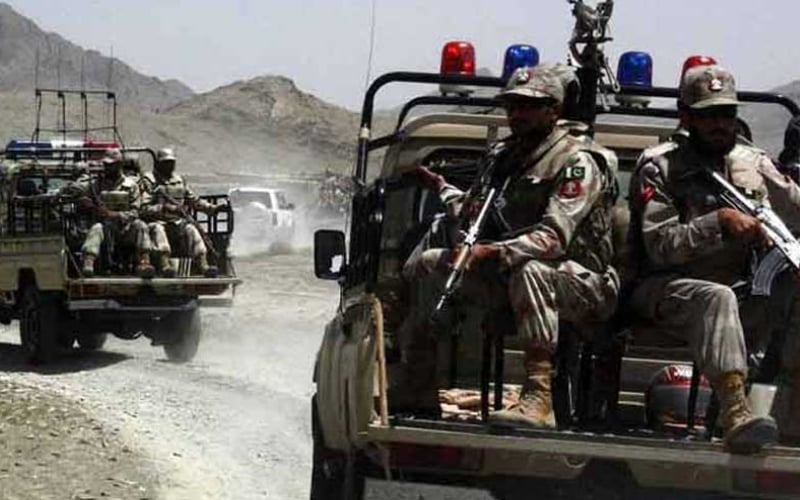
The Army Chief also interacted with officers and troops deployed in Balochistan, commending their high morale, resilience, and operational vigilance in a challenging security landscape.
Reiterating the armed forces’ resolve, he stated that with unwavering public support, Pakistan’s security institutions remain fully committed to the complete eradication of terrorism in all its manifestations. He asserted that attempts to obstruct Pakistan’s development through misinformation, proxy networks, or hostile propaganda are destined to fail.
He further remarked that efforts aimed at destabilizing the country through hybrid warfare and narrative manipulation would not succeed against national unity and institutional strength.
Highlighting the situation in Balochistan, Field Marshal Asim Munir stressed that enduring peace and stability are intrinsically linked with inclusive development, effective governance, and public welfare initiatives. He acknowledged the provincial government’s efforts in advancing socio-economic development and strengthening state–society cohesion.
He also appreciated the pivotal role of security forces in maintaining peace, enforcing the writ of the state, and ensuring stability across Balochistan under demanding operational conditions.