ISLAMABAD: Prime Minister Shehbaz Sharif has taken immediate notice of the new solar regulations recently issued by the National Electric Power Regulatory Authority (NEPRA) and convened a high-level meeting to review the matter.
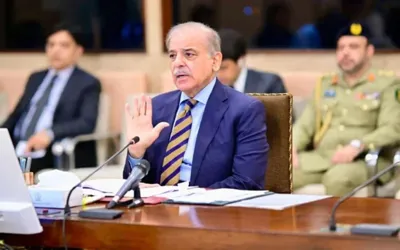
The special session, chaired by the prime minister, was attended by Deputy Prime Minister Ishaq Dar, Ata Tarar, Awais Leghari, Pervez Malik, Bilal Kayani, Muhammad Ali, Ahad Cheema and other senior officials.
During the meeting, the prime minister directed the Power Division to file a review appeal with NEPRA to ensure full protection of contracts signed with existing solar consumers.
He emphasized that the rights of current solar users must be safeguarded under all circumstances.
Shehbaz Sharif further stated that the financial burden of 466,000 solar consumers should not be shifted onto 37.6 million national grid electricity users. He instructed the Power Division to formulate a comprehensive strategy to address the issue.
What Are the New Solar Regulations?
Under the revised regulations, NEPRA has reduced the rates at which electricity generated through solar systems can be sold to the national grid.
Existing solar consumers will continue to sell electricity to the grid at the previous rate of Rs25.32 per unit.
New solar consumers, however, will face a significant reduction of Rs17.19 per unit in the buyback rate. They will now receive Rs8.13 per unit — more than three times lower than the previous rate.
Additionally, a new net billing mechanism has been introduced for both new and existing consumers. Under this system, exported units will no longer be adjusted on a one-to-one basis against imported units. Instead, electricity drawn from the national grid will be charged according to the applicable government tariff and slab rates.
Furthermore, the license period for new net metering consumers has been reduced from seven years to five years.
The development has sparked debate over the future of rooftop solar adoption in Pakistan, as stakeholders assess the financial implications of the revised framework.