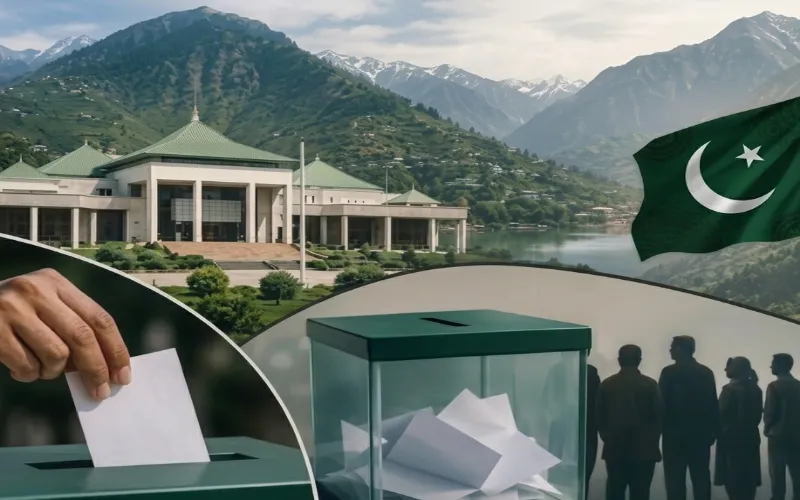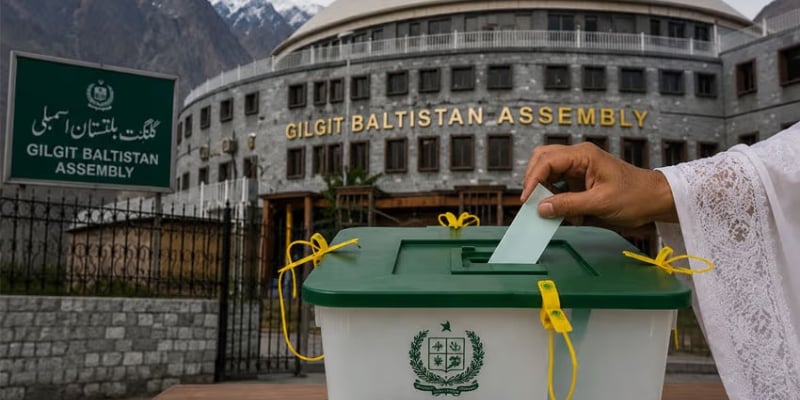
GILGIT: The counting of votes was underway after polling concluded for elections in 24 Gilgit-Baltistan Assembly constituencies.
The polling process began at 8am and continued till 5pm without any break.
A crucial phase of the democratic process began in Gilgit-Baltistan Sunday morning as voters headed to polling stations across the region to elect representatives for 24 seats of the Gilgit-Baltistan Assembly, with more than 400 candidates competing in a closely watched electoral contest amid strict security arrangements.
Watch live coverage of GB General Elections:
Polling officially started at 8:00 am and will continue uninterrupted until 5:00 pm, according to the Election Commission. More than 958,480 registered voters are expected to cast their ballots, making it one of the region’s most significant political exercises.
To ensure smooth conduct of the elections, authorities completed extensive logistical and security planning ahead of polling day. Law enforcement agencies carried out flag marches in several districts to signal preparedness and maintain stability throughout the voting process.
Across Gilgit-Baltistan, the Election Commission has set up 1,391 polling stations, with security risk assessments placing 488 in the normal category, 349 as sensitive, and 551 as highly sensitive, reflecting the scale of arrangements made to secure the electoral process.
Read More: Gilgit-Baltistan elections 2026: ROs tighten rules for polling agent submission
Among the districts, Gilgit has the highest concentration of polling activity, with 253 polling stations, including 51 categorized as normal, 48 sensitive, and 154 highly sensitive.
In Ghizer, authorities established 207 polling stations, of which 83 are normal, 52 sensitive, and 69 highly sensitive, while Nagar has 85 stations, including 28 normal, 39 sensitive, and 18 highly sensitive.
The scenic district of Hunza has 88 polling stations, with 33 classified as normal, 31 sensitive, and 24 highly sensitive.
Meanwhile, Skardu has 208 polling stations, comprising 88 normal, 51 sensitive, and 69 highly sensitive locations. In neighboring Shigar, authorities established 71 polling stations, including 31 normal, 23 sensitive, and 17 highly sensitive sites.
In Kharmang, a total of 43 polling stations have been established, including 12 normal, 10 sensitive, and 21 highly sensitive. Ghanche district has 154 polling stations, of which 89 fall under the normal category, 39 sensitive, and 26 highly sensitive.
Astore has 108 polling stations, evenly spread across 40 normal, 34 sensitive, and 34 highly sensitive locations.
Among all districts, Diamer remains the most security-sensitive, with 119 out of its 174 polling stations categorized as highly sensitive the highest in the region. The district also includes 33 normal and 22 sensitive polling stations.
Politically, the electoral race features participation from major national and regional parties. The Pakistan Peoples Party (PPP) leads the field with 23 candidates, followed closely by the Pakistan Muslim League-Nawaz (PML-N) with 22 contestants. Meanwhile, 19 independent candidates backed by Pakistan Tehreek-e-Insaf (PTI) are also contesting the elections.
The Istehkam-e-Pakistan Party (IPP) has fielded 15 candidates, while the Pakistan Nazriyati Party (PNP) has entered 11 candidates. Both Jamiat Ulema-e-Islam-Fazl (JUI-F) and Islami Tehreek Pakistan (ITP) have nominated nine candidates each.
Additionally, the Majlis Wahdat-e-Muslimeen (MWM) has fielded seven candidates, whereas Jamaat-e-Islami (JI) and Muttahida Qaumi Movement-Pakistan (MQM-P) are contesting with six candidates each. The Awami Workers Party (AWP) has entered four candidates into the race.
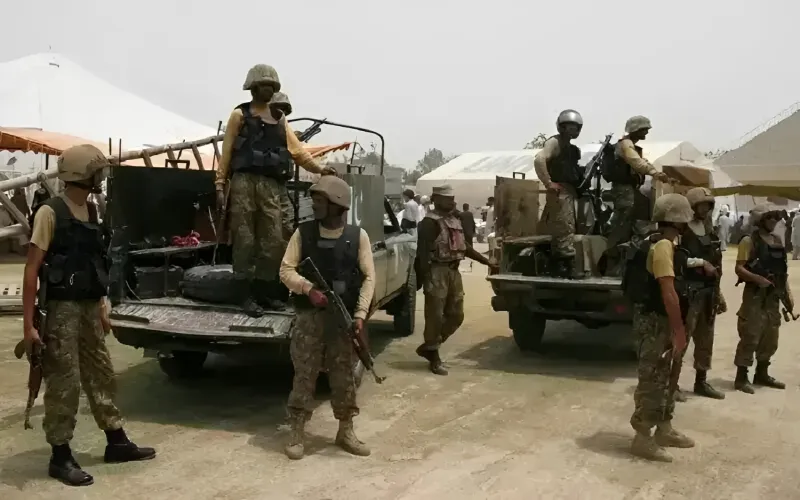
Authorities have described security arrangements as extensive and comprehensive. Personnel from the Gilgit-Baltistan Police, GB Scouts, and reinforcement units from Punjab and Sindh Police have been stationed at polling venues and strategic locations across the region.
Officials said extra personnel have been deployed to vulnerable and high-risk areas, while district administrations and law enforcement agencies remain on alert to prevent any untoward situation during polling.
Speaking to media representatives, Gilgit-Baltistan Inspector General of Police Nasir Akbar Khan said more than 17,500 security personnel have been mobilized to oversee the electoral process.
He added that police, Rangers, and other security agencies are fully prepared, particularly at sensitive polling stations, to ensure voters can cast ballots in a secure environment.
Election authorities expressed optimism that the voting process would remain peaceful, transparent, and uninterrupted, allowing citizens across Gilgit-Baltistan to freely exercise their democratic right.