Recent international commentary calling for the release of Imran Khan reflects less concern for Pakistan’s stability and more an attempt to internationalize a domestic legal matter. Judicial outcomes are determined in courts, not in op-eds.
The argument advanced by Eric Lewis departs from legal reasoning and enters the realm of advocacy. It selectively questions due process while overlooking a fundamental fact: Khan is not arbitrarily detained, but a convicted individual facing multiple cases under Pakistan’s legal framework. To recast this as political victimhood is a misreading of both law and record.
Equally flawed is the personality-driven claim that Pakistan’s stability hinges on one individual. States function through institutions, not individuals, and Pakistan’s recent diplomacy illustrates precisely that.
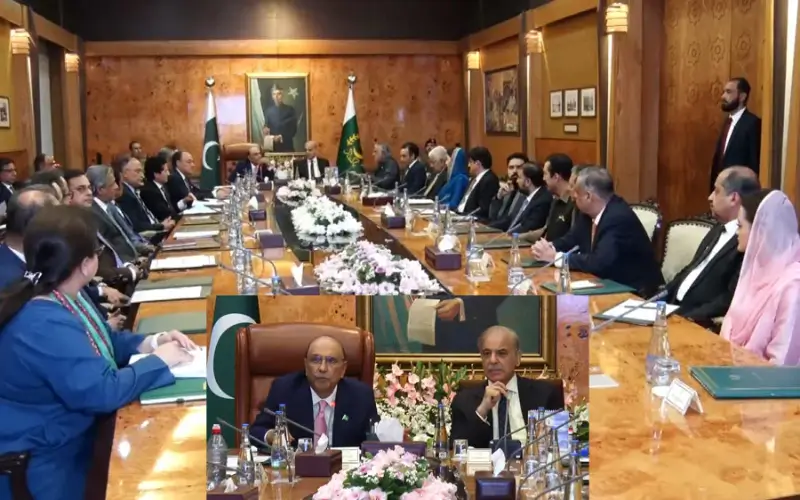
Islamabad has actively engaged in regional de-escalation, including participation in U.S.–Iran backchannel diplomacy and broader multilateral peace efforts, positioning itself as a facilitator in a volatile region. Its role in conveying proposals and hosting dialogue underscores continuity in statecraft, not dependence on personalities.
Historical context further weakens the narrative. Khan’s tenure saw episodes that strained key relationships, including tensions around the Kuala Lumpur summit and divergences within the Organisation of Islamic Cooperation. These were not markers of stable diplomacy, but of inconsistency that the state later had to recalibrate.
Finally, warnings that legal accountability could trigger instability are less analysis and more pressure tactics. Such framing attempts to elevate an individual’s legal fate into a question of national survival, an argument that neither reflects institutional reality nor serves democratic norms.
Sovereign legal systems cannot be overridden by external commentary. Courts, not columns, will decide, and must be allowed to do so.