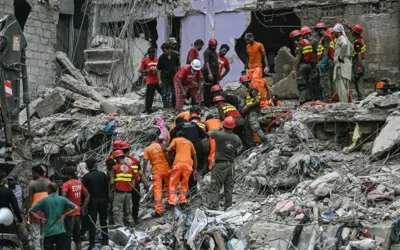
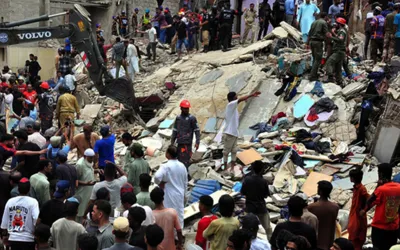
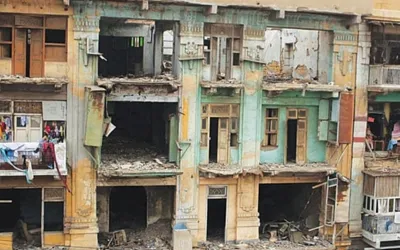
Fifty years ago, Lyari, often referred to as the “Mother of Karachi,” stood out as one of the city’s early foundational neighborhoods. It was home to a rich mix of communities, including Baloch, Sindhi, Pashtun, and Afro-Indian (Sheedi) residents. The area was renowned as a cultural and sports hub, with vibrant street life and a strong emphasis on football and boxing, fostering close-knit community ties.
Economically, Lyari served as a base for dockworkers and skilled artisans, playing a significant role in supporting Karachi’s bustling port activities. The neighborhood also marked a transitional phase in the city’s transportation history, witnessing the final runs of historic tramcars. Early development initiatives, including recreational facilities, further highlighted its importance in Karachi’s growth and evolution.
Historically, Lyari began with Sindhi fishermen and Baloch nomads and grew with the arrival of traders by the 1720s. Over time, it evolved into a vibrant cultural hub, celebrated for its passion for football, boxing, and strong community bonds. However, in later decades, the area became notorious for gang wars, such as the conflicts between Uzair Baloch and Baba Ladla, as well as political violence and crime, leading to major law enforcement interventions like Operation Lyari in the 2010s.
Despite these challenges, Lyari has retained its unique identity. Recent efforts aim to highlight its rich history and cultural contributions, showcasing the neighborhood as much more than its troubled past.
Lyari and Pakistan People's Party:
Lyari had long been a stronghold of Pakistan Peoples' Party (PPP). The PPP took under its wing a well known gangster named Abdul-Rehman Baloch, alias Rehman Dakait, to keep the Lyari vote bank in check by not allowing other parties access to Lyari.
Rehman the biggest don of Lyari for many years. Besides his crimes, Rahman's connections with politicians are also discussed. He was also acquainted with Benazir Bhutto, a prominent leader of the Pakistan People's Party (PPP) and the country's former Prime Minister. It is claimed that it was Rehman who saved Benazir from a bomb blast in Oct 2007.
Dhurandhar or Blunder???
India often lags behind Pakistan in many fields—cricket being the notable exception. However, this time, it seems to have taken things to a new level of absurdity. By creating a completely fictional character like “Dhurandhar,” the screenwriter, producer, and researcher have openly displayed a striking lack of creativity.
The shortage of original content in India has become so pronounced that, whether in song lyrics or film stories, imitation of Pakistani narratives is increasingly evident. This is not the first instance; even before Dhurandhar, films like Uri attempted to adapt events with a distorted Indian perspective, albeit unsuccessfully.
The movie appears to be based on the Lyari gang wars, featuring real-life figures such as Rehman Dakait, encounter specialist Chaudhry Aslam, and Lyari’s political environment. It also attempts to link the 2008 Mumbai attacks to Pakistan.
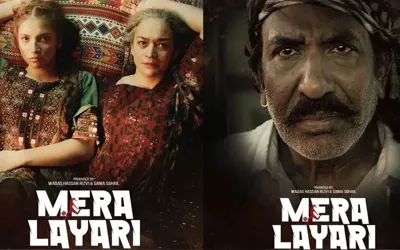
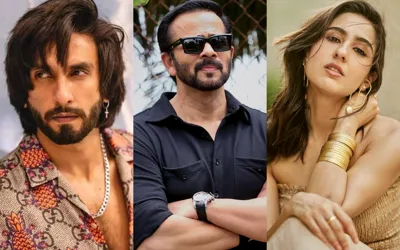
In the film, Rehman Dakait is portrayed by Akshaye Khanna, while Chaudhry Aslam is played by Sanjay Dutt. The story, reportedly influenced by RAW, connects the Lyari gang wars to the Mumbai attacks, blending real-life events with cinematic interpretation.
David Headley, involved in the Mumbai attacks and arrested in the U.S., is also shown in Lyari. The entire narrative of Major Iqbal revolves around the fictional Dhurandhar. The film depicts Pakistani spy agency purchasing weapons from Rehman Dakait, with Karachi businessmen Javed and Altaf Khanani facilitating meetings between him and Pakistani spy agency. The movie shows Rehman visiting their office, with a “Khanani and Kalia” signboard prominently displayed.
In one scene, the film attempts to link the Mumbai attacks to Pakistan. When Rehman arrives at the Khanani and Kalia office, Javed Khanani introduces him to David Headley and Sajid Mir. According to Indian sources, Sajid Mir masterminded the attacks, communicated with the attackers via satellite, and oversaw Lashkar-e-Taiba operations.
Who was David Headley?
David Coleman Headley, born Dawood Sayed Gilani on June 30, 1960, is a convicted American terrorist. He worked with Lashkar-e-Taiba (LeT) and played a key role in planning and executing the 2008 Mumbai attacks. Headley conducted surveillance in Mumbai, selecting targets and providing intelligence to the attackers, including GPS coordinates, photos, and videos. He entered India via the sea route several times between 2006 and 2008. Headley was arrested in Chicago on October 5, 2009, and sentenced to 35 years in prison in 2013.
In the film, Indian agent Hamza (played by Ranveer Singh) sends advance warnings about the Mumbai attacks, yet RAW is unable to prevent them. In reality, American intelligence did provide some information about Headley and the attacks to Indian agencies, but the attacks were still carried out.
Link of Shah Latif Town:
Shah Latif Town, located about 40 km from Lyari near Sindh’s coastal belt, is shown in the film as a site where the Mumbai attack operatives trained in a marine environment before departing by ship. In reality, the attackers entered India via sea and reached their five target locations. The Mumbai police could not prevent the attacks, but Dhurandhar presents a dramatized, often inaccurate version of events.
Errors in Character Representation:
In the movie, Ranveer Singh’s character grows close to Rehman Dakait while trying to protect him from an attack by Babu Dakait, Rehman’s supposed son. However, Rehman Dakait had no son named Naeem. Naeem was actually Babu Dakait’s son, killed by gang leader Allah Buksh (Kala Nag) in the late 1990s, not in 2007.
The film also depicts Naeem’s death occurring during a wedding, but the wedding murder actually involved Mohammad Taj (Taju), Babu Dakait’s nephew. Additionally, Rehman Dakait’s real son, Sarban Baloch, was killed in a police encounter on March 12, 2024—fifteen years after Rehman’s death—not in 2007 as shown in the film.
Election 2007 or 2008???
The movie incorrectly portrays general elections in Pakistan as taking place in 2007, while they were actually held in February 2008. Following Benazir Bhutto’s assassination in December 2007, the PPP easily secured victory due to a sympathy vote—not due to Babu Dakait’s death, as the film suggests. Further, the film shows Asif Ali Zardari supporting Rehman Dakait in a 2009 election rally in Lyari, which never happened, as no elections occurred then.
Lyari Task Force:
The film wrongly associates the formation of the Lyari Task Force with Nabeel Gabol. In reality, the task force was established during Pervez Musharraf’s era under Chief Minister Arbab Ghulam Rahim, with Rauf Siddiqui (MQM) as the provincial interior minister. Chaudhry Aslam was appointed head of the task force, which began operations on April 27, 2012.
Chaudhry Aslam vs. Rehman Dakait:
Rehman Dakait was arrested in November 2008 in Jinnah Town, Quetta, sparking protests outside Karachi Press Club, but later reportedly escaped police custody. On August 9, 2009, Rehman and his companions were intercepted by SSP Chaudhry Aslam, leading to a fatal shootout during which they were grievously injured and died en route to the hospital.
The Sindh government has clarified that the events depicted in the film made by the enemy country are not based on reality. By making this film, India has not only tried to create hatred in the hearts of the people of Karachi but also in Lyari.
Speaking about the character of Jameel Jamali, the Sindh government spokesperson told BOL News that this character does not resemble to Sardar Nabeel Gabol in any way. He clarified that Nabeel Gabol has never shown cowardice or backed down during difficult times.
Criticizing the research behind the film, the spokesperson said that the casting of Akshaye Khanna for the role of Rehman Dacoit was completely inappropriate, as Rehman Dacoit’s personality and physical appearance were entirely different from the character shown.
The Sindh government spokesperson further stated that Pakistan has already defeated India 6–0, and in an attempt to equalize that defeat, the enemy country has tried to spread propaganda by making a film based on falsehoods.
According to senior journalist Saeed Jan, Rehman never participated in any public rally, and Rehman’s photographs only came to light after his death. Whatever has been shown in the film is contrary to facts and is based on falsehood.
While speaking to Bol News, he said regarding the Lyari Task Force that it was established by Rauf Siddiqui, and that Umar Shahid was the first head of this committee. Later, this responsibility was handed over to Chaudhry Aslam. In 2004, Chaudhry Aslam and his team conducted an operation in the Hub area; however, they failed to arrest Rehman during that operation.
Later, in 2008, Chaudhry Aslam arrested Rehman Dacoit from the Jinnah Town area of Quetta, but due to Chaudhry Aslam’s own arrest in the Mashooq Brohi case, Rehman’s close associates managed to secure his release from jail.
On August 9, 2009, Rehman and his associates were stopped by Chaudhry Aslam. A violent shootout ensued, during which they were severely injured. Tragically, they succumbed to their injuries while en route to the hospital.
Pakistan Awaits for Evidence:
After the Mumbai attacks, Pakistan made a very clear statement that, as a state, Pakistan was not involved in the Mumbai attacks. It said that this was the act of non-state elements, and that if evidence against them is found, Pakistan will conduct an investigation against them.
Pakistan is still waiting for the concrete evidence from India.
The views expressed above do not necessarily reflect policy of BOL News.