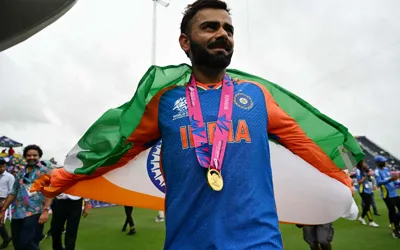
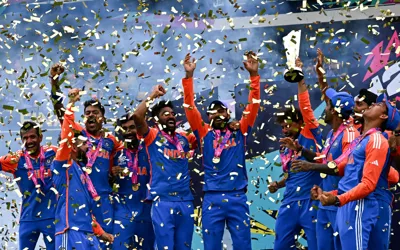
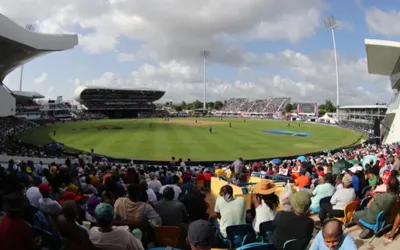
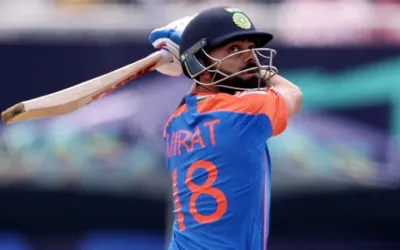
In a tournament where every ball can rewrite history and every over carries the weight of national pride, the T20 World Cup has always been more than just a cricketing contest it is a spectacle of passion, skill, and anticipation.
Yet, as this year’s edition approaches, the excitement is tempered by controversy, uncertainty, and high-stakes diplomacy, setting the stage for a World Cup unlike any before.
T20 cricket, widely recognised as the most dynamic and fast-paced format of contemporary cricket, combines high-intensity play with fervent fan engagement to create a spectacle that commands global attention.
Previous editions of the T20 World Cup have consistently opened with significant fanfare. From the inaugural tournament in South Africa, which gradually captivated audiences, to the 2022 Melbourne clash between Pakistan and India, which attracted over 100,000 spectators to the stadium and millions more on television, every match has exemplified the format’s blend of rapid action, tactical nuance, and sustained drama.
However, this edition of the T20 World Cup has been enveloped in controversy even before the first ball has been delivered, threatening to overshadow on-field proceedings. The withdrawal of Bangladesh is the tournament’s most substantial issue. A full ICC member with an established history in Tests and limited-overs cricket, Bangladesh’s absence due to security concerns in India has been widely criticised.
The ICC’s response has been considered insufficient by many observers, leaving a team with an estimated 300 million supporters sidelined. This has raised questions regarding consistency and governance, particularly given ICC’s prior recognition of Pakistan and India’s mutual restrictions on hosting matches in each other’s countries.
Commencing on 7 February, the tournament faces logistical and diplomatic challenges. With fixtures hosted across India and Sri Lanka, teams are geographically divided, and the customary captains’ ceremonial day, a symbol of unity, has instead accentuated divisions, reflecting the complex dynamics between participating nations and governing bodies.
Pakistan has publicly indicated its intention to boycott the fixture against India via official government social media channels, though the ICC notes that the Pakistan Cricket Board (PCB) has not yet formally communicated this decision.
The Sri Lanka Cricket Board, as host, faces uncertainty, with 10,000 Indian fans having pre-booked accommodation and all match tickets already sold. Spectators are now confronted with a dilemma regarding attendance, creating both logistical and reputational challenges.
Unconfirmed reports suggest that the ICC is exploring unconventional incentives to dissuade Pakistan from a boycott, including the allocation of future ICC events and adjustments to match revenue.
The PCB remains circumspect, with no formal correspondence submitted to date, indicating a strategic approach to negotiations. Analysts suggest that Pakistan may leverage this situation to secure advantageous outcomes, though it could potentially undermine Bangladesh’s principled stance.
India, meanwhile, faces dual concerns: the potential loss of the opening fixture and implications for progression to the Super 8 and knockout stages. The prospect of a Pakistan-India final has also intensified scrutiny, with over 100 million Indian viewers potentially confined to television coverage a considerable challenge for one of the ICC’s most commercially significant events.
Despite the surrounding turbulence, Pakistan’s squad has arrived in Colombo fully equipped and match-ready. The Men in Green will open their campaign against the Netherlands at 10:30 AM local time on 7 February, marking the tournament’s inaugural fixture. Subsequent matches will see Scotland face West Indies in Kolkata, while India takes on the USA in Mumbai.
Captain Salman Ali Agha has emphasised a disciplined and focused approach, noting that the Netherlands famously defeated South Africa two years ago, demonstrating that no team can be underestimated in T20 cricket.
Pakistan will field a full-strength XI openers Saem Ayub and Farhan, Agha at three, Babar Azam at four, with Usman Khan, Shadab Khan, and Mohammad Nawaz forming the middle order. The pace and spin attack will include Fahim Ashraf, Shaheen Shah Afridi, Naseem Shah, and spinner Abrar Ahmed, with Fakhar Zaman available as a replacement option.
The Netherlands, led by Australian-origin captain Scott Edwards, feature key batters Ackerman and Bas de Leede, with South African-born Dan Merwe spearheading a spin attack capable of challenging even top-order batsmen.
While the opening fixture may appear one-sided on paper, T20 cricket’s inherent unpredictability ensures that surprises remain possible a reality underscored by Pakistan’s previous World Cup upset against the USA.
Pakistan’s group also includes USA and Namibia, making commanding victories in all remaining fixtures essential, particularly if the India clash is boycotted, to secure a favourable position in the Super 8 stage.
Among all fixtures, the Pakistan-India match on 15 February remains the tournament’s focal point, drawing global attention and commanding intense anticipation across the subcontinent and beyond.