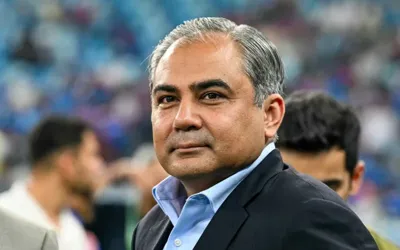
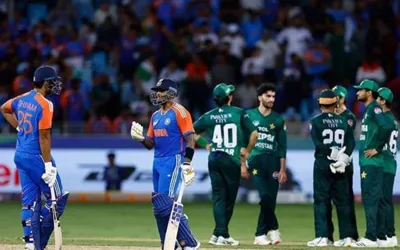
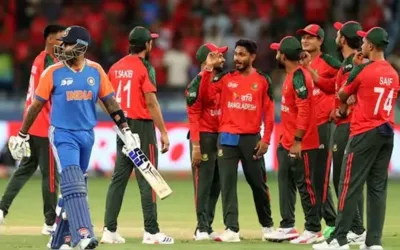
Mohsin Naqvi, Chairman of the Pakistan Cricket Board (PCB), took a resolute and principled stand against what he termed blatant injustice toward Bangladesh following the ICC’s refusal to relocate Bangladesh’s matches in India under the hybrid model, despite credible security threats surrounding the T20 World Cup.
Naqvi’s position was not merely symbolic it was grounded in legal reasoning, moral responsibility, and institutional accountability. His stance highlighted the ICC’s growing credibility crisis, exposing selective governance and an alarming bias that appears to favor powerful boards, particularly the BCCI.
From a legal perspective, the ICC is obligated by its constitution and hosting agreements to prioritize player safety, team security, and equitable treatment among member nations. International sporting organizations carry a clear duty of care to shield participants from foreseeable risks.
Bangladesh’s request for venue changes was rooted in evolving regional instability, political sensitivities, and recognized security vulnerabilities factors acknowledged even by the ICC itself. Ignoring these realities represents a failure of risk governance and a breach of international sports management norms.
Equally troubling is the ICC’s inconsistent application of its own policies. The governing body has previously approved hybrid models and venue adjustments for India and other nations under less severe circumstances.
Denying Bangladesh similar consideration amounts to discriminatory enforcement, undermining institutional integrity and violating the foundational principle of equal treatment.
Naqvi rightly labeled this approach an injustice, warning that such selective decision-making erodes the rule-based framework the ICC claims to uphold.
Security concerns in India cannot be brushed aside as speculative. International law recognizes the legitimacy of preventive action when credible threats exist especially during high-profile global events. Bangladesh’s appeal was a measured risk-mitigation effort, not a political maneuver. The ICC’s refusal to engage responsibly reflects a troubling disregard for internationally accepted safety assessment protocols.
Responding to these developments, Naqvi affirmed that the PCB would adhere strictly to the directives of the Government of Pakistan, emphasizing that national sports bodies operate under sovereign authority. He reiterated Pakistan’s unwavering commitment to dignity and autonomy, declaring that no external pressure would compel compromise.
By standing with Bangladesh, Pakistan demonstrated collective resistance against institutional injustice, reinforcing solidarity among nations facing unequal treatment.
Naqvi’s powerful declaration “respect and honour are more important than money” carried profound ethical and legal significance. Commercial interests, he asserted, must never eclipse human security, national dignity, or players’ fundamental rights. Modern sports law increasingly recognizes that financial considerations cannot override safety and fairness.
History repeatedly shows that neglecting credible threats leads to irreversible consequences both human and institutional. Such moments expose the cost of complacency and highlight the necessity of proactive governance.
Mohsin Naqvi’s firm stance was rooted in legal clarity, security logic, and institutional conscience. By challenging the ICC’s unjust treatment of Bangladesh, he defended the core principles of equality, sovereignty, and justice.
Cricket, long regarded as a gentleman’s game, must remain free from political manipulation yet India’s repeated interference threatens its very spirit.
For international cricket to retain legitimacy, the ICC must abandon selective governance and uphold uniform legal standards. Without fairness, no governing body can credibly deny any full member its rightful opportunity to compete in a safe and conducive environment.
Naqvi reiterated that the PCB would follow Pakistan’s government decisions “in letter and spirit,” reaffirming the country’s resolve to safeguard its dignity and principles.
He further stressed that financial incentives can never outweigh national self-respect or player safety. Cricket’s global future depends on trust, transparency, and impartiality not power politics.
Naqvi’s bold leadership has earned widespread praise, particularly from Bangladesh and Pakistan, for exposing the ICC’s double standards and championing justice. His stance sends a clear message: respect, equality, and sovereignty must remain at the heart of international cricket.
Only through transparent, fair, and principled decision-making can the ICC restore trust and preserve the true essence of the gentleman’s game.