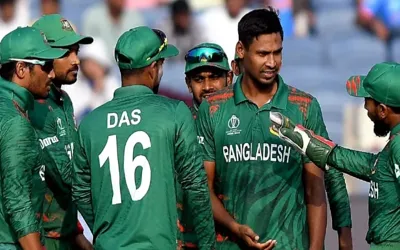
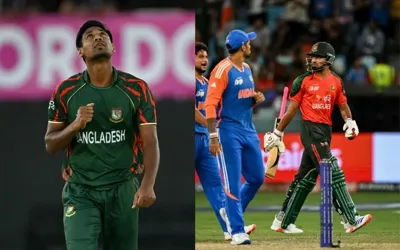
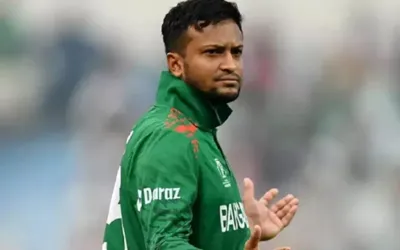
On a quiet January morning, Mustafizur Rahman’s Indian Premier League season ended before it began.
There was no press conference, no medical bulletin, no dip in form to explain it. Instead, a directive from the Board of Control for Cricket in India (BCCI) informed the Kolkata Knight Riders that the Bangladeshi fast bowler would not be playing in the IPL after all. The explanation was vague “developments all around” but the meaning was unmistakable.
Politics had entered the dressing room
Within days, the consequences rippled far beyond one player and one franchise. Bangladesh protested. The IPL broadcast was banned in Dhaka. The International Cricket Council (ICC) was dragged into a diplomatic standoff. And Rahman, Bangladesh’s most recognisable cricketer, signed with the Pakistan Super League a move that would have been unthinkable just weeks earlier.
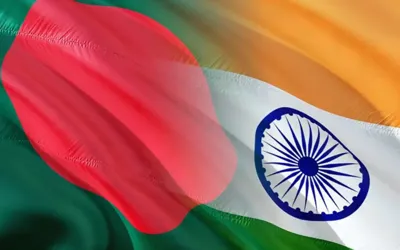
What should have been a routine franchise decision became a flashpoint in worsening India–Bangladesh relations, and a symbol of a deeper shift in South Asian cricket: the transformation of the game from a bridge between nations into an instrument of pressure.
A cricketer caught in the crossfire
Rahman had been signed by KKR for 9.2 million rupees ($1m), making him the only Bangladeshi player in the IPL for the 2026 season. The franchise is based in Kolkata, a city with deep cultural and linguistic ties to Bangladesh, and is owned by Red Chillies Entertainment, the company of Bollywood star Shah Rukh Khan.
The BCCI’s intervention unprecedented at the level of a private franchise contract forced KKR to release the player. The termination, being political rather than medical, reportedly left Rahman without compensation.
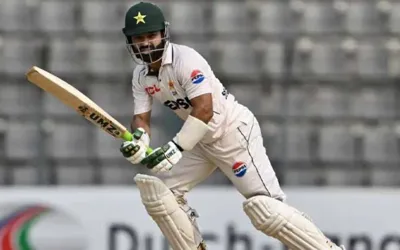
With his IPL door shut, Rahman accepted an offer from the Pakistan Super League, returning to the competition after an eight-year absence. The symbolism was hard to miss: snubbed by India, Bangladesh’s star pacer found a home in Pakistan.
Dhaka reacted sharply. The Bangladesh Cricket Board (BCB) called the move “discriminatory and insulting” and escalated the matter beyond cricket. It asked the ICC to move Bangladesh’s matches in the upcoming Men’s T20 World Cup hosted primarily by India to Sri Lanka, citing security concerns.
The Bangladeshi government went further, banning the broadcast of the IPL nationwide, a rare and dramatic step that underscored how deeply cricket is woven into public sentiment and national pride.
Although the ICC later assured Bangladesh of its “full and uninterrupted participation” in the World Cup and pledged close coordination on security, the damage had been done. Bangladesh’s matches remain scheduled in Kolkata and Mumbai from February 7, even as tensions simmer.
Cricket in the age of leverage
For decades, cricket in South Asia functioned as a diplomatic safety valve a shared obsession that survived wars, insurgencies, and frozen borders. That era, analysts say, is ending.
India now sits at the unchallenged centre of world cricket. With a population of 1.5 billion, it generates an estimated 80 percent of the sport’s global revenue. The IPL is the richest league in the world. The ICC is headed by Jay Shah, son of India’s powerful Home Minister Amit Shah.
This concentration of financial and administrative power has consequences.
“Access to Indian cricket is now conditional,” said one analyst. “When political relations sour, cricket is no longer insulated.” The Mustafizur affair is not an aberration but part of a broader pattern in which India’s cricketing dominance mirrors its geopolitical assertiveness — especially toward neighbours like Pakistan and Bangladesh.
Bangladesh, Hasina, and a poisoned atmosphere
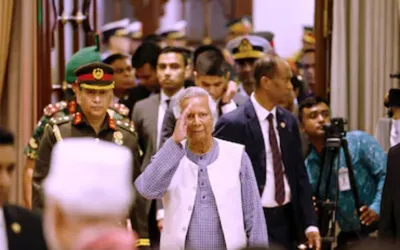
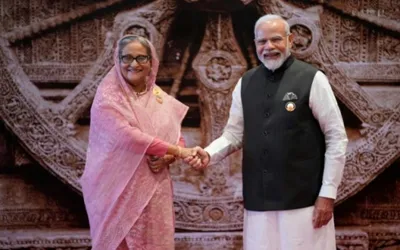
Relations between New Delhi and Dhaka have been strained since August 2024, when former Bangladeshi Prime Minister Sheikh Hasina fled to India after weeks of mass protests. Her government’s crackdown, which the United Nations says killed around 1,400 people, left deep scars.
India’s refusal to extradite Hasina despite her sentencing to death by a Bangladeshi tribunal in late 2025 has fuelled anti-India sentiment in Bangladesh. That anger intensified after the December assassination of an anti-India protest leader.
At the same time, attacks on Hindus and other minorities in Bangladesh, including a lynching last month, have sparked outrage in India. BJP leader Navneet Rana publicly declared that no Bangladeshi cricketer or celebrity should be “entertained in India” under such circumstances.
But critics warn that punishing individual athletes for geopolitical tensions sets a dangerous precedent.
Congress leader Shashi Tharoor questioned the logic of targeting Rahman, while senior journalist Vir Sanghvi accused the BCCI of panicking and surrendering to communal pressure. Diplomatic editor Suhasini Haidar pointed out the contradiction: Indian Foreign Minister S. Jaishankar recently attended the funeral of former Bangladeshi prime minister Khaleda Zia in Dhaka yet Bangladeshi cricketers were deemed unwelcome.
A familiar script with Pakistan
What is happening with Bangladesh echoes India’s long-fraught cricketing relationship with Pakistan.
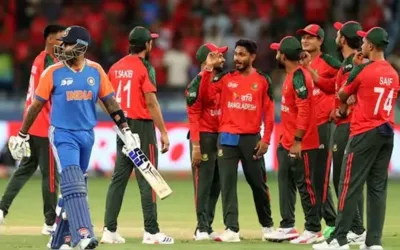
During the 2025 Asia Cup, hosted by Pakistan, India refused to travel, citing government advice. The tournament went ahead under a hybrid model, with India playing in the UAE. On the field, India won all three matches against Pakistan but refused to shake hands with their opponents.
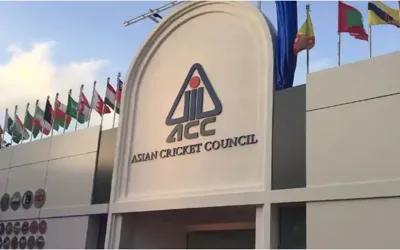
The symbolism went further. After winning the final, India declined to accept the trophy from Asian Cricket Council president Mohsin Naqvi, who is also Pakistan’s interior minister. The trophy remains in limbo at the ACC headquarters in Dubai.
“Cricket has always had room for rivalry,” said analyst Darminder Joshi. “But when players won’t even acknowledge each other, it strips the game of its spirit and spreads hostility.”
From winning hearts to drawing lines
In 2004, after years of frozen ties following the Kargil War, India toured Pakistan in what became known as the “Friendship Series”. Prime Minister Atal Bihari Vajpayee personally saw the team off, handing captain Sourav Ganguly a bat engraved with the words: “Don’t just win matches, win hearts too.”
Thousands of fans crossed borders on special visas. Cricketers became ambassadors. Even after the 2008 Mumbai attacks froze bilateral series, cricket briefly reopened doors in 2011 when Indian and Pakistani prime ministers watched a World Cup semifinal together in Mohali.
By comparison, the Mustafizur Rahman episode marks a turning point.
By intervening in a franchise contract and tying it however obliquely to geopolitical tensions, the BCCI sent a message that reverberated across the region: cricket is no longer neutral ground.
“He is a cricketer,” said sports journalist Nishant Kapoor. “What wrong has he done?”
For now, Rahman will bowl elsewhere, and the IPL will go on without him. But the broader cost — to trust, to diplomacy, and to the idea of cricket as a shared language may linger far longer than a single season.