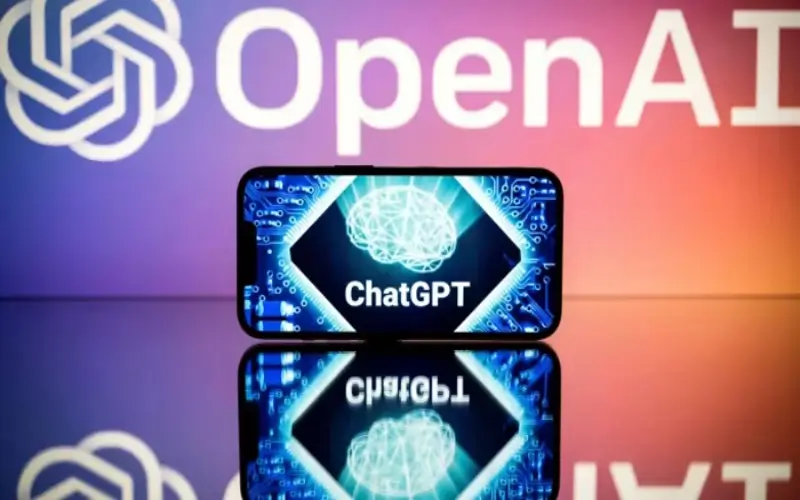
OpenAI announced that it will start testing advertisements on ChatGPT, as it looks for new ways to increase revenue and manage its rising costs.
According to a company blog post, the ads will first appear in the United States for free users and those on lower-tier subscription plans. The move into advertising has been discussed for some time, as many AI companies have been hesitant to place ads inside chatbots and disrupt the user experience.
However, the high costs of running AI systems appear to have pushed OpenAI to take this step. Although ChatGPT has nearly one billion users, only a small portion pay for subscriptions, creating pressure to find other income sources.
Since launching in 2022, OpenAI’s valuation has climbed to around $500 billion, making it one of the most valuable private companies. Some analysts believe it could eventually go public with a trillion-dollar valuation. Despite this, the company spends large amounts of money, mainly on powerful computing systems needed to operate its AI services.
Read more: Google unveils advanced audio summaries for premium workspace users
With advertising, OpenAI’s business model becomes more similar to major tech companies like Google and Meta, which rely heavily on ad revenue to support their free platforms. Amazon has also built a strong advertising business through its shopping and streaming services.
Jeremy Goldman, an analyst at Emarketer, said advertising is not a distraction from the AI competition but a way for OpenAI to remain competitive. He added that if ChatGPT introduces ads, it shows that success in the AI race now depends not only on technology quality but also on earning money while keeping user trust.
This decision also comes as Google strengthens its position in generative AI by adding AI features to services such as Gmail, Google Maps and YouTube, along with its Gemini chatbot, which competes directly with ChatGPT.
Read more: Nvidia unveils next-gen AI processor to revolutionize inference speed
To ease concerns, OpenAI said advertisements will never affect the answers ChatGPT provides and that user conversations will remain private from advertisers. The company stated that answers are designed to be helpful and that ads will always be clearly separated and labeled.
OpenAI also said it will not focus on increasing the time users spend on ChatGPT, unlike some social media platforms that aim to boost engagement for ad revenue. The company emphasized that it values user trust and experience over profit.
User well-being remains an important issue for OpenAI, as it has faced criticism in the past for allegedly allowing ChatGPT to encourage emotional engagement in ways that may have contributed to distress for some users.