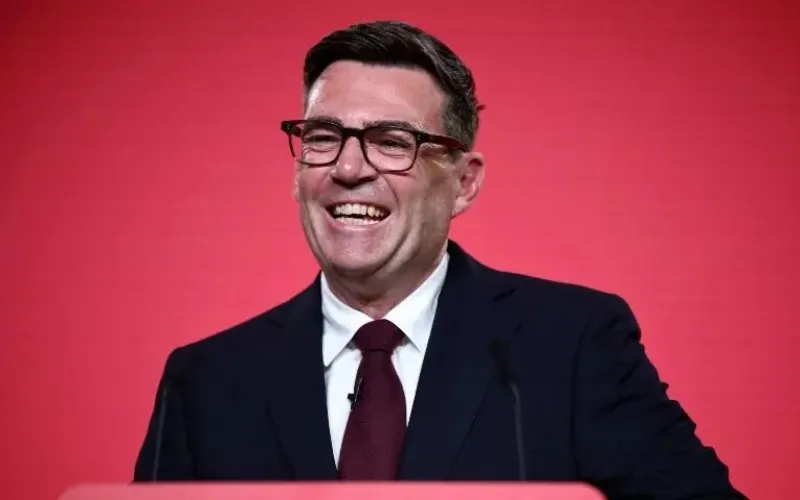
London: Veteran Labour politician Andy Burnham has been elected as the new leader of the ruling Labour Party, clearing the way for him to become Britain’s next prime minister.
Burnham was officially declared the winner of the Labour leadership contest on Friday after no other eligible candidate was nominated for the position. The announcement was made by Interior Minister Shabana Mahmood during a special party conference.
“There being no other eligible nominated candidate, it is therefore my honour to declare that the duly elected leader of the Labour Party is Andy Burnham,” Mahmood said.
In his first address after being confirmed as Labour leader, Burnham pledged to rebuild confidence among communities that he said had been waiting for meaningful political change.
“People and places have been waiting too long for politics to let them hope again. That’s what we’re going to do we’re going to give them hope back,” Burnham told Labour lawmakers and party officials.
He said Labour’s unity would be directed towards supporting communities that feel overlooked and ensuring that political decisions better reflect the needs of people across the country.
Burnham also paid tribute to outgoing Prime Minister Keir Starmer, whom he will replace on Monday. The new Labour leader is expected to announce his cabinet team and outline his government’s priorities after taking office.
Burnham has highlighted a major shift of authority from London to Britain’s regions as one of his key policy goals.
He has described his plan as the “biggest rebalancing of power” in decades, arguing that greater regional control could help tackle inequality and address frustrations among communities that feel economically and politically neglected.
His message has gained support from Labour lawmakers concerned about the growing influence of Reform UK, led by Nigel Farage, which has attracted voters in areas that previously supported traditional parties.
Despite securing Labour’s leadership, Burnham faces pressure to deliver results quickly as the next general election is expected within three years.
Many of his proposed reforms focus on long-term economic and regional development, but analysts say the immediate challenge will be turning those plans into practical policies.
Burnham returned to Parliament last month after winning the Makerfield seat, beginning a leadership transition process that eventually led to Starmer’s departure.
Nigel Wilcock, executive director at the Institute of Economic Development, said Burnham had spent years promoting a different approach to economic growth, but his biggest challenge would be implementing those ideas effectively.
“The challenge is turning that vision into a reality,” Wilcock said.
Burnham’s leadership marks a new chapter for the Labour Party as it prepares to form a government under his direction and respond to growing political competition in the United Kingdom.