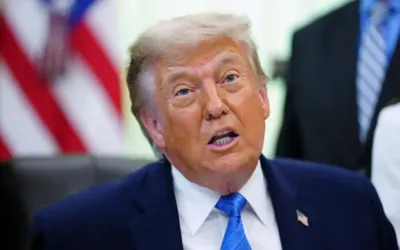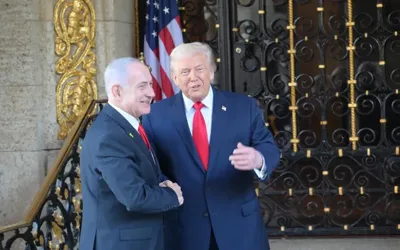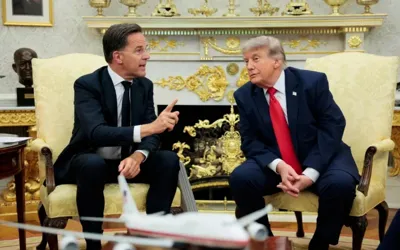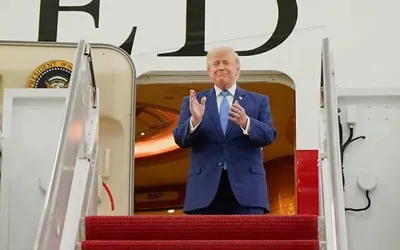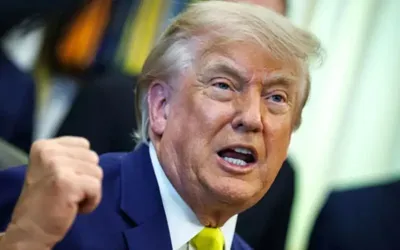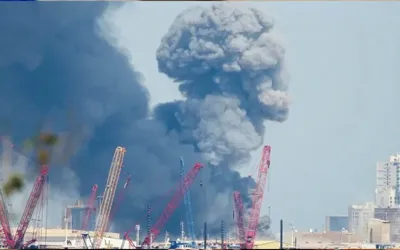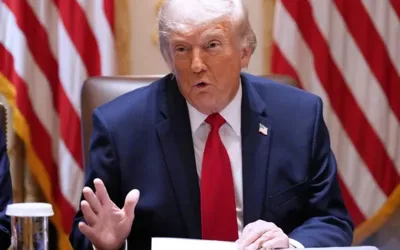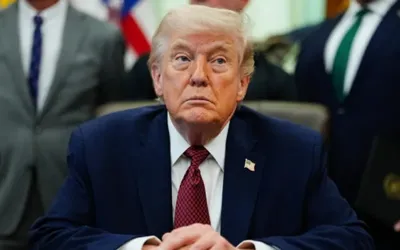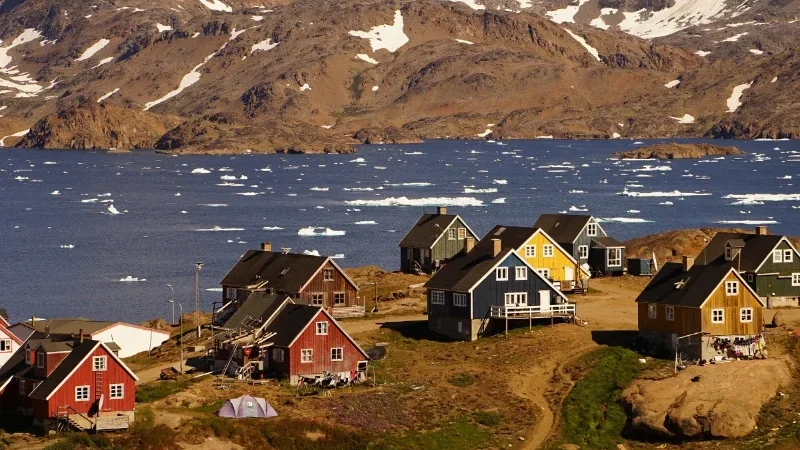
Despite firm declarations from Denmark that Greenland is not for sale, renewed comments from US President Donald Trump have revived a provocative question: could the United States ever put a price on the world’s largest island?
According to a White House spokeswoman this week, Trump and his advisers are once again “talking about what a potential purchase would look like.” Yet even as a purely hypothetical exercise, the idea quickly runs into a fundamental problem there is no meaningful way to value a country or an autonomous territory.
“There’s no market for buying and selling nations,” said Nick Kounis, chief economist at ABN AMRO. Unlike companies or commodities, countries lack an accepted valuation framework.
History Offers Little Guidance
Past US land purchases provide no useful benchmark. In 1946, Washington offered Denmark $100 million for Greenland roughly $1.6 billion in today’s dollars but the proposal was rejected. That figure is meaningless now, economists say, given eight decades of economic growth, geopolitical change, and shifting strategic priorities.
Even earlier deals, such as the Louisiana Purchase in 1803 or the acquisition of Alaska in 1867, offer little insight. Those transactions occurred under unique historical circumstances, involved willing sellers, and predate modern concepts of sovereignty, Indigenous rights, and environmental regulation.
Valuing Greenland Like a Business?
One theoretical approach would be to treat Greenland like a corporate takeover and value it based on economic output. But that, too, quickly falls apart.
Greenland’s GDP, largely driven by fishing, was about $3.6 billion in 2023, according to Denmark’s central bank a modest figure that depends heavily on Danish subsidies. Roughly half of Greenland’s public budget is funded by Copenhagen, paying for healthcare, education, and infrastructure.
Any buyer would also have to factor in the cost of maintaining those services, raising the question: would Greenland be an asset or a long-term financial liability?
Minerals, Energy, and Political Reality
Much of Washington’s interest centers on Greenland’s vast untapped mineral potential. Surveys suggest the island contains 25 of the 34 “critical raw materials” identified by the European Commission, including rare earth elements vital for modern technology and defense systems. Estimates place the potential value of these resources in the hundreds of billions of dollars.
However, major obstacles remain. Oil and gas exploration is banned for environmental reasons, mining projects face regulatory hurdles, and Indigenous Greenlandic communities have strongly opposed certain developments. These constraints would significantly limit any theoretical return on investment.
More importantly, mining concessions are not the same as sovereignty. Any attempt to “buy” Greenland would also collide with the political and cultural rights of the Inuit population, who assert claims rooted in history, identity, and self-determination.
“When you add Indigenous culture, history, and ownership claims, the idea of pricing it becomes meaningless,” said Andreas Østhagen, research director at Norway’s Fridtjof Nansen Institute. “That’s why the whole concept is absurd.”
Strategy Over Substance?
For now, US officials say “all options are on the table” to secure influence over Greenland, citing national security concerns. The US already maintains a military presence on the island, and Secretary of State Marco Rubio is expected to discuss Arctic security with Danish leaders in the coming days.
Some analysts believe the rhetoric may be less about an actual purchase and more about negotiation tactics. Kounis suggests Trump may be deploying a familiar strategy: floating an extreme proposal to gain leverage in future talks.
“If the end goal is greater military or economic access,” he said, “then this could simply be about reshaping the negotiating landscape.”
In the end, while assets can be priced and companies acquired, Greenland remains something else entirely a place where economics, sovereignty, history, and identity collide in ways no balance sheet can capture.